VISIT FOR THE BEST FITNESS AND HEALTH ADVICES

Blog Archive

Tuesday, November 25, 2025

7 things you can stop worrying about


Fitness shouldn’t be one more thing to feel bad about.

So today, I want to take a few worries off of your plate.

Think of this as a permission slip to stop overthinking the stuff that doesn’t matter nearly as much as you’ve been told.

Stop worrying about missing a week of workouts.

Even if you miss a week of workouts multiple times each year, it has no discernible impact on your overall progress.

You may feel less “full” or “pumped” in the moment, but nothing structural is changing. And even if you’re off for longer than a week, regaining any lost strength or muscle happens relatively quickly.

Bottom line: if you miss a week for a vacation or because you’re taking care of a sick kiddo, don’t sweat it. And if you need help getting into a rhythm to start with, we’ve got you.

Stop worrying about eating that piece of cake.

There are no “bad” foods.

And it’s not just cake that’s getting a bad rap.

Unfortunately, fear-mongering around food is at an all-time high right now.

Just this week, I saw someone say not to eat too much spinach or it will bleed the iron out of your body. 🤦‍♂️

Not only are these messages wildly inaccurate and unhelpful – they make you feel like you did something wrong.

Nothing could be further from the truth!

Bottom line: you’re not “bad” for choosing to eat a food. And if you’re feeling confused by all the nutrition noise out there, check out our Guide to Healthy Eating.

Stop worrying about hitting the perfect set & rep range.

You can make amazing progress with both high volume (as high as 20+ sets per muscle) or low volume (as little as 3-4 sets per muscle).

Heck, even 1 set per week done to failure has shown strength improvements.

Same goes for reps.

You can build muscle on anything from 5-30 reps, as long as they are challenging!

Bottom line: if you’re not competing in a strength sport, a few challenging sets per week (at least 5 reps per set, close to failure) is all you’ll ever need. For most people, I’d stick in the 6-15 rep range. Not because it’s a magic number, but because it tends to be the easiest to execute!

Stop worrying about rest periods.

I LOVE that this was a question I got from a reader, because it highlights that they’re thinking about recovery, too.

There is so much conflicting information out there that we should be taking 2-3 min rest in between sets to gain muscle. But with supersets we’re doing the complete opposite. Thoughts?

Here’s the thing: they actually both work.

A June 2024 study comparing supersets versus traditional straight sets found similar amounts of muscle growth – but noted that supersets DO increase perceived exertion (i.e. it feels harder, likely because with less rest, you’re more out of breath and muscles feel more fatigued!)

Bottom line: do whatever fits your schedule and enjoyment of exercise. Supersets save time and add a cardio challenge. Longer rests help you feel fresher for your next set – which is great for strength. And both build muscle just fine.

Stop worrying about if you have the right workout tools.

If you’ve ever worried about if you should use a machine vs a dumbbell, a barbell vs a kettlebell, or just your own bodyweight, let me put your mind at ease.

They are all great.

You can use any of them to get awesome results.

Bottom line: The best tool is the one that you have access to, are comfortable with, and are excited to use. We can figure out the rest from there.

Stop worrying about “optimizing” your protein intake.

Protein is important.

But if you’re getting around 0.7-0.8g/lb of bodyweight, you’ve already eating enough to support strength, muscle, recovery, and satiety.

Heck, I have clients see huge improvements at even lower protein intakes (between 0.4-0.6g/lb of bodyweight).

What’s that look like in the real world?

For most people, it’s around 1-2 palm-sized servings of protein at each meal.

That’s it.

And sure, going to higher levels may have additional benefits in some unique cases. But these are the smaller optimizations around the edges, not the bulk of the impact.

Bottom line: 1 gram of protein per pound of bodyweight is an easy number to remember, but it doesn’t apply across everyone broadly. Do your best to get a solid source of protein in with each meal, and you’re in a great spot! 🙌

Stop worrying about “perfect” exercise technique.

The truth is, there is a wider variety of safe and effective exercise techniques than most would lead you to believe. We all have slightly different bodies and anthropometry (ratios of arm length, torso, leg, etc.) One person might feel more comfortable squatting with toes straight ahead and a narrow stance. Another with toes slightly turned out and a wider stance, etc.

None of these are wrong.

We run into trouble when we try to force people with different bodies to all move the exact same way. That’s not how it works.

The “best” technique is the one that fits the individual, feels good, and allows them to express their best effort in the target areas.

Bottom line: Technique doesn’t need to be perfect – it needs to be safe, repeatable, and effective. Everything that falls within that is great!

So what does matter?

This is the part that gets lost in the noise.

What moves the needle the most is incredibly boring and incredibly consistent:

  • Getting enough sleep (7-9 hours for most people)
  • Eating mostly balanced meals (with foods you enjoy)
  • Moving your body often (some low intensity, some higher intensity)
  • Doing strength work a couple times a week (near to failure)
  • Staying connected to people you care about
  • Having a strategy for when life gets messy

The hard part isn’t learning the “right” way.

It’s tuning out all the noise so you can stay focused on the stuff that actually works.

My hope is that at least one thing in here lets you take a little breath and go,

“Oh…thank goodness. I can stop worrying about that.”

If you want help making all this feel doable in a busy, real-life schedule, just hit reply. I’m always happy to help.

-Matt

The post 7 things you can stop worrying about first appeared on Nerd Fitness.


from Nerd Fitness https://ift.tt/pJDgmcX
Wednesday, November 19, 2025

Why accountability feels different for everyone


Two words I hear all the time: motivation and accountability.

From clients, readers, and people who want to get healthier but can’t seem to make it stick.

While they sound simple, both are actually…complicated.

When someone says, “I just need more accountability,” what that really means can vary a lot.

  • Sometimes it’s about systems and structure.
  • Sometimes it’s about clarity on their goals and how to achieve them.
  • And sometimes, it’s about how we personally respond to expectations – both from ourselves and from others.

Why no single “system” fits everyone

If you’ve ever read books like Atomic Habits by James Clear, The Power of Habit by Charles Duhigg, or Switch by Chip and Dan Heath, you know there are a lot of frameworks out there for understanding behavior.

After 15 years of coaching, here’s what I’ve learned:

None of these systems are foolproof. None of them fully capture how complex people really are.

But that’s not the point. Each one is a lens. A new vantage point that helps us see our habits and struggles differently.

And when you’re stuck, sometimes that’s exactly what you need: a fresh perspective that gives you a new way to approach things.

Enter The Four Tendencies

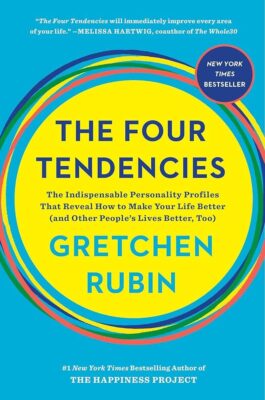
Several years ago, our entire coaching team read The Four Tendencies by Gretchen Rubin, and it provided some really key insights that we’ve baked into our coaching program and how we think about helping people ever since.

The basic concept is this: people respond to internal and external expectations differently. By understanding which expectations you thrive with, and which are a struggle, you can work with your natural tendencies instead of fighting against them.

The most common tendency we see is The Obliger.

Obligers are the glue of a team or family. They meet outer expectations (deadlines, commitments, helping others), but resist inner ones (self-care, personal goals, boundaries).

Sound familiar?

If you’ve ever said:

“I know what I should be doing… but I can’t seem to do it for me,”

…you might be in this group.

One of our clients described it perfectly:

“Every bit of energy feels consumed by surviving my workday, meeting the needs of my family, helping with the needs of others… there’s too little self-care and self-prioritization in my life at this time.

I know I bring the situation upon myself. I am wired to commit to things, to be involved, to want to be needed and valued and recognized. But it comes at a price. The demands from other people or things leave little left for me.”

That’s the Obliger experience in a nutshell.

And let me be clear, this isn’t about weakness or lack of willpower.

In fact, Obligers get SO MUCH done.

The problem is they often sacrifice their own goals to help others, which can lead to health challenges in the long-run.

How we help Obligers succeed

At Nerd Fitness Coaching, we help Obligers by providing three key supports: external accountability, Dial Mode adjustments, and tracking wins as they accumulate to reinforce and reward their progress.

Here’s how you can translate those into your own practice:

  • A coach or workout buddy you checks in and celebrates wins with you
  • A checklist or tracking system that makes your progress visible
  • Building out a Dial Mode – i.e. a plan for different types of days so you can adjust accordingly and avoid burnout
  • Reframing goals as something that benefits others – i.e. “I’m exercising so I have more energy for my kids.”

As you’ll notice, several of those are about externalizing your accountability.

Here’a another fun tactic: write a letter from your future self to your current self thank you for showing up. This is the exact thing that clicked for my client Gina. When things got hectic, writing that letter made her feel accountable to her future self (in a good way!). That simple shift helped her stay consistent through a chaotic month.

The Hidden Danger: burnout and the “pause button”

Obligers often take on too much.

They juggle a million competing expectations – deadlines, family, coworkers, community.

And when it all gets too heavy, they tend to hit the big red pause button on SOME of those.

“I just can’t deal with all of this right now. I’ll get back to it later.”

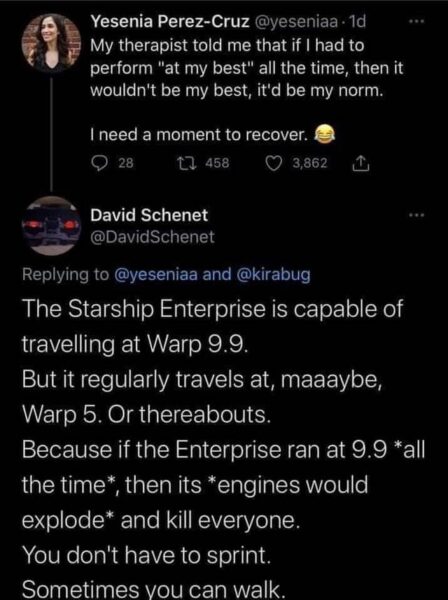
Totally understandable. And in fact, it’s an act of self-preservation. They CAN’T keep going at 100 miles per hour.

We often see folks in this scenario try to cut out all of these outside expectations with the hope that they’ll finally have time to focus on themselves later.

It sounds logical, but it usually backfires.

Because Obligers actually thrive with some form of external accountability.

So the key isn’t to eliminate expectations. It’s to curate them.

Here are a few counterintuitive questions I like to ask to do just that:

What are the benefits of NOT moving towards goal X right now?

And what are the consequences of continuing to move towards it?

By reversing the old “pro/con” list, we can get a lot of clarity on what feels good to you!

Big picture takeaway

Motivation and accountability aren’t one-size-fits-all.

Understanding your “tendency” gives you a new lens – and using tools specific to your needs increases your chances of success in the long-run.

If you want to see where you land, you can take the free quiz from Gretchen here -> https://gretchenrubin.com/quiz/the-four-tendencies-quiz/

Let me know which tendency you get! (I’m a Questioner! 🙋‍♂️)

-Matt

P.S. Fun fact: ~60% of the people we work with at Nerd Fitness Coaching identify as Obligers. Everyone’s needs are different, which is why we design coaching around you, not generic motivation hacks. If that sounds like the kind of structure you’ve been missing, I’d love to talk to you. Just hit reply to this email. ❤ 

The post Why accountability feels different for everyone first appeared on Nerd Fitness.


from Nerd Fitness https://ift.tt/eNEqy4h

Wednesday, November 12, 2025

If you need to hear this…


I’ve gotten several messages from readers lately that have my Spidey-senses tingling.

Here are a few examples:

“I’ve been working out 3x/week for 16-weeks. It’s going well and I’m seeing changes, but I’m not sure if my progress is good enough or what I’m missing.”

“I’m worried my goals aren’t specific enough. I feel a bit lost and there’s so much out there to consider. I’m not sure if I’ve got it all right.”

It echoes a question I’ve talked about before: What does “enough” fitness actually look like?

It’s normal to ask these questions. We all crave reassurance that what we are doing actually matters.

And if you’re looking for a place to start or recalibrate, the Nerd Fitness Starter Guide has some great frameworks to point you in the right direction.

But what if our fears are being preyed upon by a fitness industry obsessed with optimization – fixating on details and over-exaggerating their importance? And as Magic: the Gathering nerd, I get it. I love geeking out on the details and fine-tuning the system.

But if we focus too much on “perfect,” we can lose sight of how impactful the foundational stuff really is. And how freaking AWESOME it is that you are already working on those pieces. Don’t get me wrong. My message isn’t “Don’t worry about it! Just do the basics.”

For so many of the people I talk to, it’s this: You’re already doing great.

If you want to make some adjustments, awesome, but make sure you also celebrate the foundation you’re building. Fitness shouldn’t be one more thing to feel bad about.

Most of us are already juggling so much: work, home, imperfect schedules, and limited time and energy.

The more people I talk to, the more I realize what most folks need isn’t more information – it’s reassurance and clarity: That they’re on the right track. That they’re doing enough. That they are enough.

And often, that clarity comes from understanding what you can let go of, not what else you need to add.

If you’re strength training a couple of times a week, taking short movement breaks during your day, or getting a few hours of general activity each week – you’re already doing so much good.

Everything else? Details.

And sure, it can be fun to get lost in the details, but not at the expense of celebrating what you’ve already built.

Every rep. Every walk break. Every small win.

It all counts.

-Matt


The post If you need to hear this… first appeared on Nerd Fitness.


from Nerd Fitness https://ift.tt/VnqvYWB