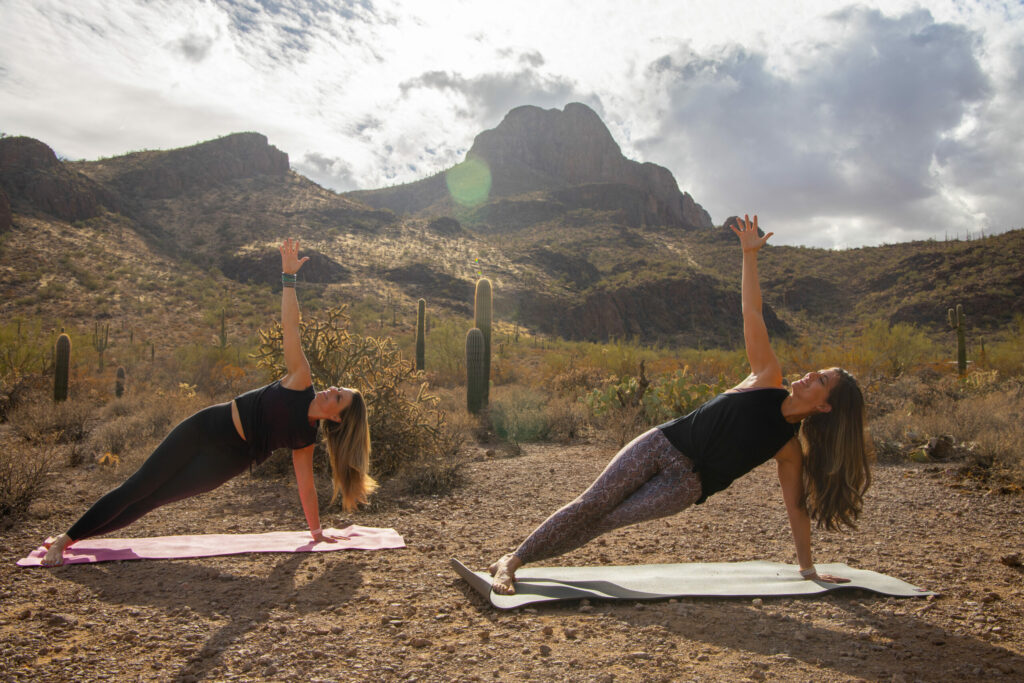
Hi friends! Happy Friday and Happy Easter weekend to my friends who are celebrating. I hope you had a wonderful week. It’s been a busy one over here – things are rocking with BarreU and we have our live class tomorrow (let me know if you’d like to join. It’s at 9:15 PST). Behind the scenes, everything is officially ready for the Barre Bootcamp 2.0 launch. (I’ll send out early access to my newsletter next week and everything will be on the blog on Monday the 12th.)
This weekend, we’ll be spending time with the fam, P has a soccer game, and can’t wait to faceplant into nana’s famous egg casserole on Sunday morning. I hope you have a lovely and relaxing weekend ahead!
It’s time for the Friday Faves party. This is where I share my fave finds from the week and around the web. I always love to hear about your faves, too, so please shout out something you’re loving in the comments section below.
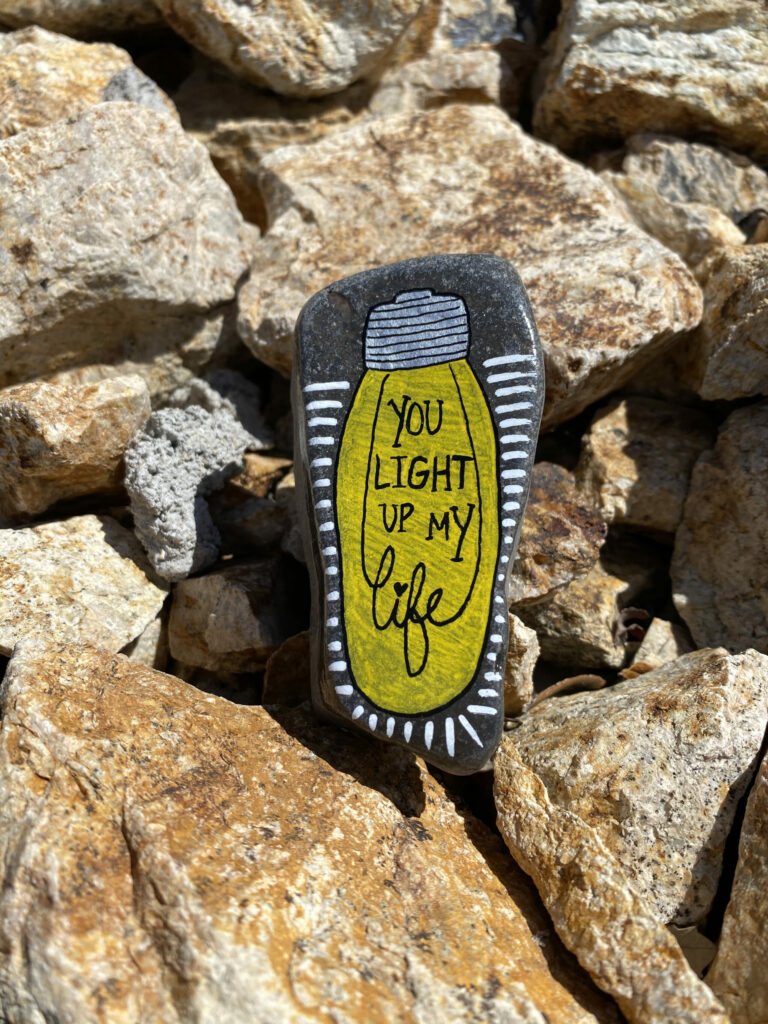
We’ve been finding these decorated rocks around the neighborhood! Such a great way to spread a little cheer and I’m inspired to do this as an art project with the girls next week.
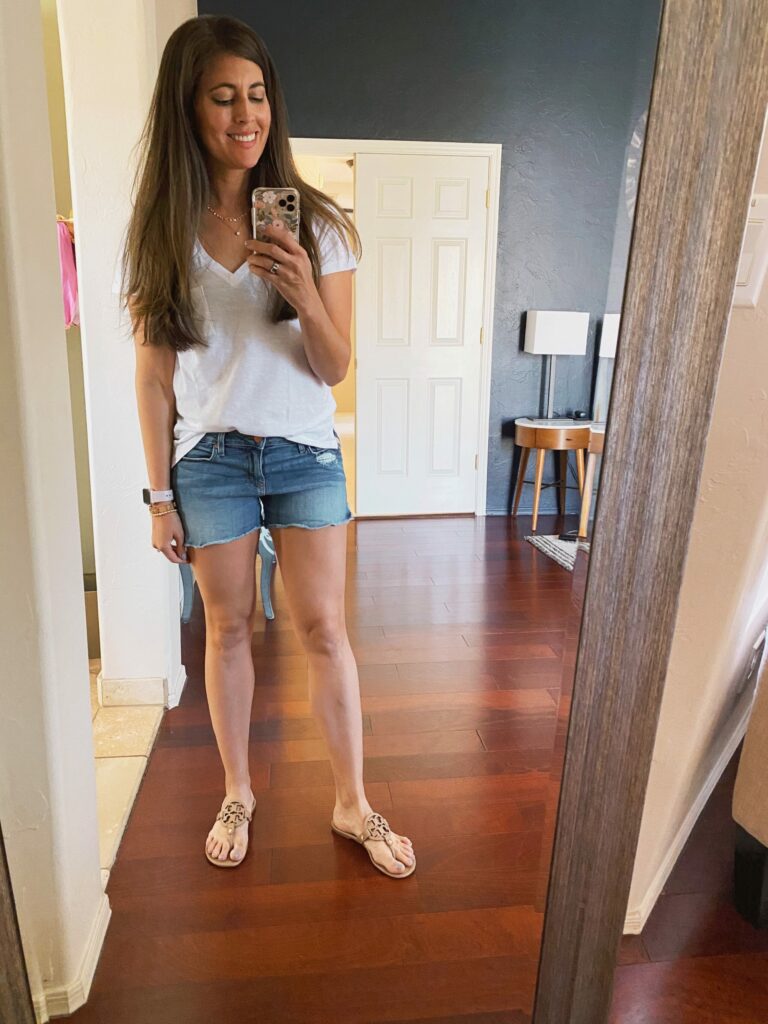
This is my #1 favorite simple tee. I have it in a few colors and just got a fresh new white one for spring. They’re not too see-through (just wear a nude bra) and run tts.
Been in the market for some new slides and thinking about these ones.
Good eats:
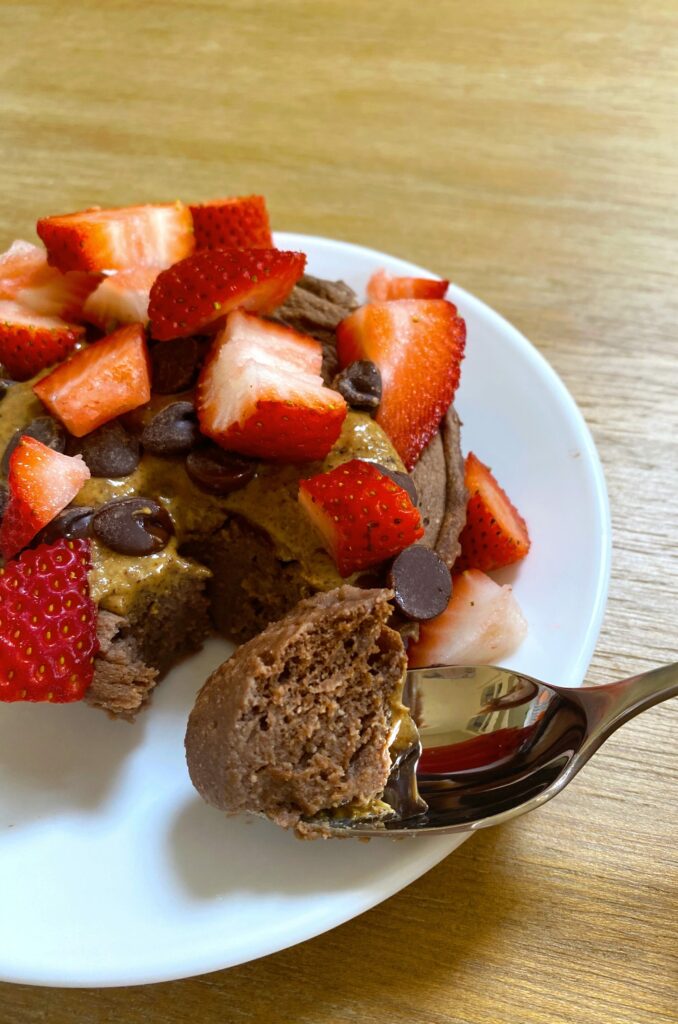
The protein muffin! This is a super simple recipe that I shared over on IG. It’s perfect for a quick protein boost that tastes like a sweet treat.
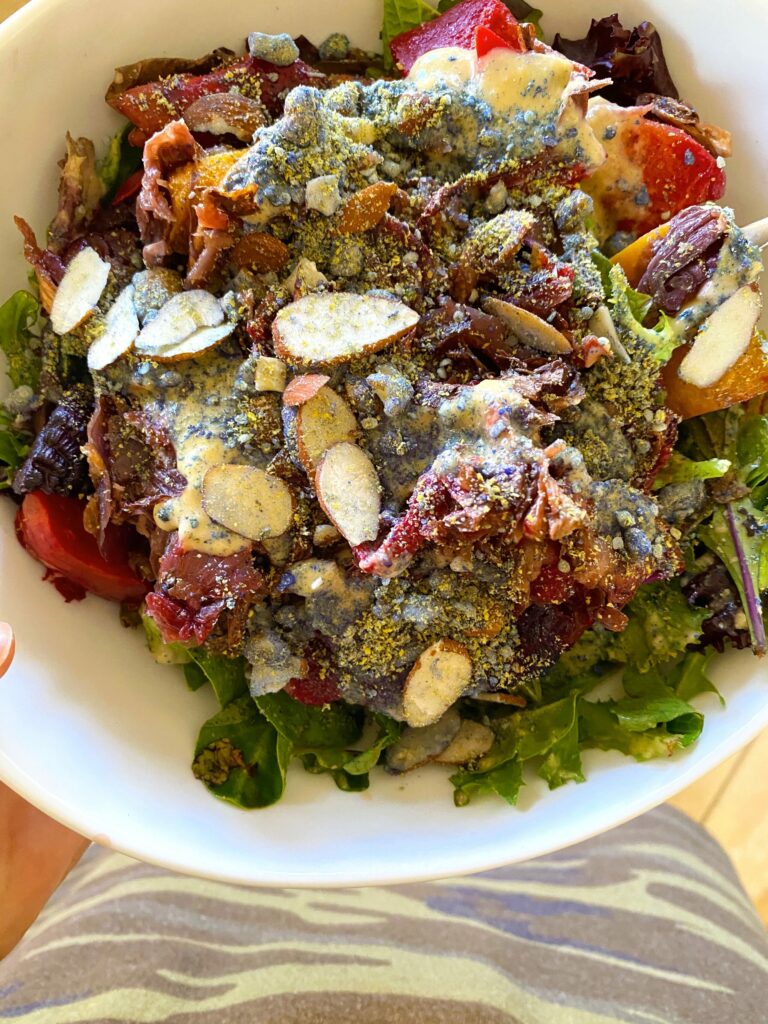
This is my new fave tea! The Egyptian licorice has been my #1 for years and I saw that they now have a mint version. It’s not overly minty, but it’s sweet, slightly spiced, and the perfect companion to a pre-bed reading spree.
(The blue-ish stuff is spirulina not mold lol)
Sakara has been crusshhhhhing it lately. I got a delivery this week – I’ll share some of my faves next week and my version of their chocolate love muffin- and everything was extra delicious and satisfying. You can use my code XOGINAH for 20% off if you want to give it a whirl!
We create strength, balance, and flexibility workouts as part of our 1-on-1 Online Coaching Program, so you’ve come to the right place to learn about functional fitness.
Here’s what we’ll cover to answer the question: “What is Functional Fitness?”
What Is Functional Fitness and Why Is It Important?
Functional fitness means training your body for everyday activities, and to make daily motion easier and safer.
When we practice functional fitness, it’s for activities like:
Carrying groceries
Picking up small children
Walking in nature
Being mobile on the floor
Fighting off sharks
Functional fitness seeks to build strength, flexibility, and balance for navigating the physical world and the objects in it.
We do this by replicating and practicing movements necessary in the real world: squatting, pulling, pushing, bending, climbing, walking, and running.
Personally, I like to think of it as becoming “antifragile,” or being able to physically handle the chaos of life.
So for functional fitness, we prioritize natural movements (squats, pull-ups) over exercises that are done on a machine (leg presses, lat pulldown).
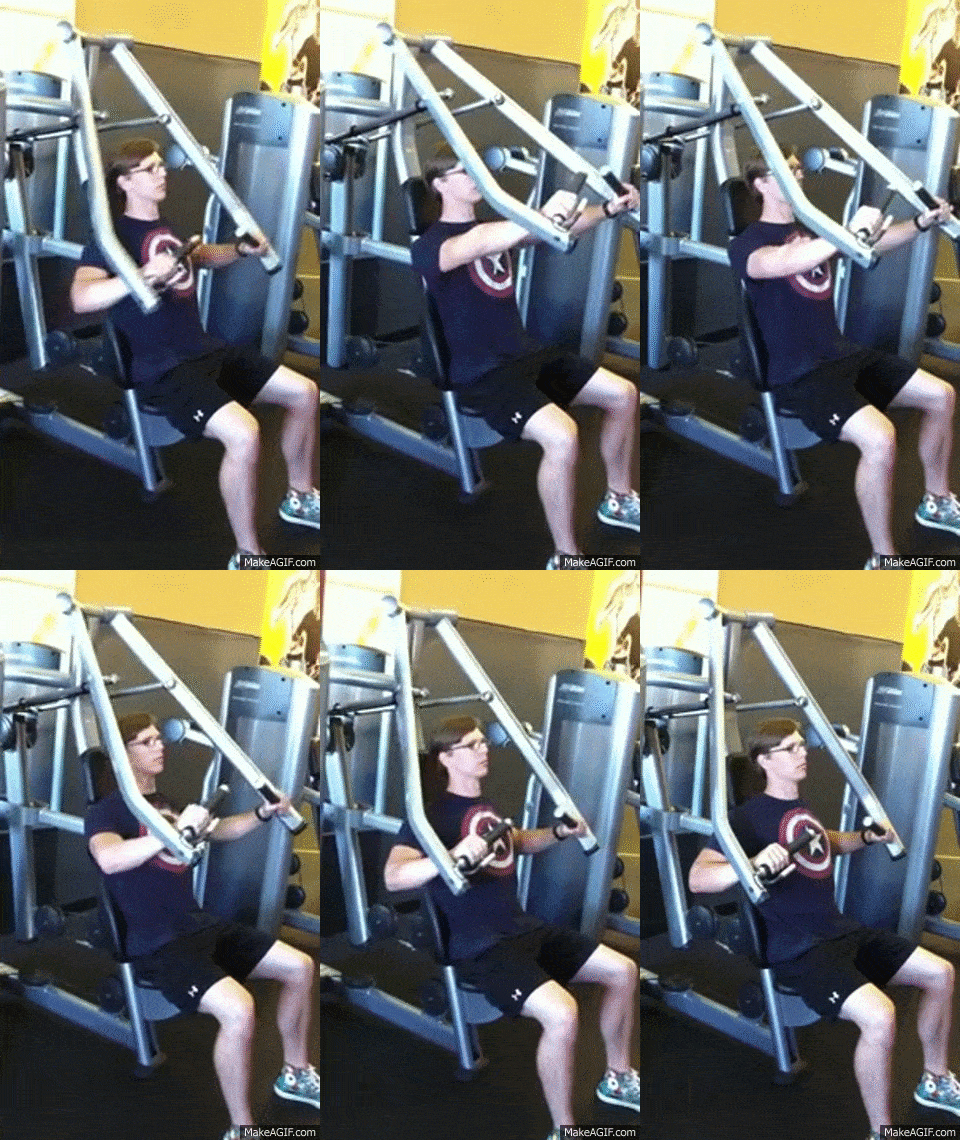
Here’s the rationale:in your everyday life, you probably won’t find yourself in a situation where you have to push weights along a guided track…while seated:
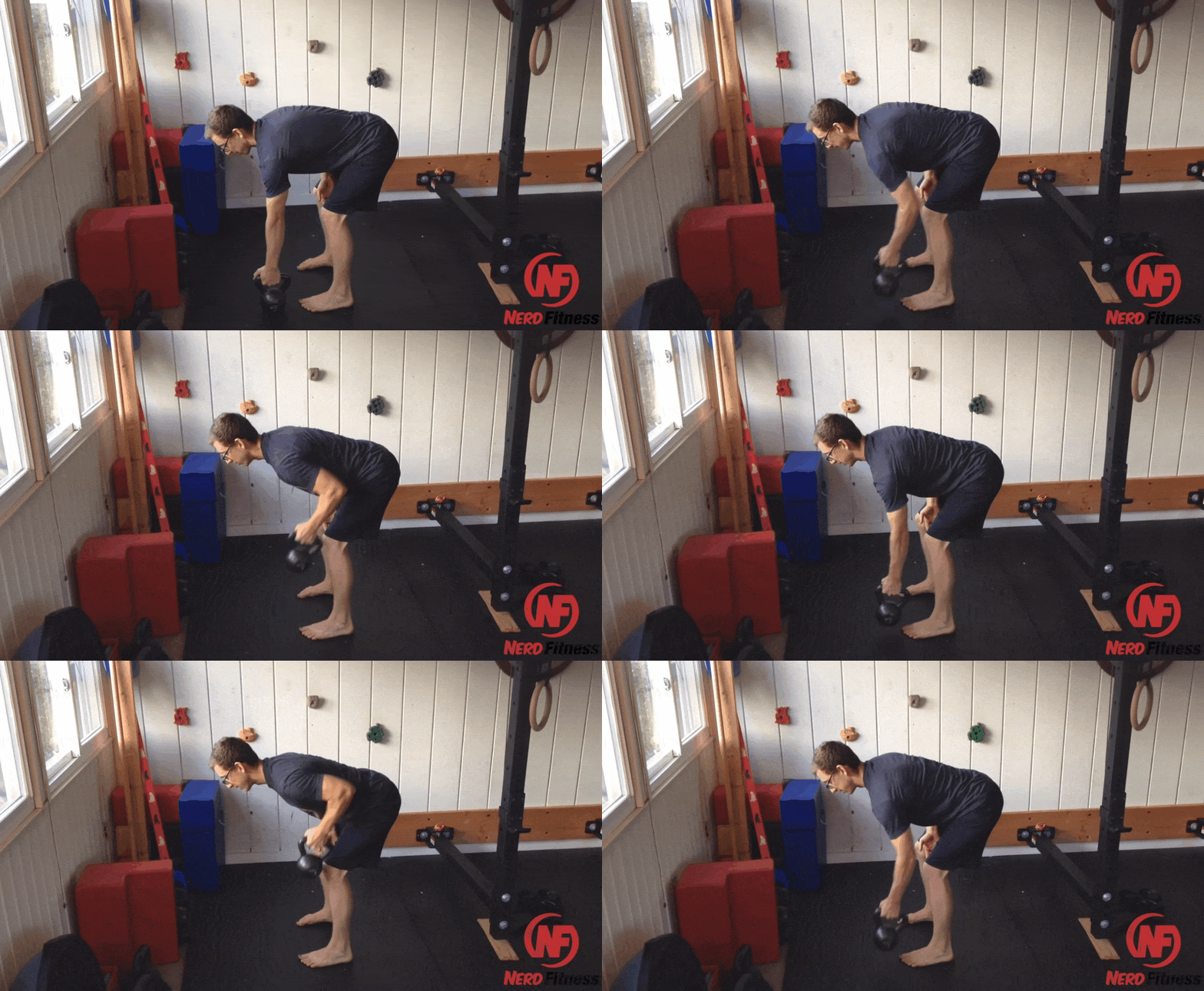
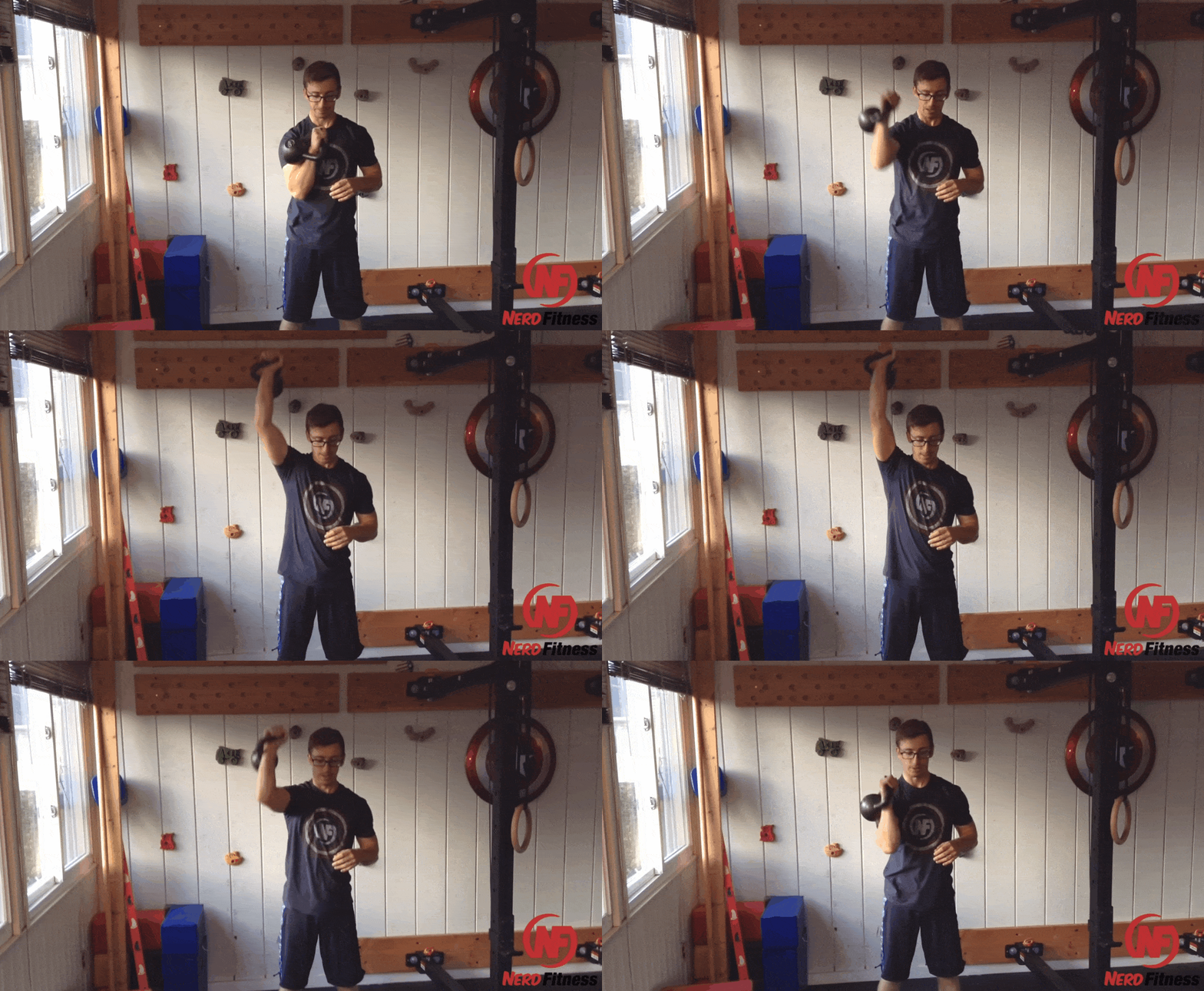
But you’ll probably find yourself in a situation where you have to lift an object from the floor, then raise it above your head, like loading your luggage into the overhead bin on a plane.
So it makes sense to practice:
And this too:
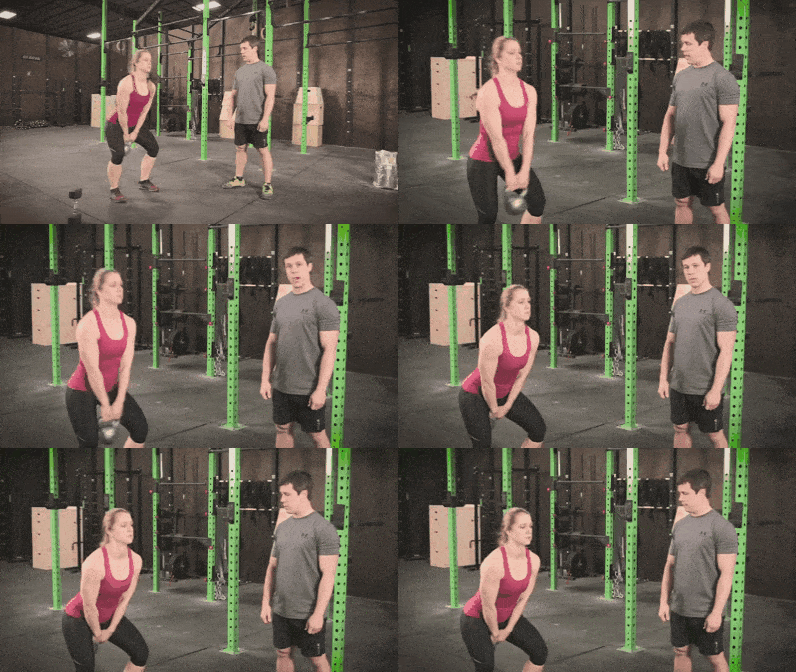
Here, the kettlebell is substituting for an object you may have to pick up and lift during your everyday life: a book, a pet rabbit, a cursed golden idol, etc.
It’s why we encourage free weights instead of machine use, because free weights force you to balance and control objects just like you have to in day-to-day life.
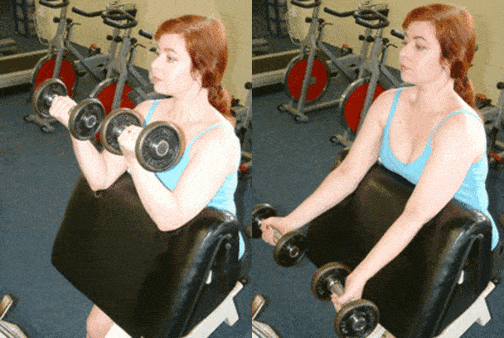
Compound exercises require more than one muscle group working together for the exercise (squats, pull-ups), so they replicate the way your body actually moves. This would be different from isolation exercises like biceps curls, which more or less train JUST your biceps muscles to move one particular way.
Since functional fitness seeks to improve your body’s ability to work as one unit, compound exercises are encouraged!
As they say, variety is the spice of life.
Let’s give you one last example of functional fitness.
Compare running on an elliptical vs going on a short hike:
Both will get your heart rate up.
But a hike will challenge your stability and balance as you move over uneven terrain. The elliptical, on the other hand, provides a repetitive motion over and over.
There is a time and a place for both, but it’s important to introduce variety and instability if your goal is to develop all-around functional fitness.
What’s that? You want exact exercises to try?
You got it!
The 10 Best Functional Fitness Exercises
A functional fitness workout prioritizes natural movements that help us conquer the obstacles and tasks faced in our everyday life.
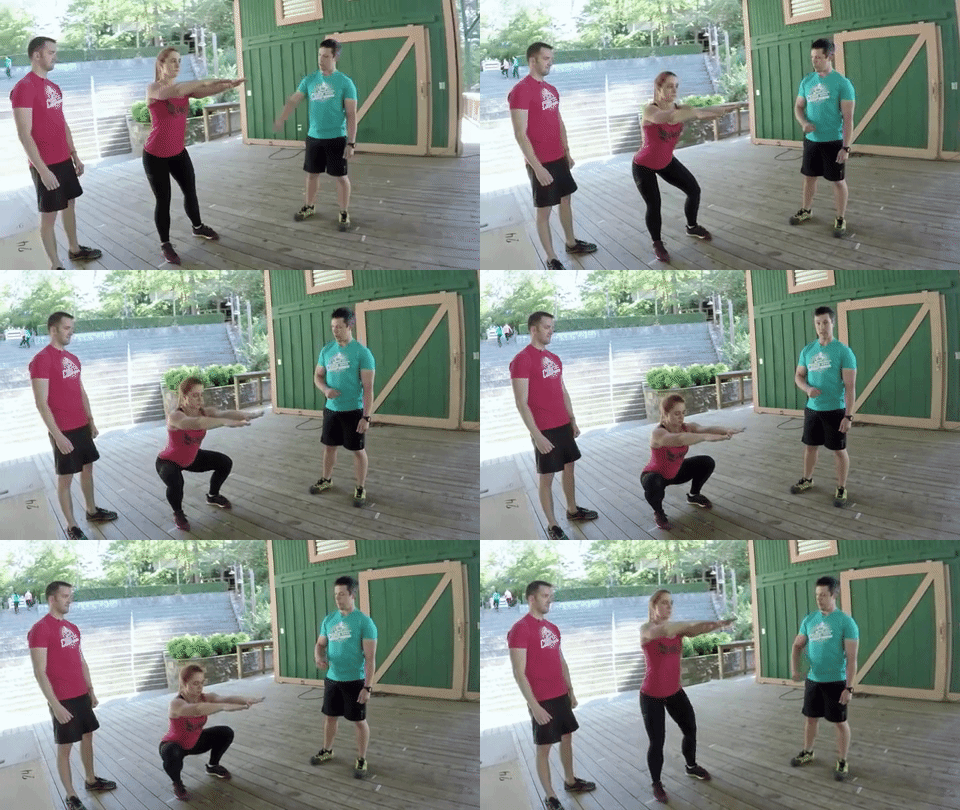
Squats are one of the most fundamental functional movements in our lives.
Getting off the ground, moving in and out of chairs, and shoveling snow will all be easier after a regular squatting practice.
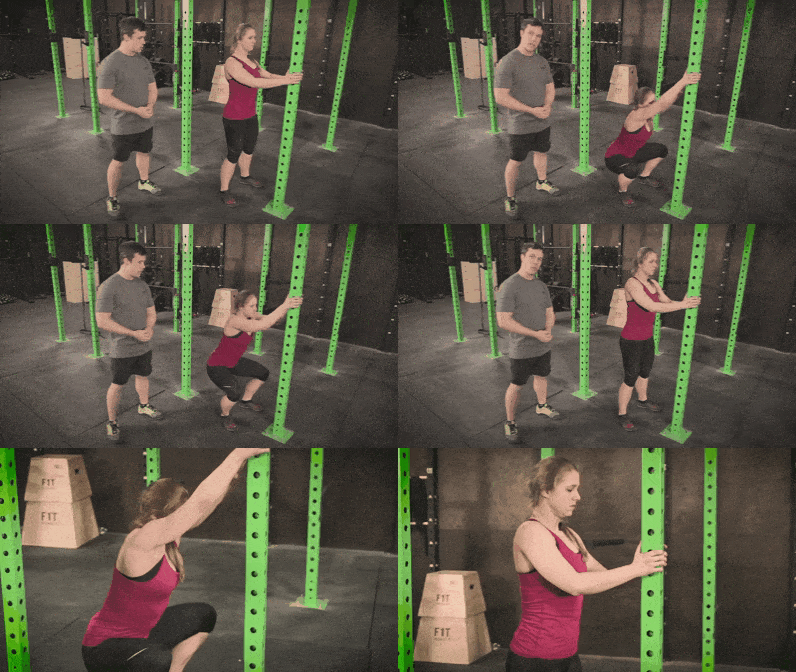
Simple bodyweight squats are a great way to get started, but if this is too tough at first, start with assisted bodyweight squats:
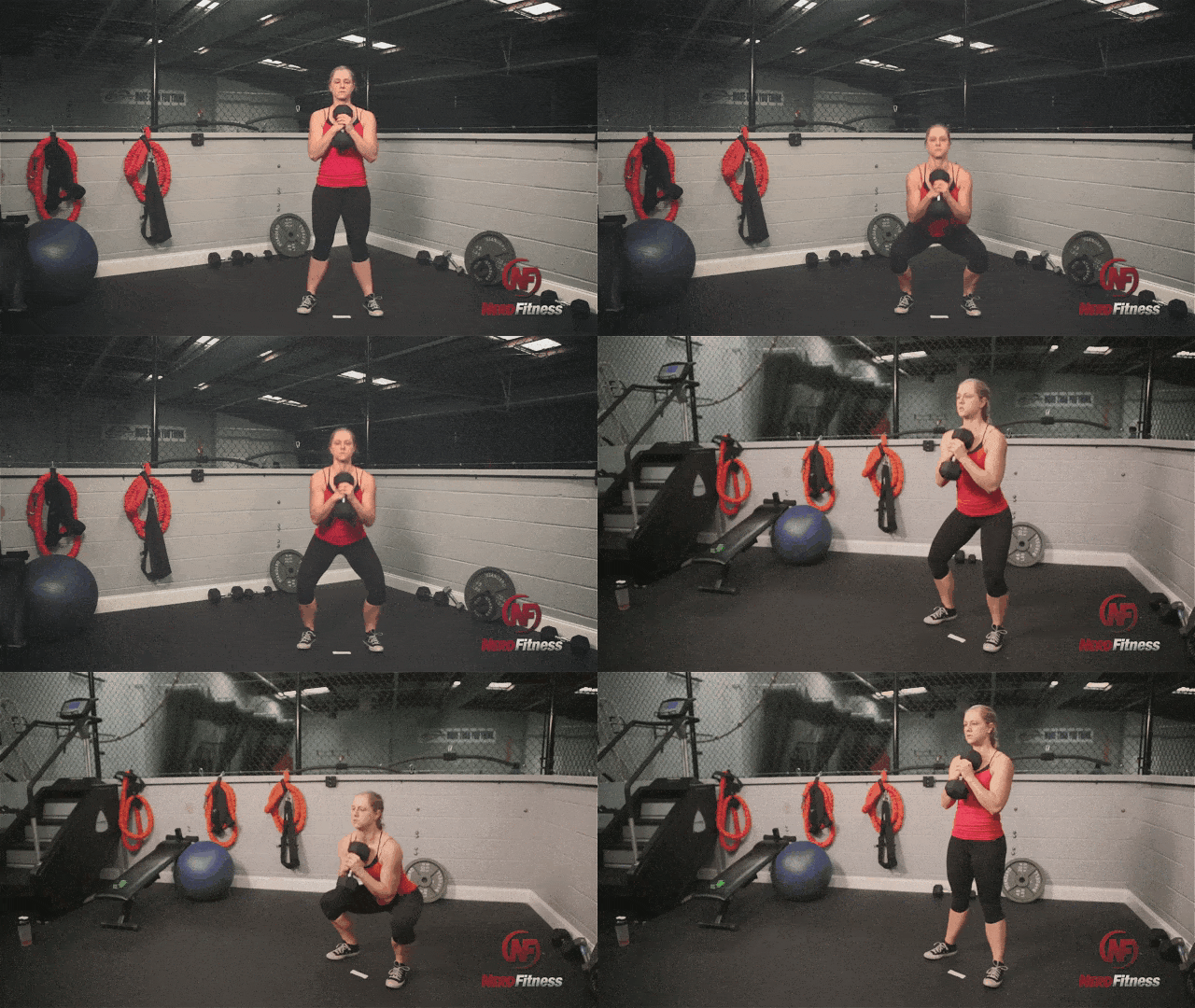
Once you get comfortable with a regular bodyweight squat, you can start incorporating weights, like with a goblet squat:
If you build up to a 30-pound dumbbell, this move can replicate picking up a small child off the ground. Practical and functional if you’re a new parent.
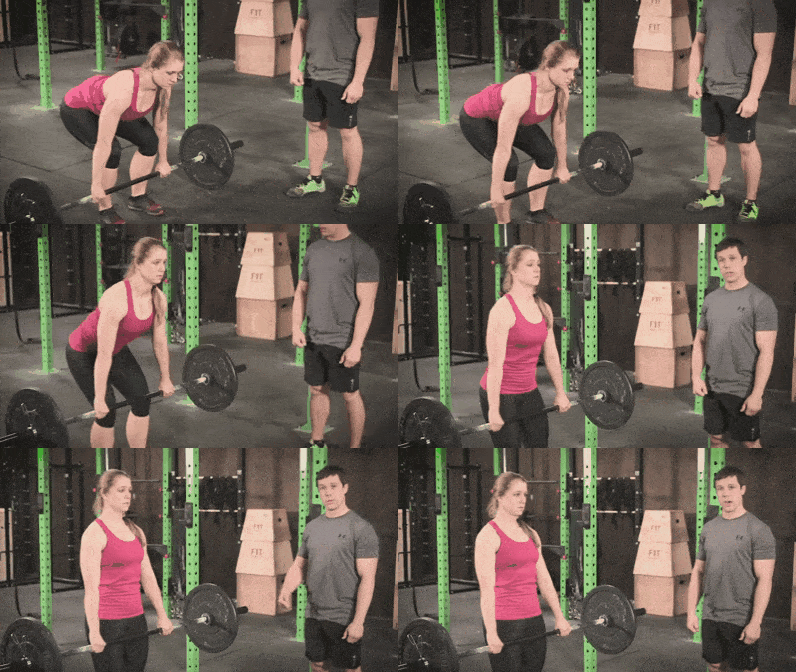
Speaking of picking up stuff off the ground, let’s talk about the deadlift as a part of functional fitness.
Moving furniture, grabbing bags of dog food, and taking a sleeping child to bed are all forms of the deadlift. When you start to incorporate the deadlift into your life, you make all these movements easier (and safer).
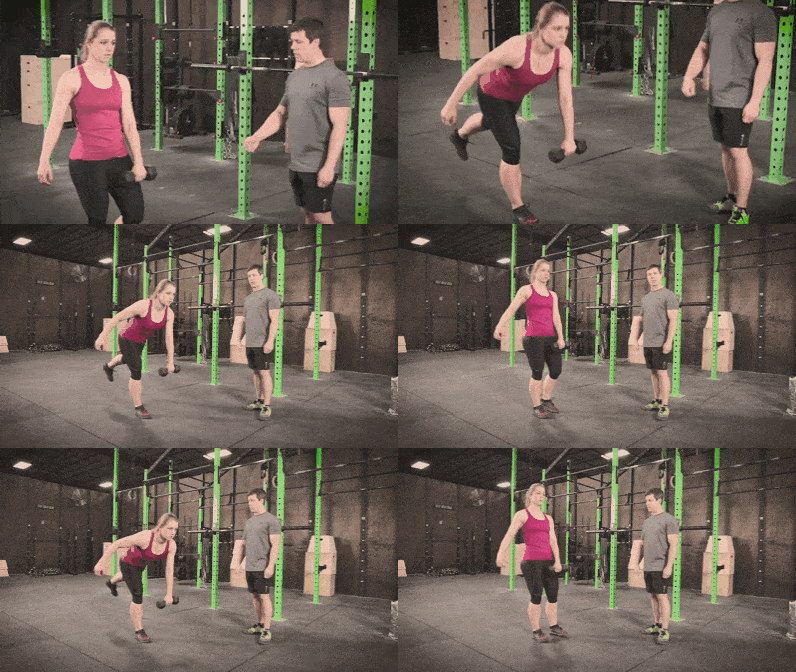
If you’ve never deadlifted before, it can be a little intimidating. A good place to start might be the Romanian Deadlift with very light dumbbells:
If you’re looking for other deadlift variations, or you want to make sure you have proper form, read our full guide with step-by-step instructions on how to deadlift safely.
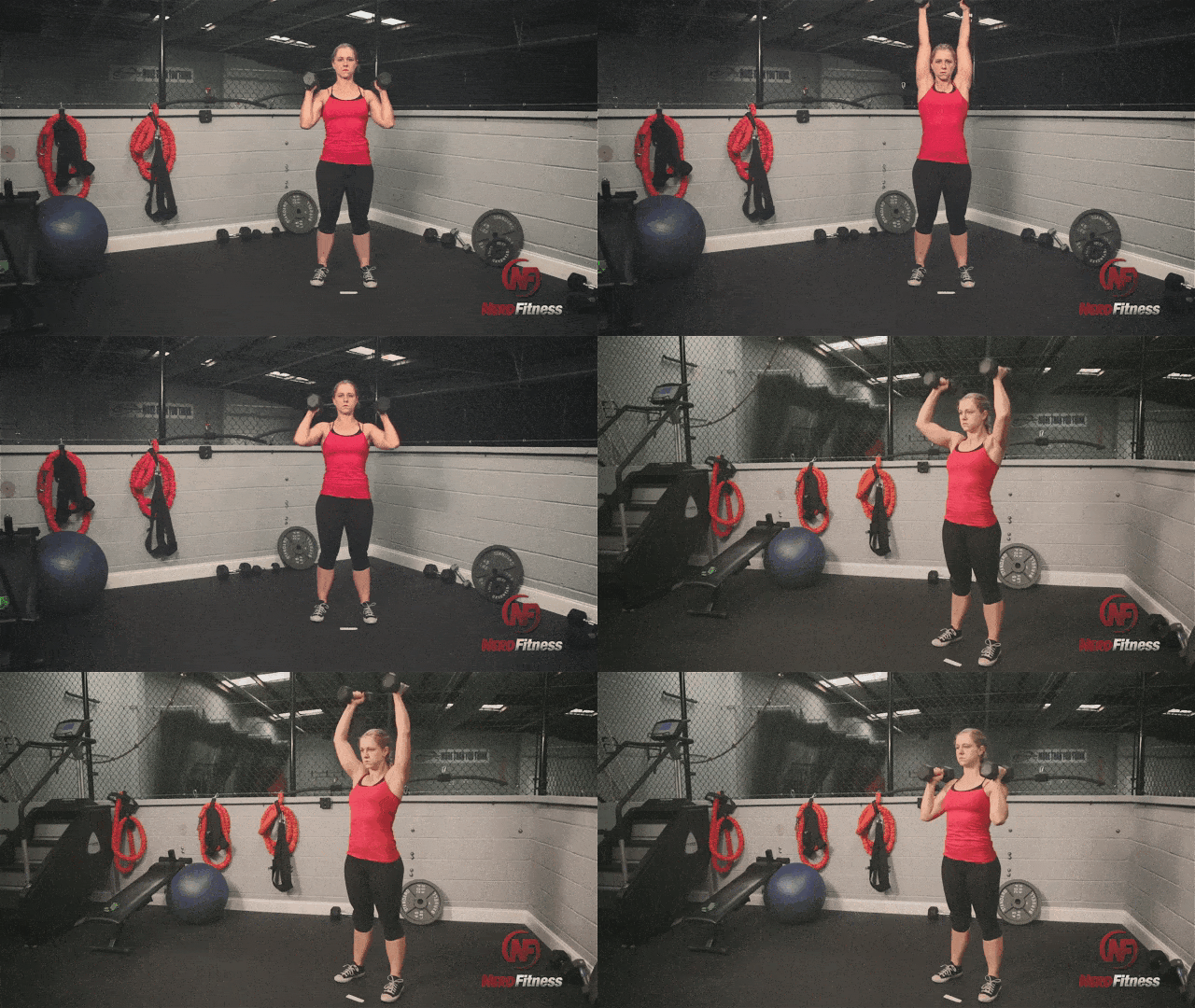
The overhead press is another exercise that will provide benefits in daily life:
Placing a cast iron skillet into a top kitchen cabinet
Hoisting luggage into the top bin when flying
Showing off the piece of the Triforce you just scored
Performing the overhead press will not only increase your upper-body strength, but it will also strengthen your core, since you balance and stabilize yourself while standing and lifting. Compare this to the bench press, where the bench itself offers support during the movement.
Again, some lightweight dumbbells are a great starting point if you’re just getting started:
The farmer’s walk is really simple: pick up a couple of weights and walk.
To up the difficulty, pick up more weight. Or walk further.
Very basic, yet very functional, because most of us carry objects from one place to another all the time.
When performing the farmer’s walk:
Pick the weight up with a good form
Keep a tight posture with your shoulders back
Take small, manageable steps
That’s it.
The farmer’s walk will challenge your arms, back, shoulders, core, and grip.
Being able to lift and carry heavy objects is about as functional as you can get.
#5) Bear Crawl
When we’re young, it’s a given that we’ll be mobile on the floor.
As adults, eh, not so much. The only interaction with the floor comes from us standing on it. We won’t even sit on it without a chair helping us.
Not very functional.
Enter the bear crawl…
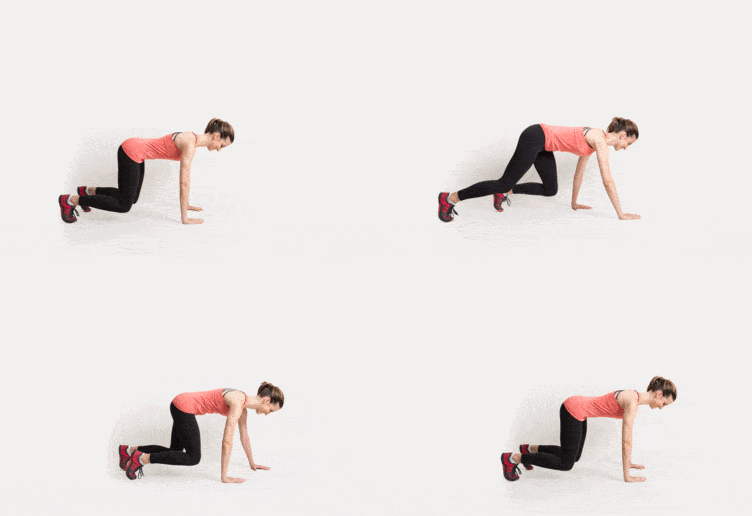
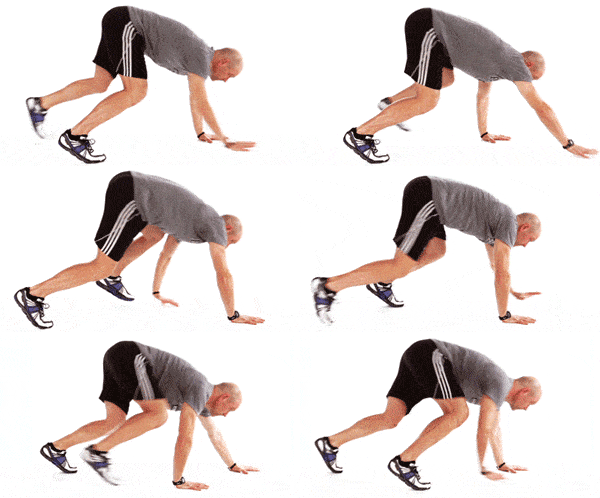
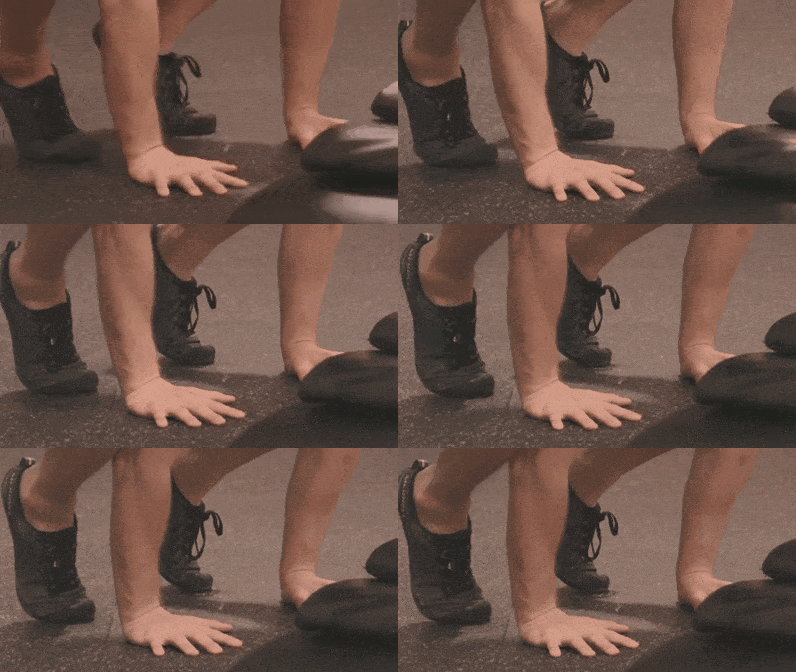
To perform the bear crawl:
Begin in a tabletop position.
Bring your knees up, so they hover.
Using opposing arms and legs (ex: right arm, left leg), take a small step forward with each limb. You want to use small steps so your torso is stable, instead of rocking side to side.
Repeat on the opposite side.
It’ll look like this:
#6) Walking Lunge
The walking lunge is going to provide lower body strength, as well as balance, for when you come in and out of the movement.
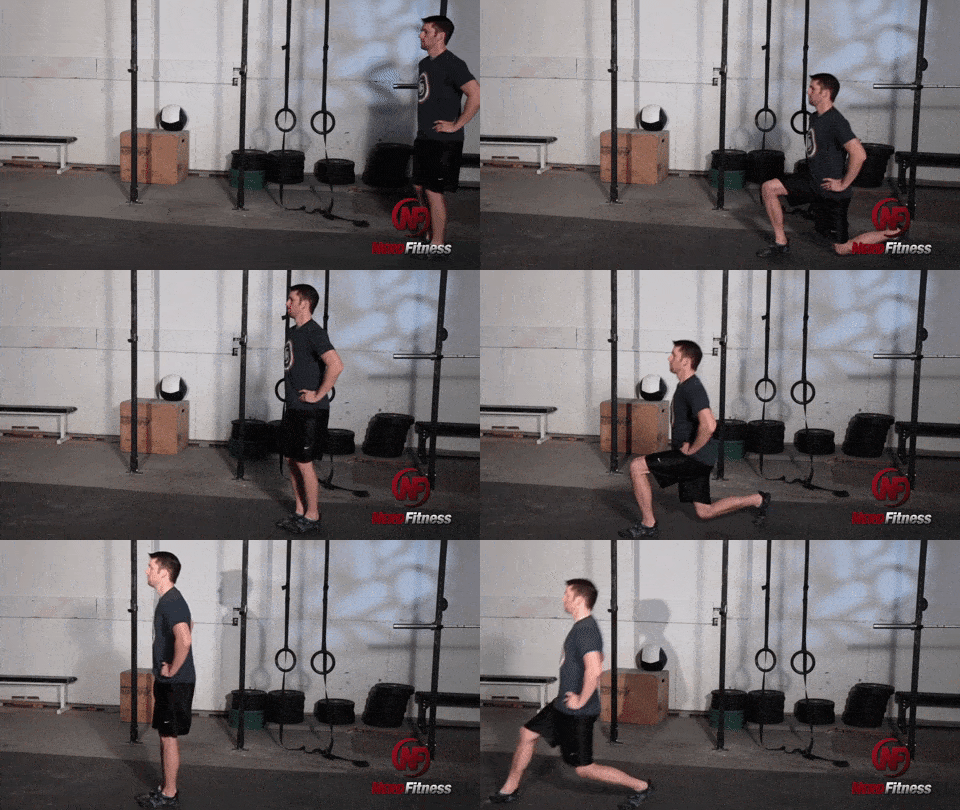
To perform a walking lunge:
Stand with a shoulder-width stance.
Step out with your right leg.
Lower your hips until your back leg’s knee almost touches the ground.
If you stepped out far enough, your front knee won’t extend past your toes.
Explode forward and up by pushing off with your back leg and up with your front leg.
Bring both feet together, and then step forward with your other foot and repeat.
#7) Pull-Ups
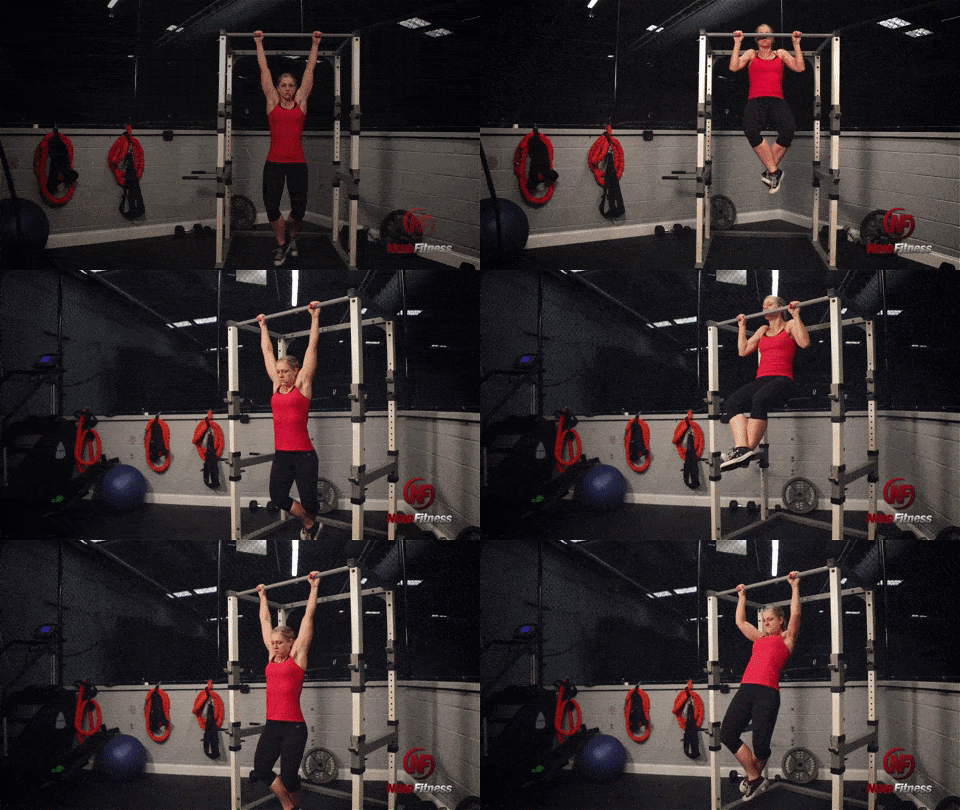
When discussing the best functional fitness exercises, we can’t neglect your “pull” muscles.
Being able to lift yourself up is very functional, and may save your life if you’re being chased by velociraptors.
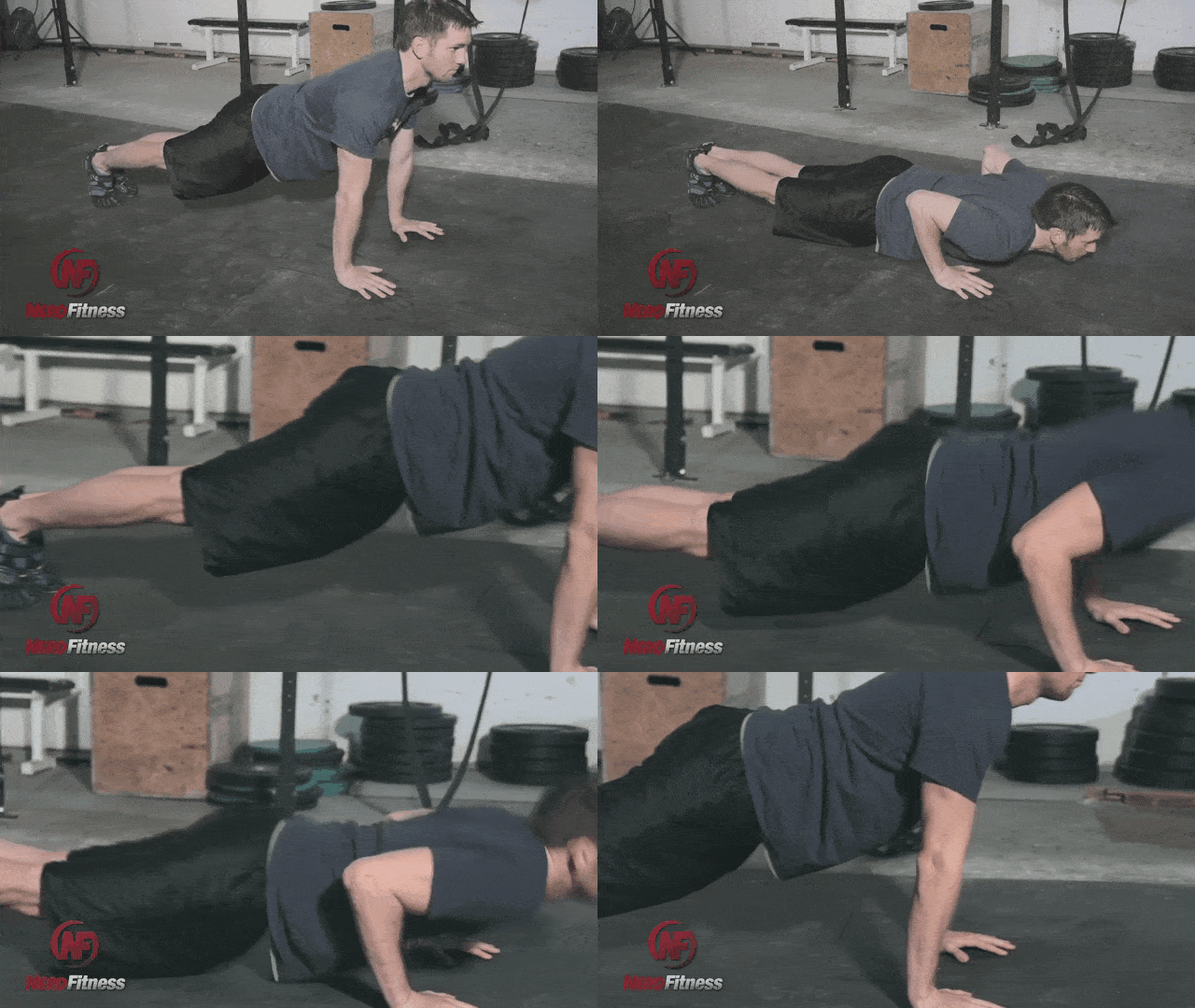
Push-ups, the ole fitness staple. But being able to hold yourself firm in a straight line (don’t sink), while pushing yourself up will create a lot of core strength. And a great functional exercise.
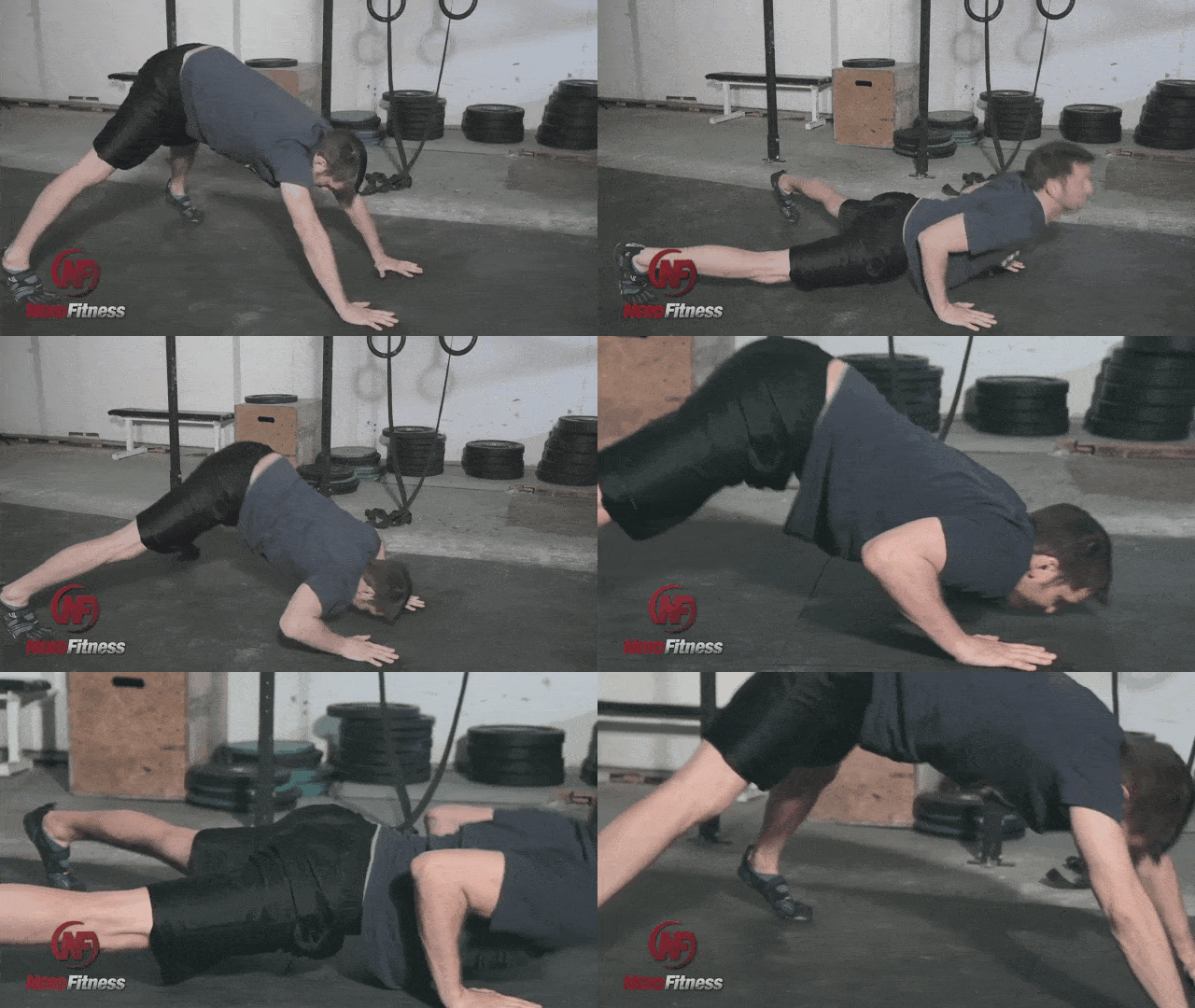
Plus, you can add some variation to level them up, creating a more dynamic exercise.
For example, you can do dive bomber push-ups:
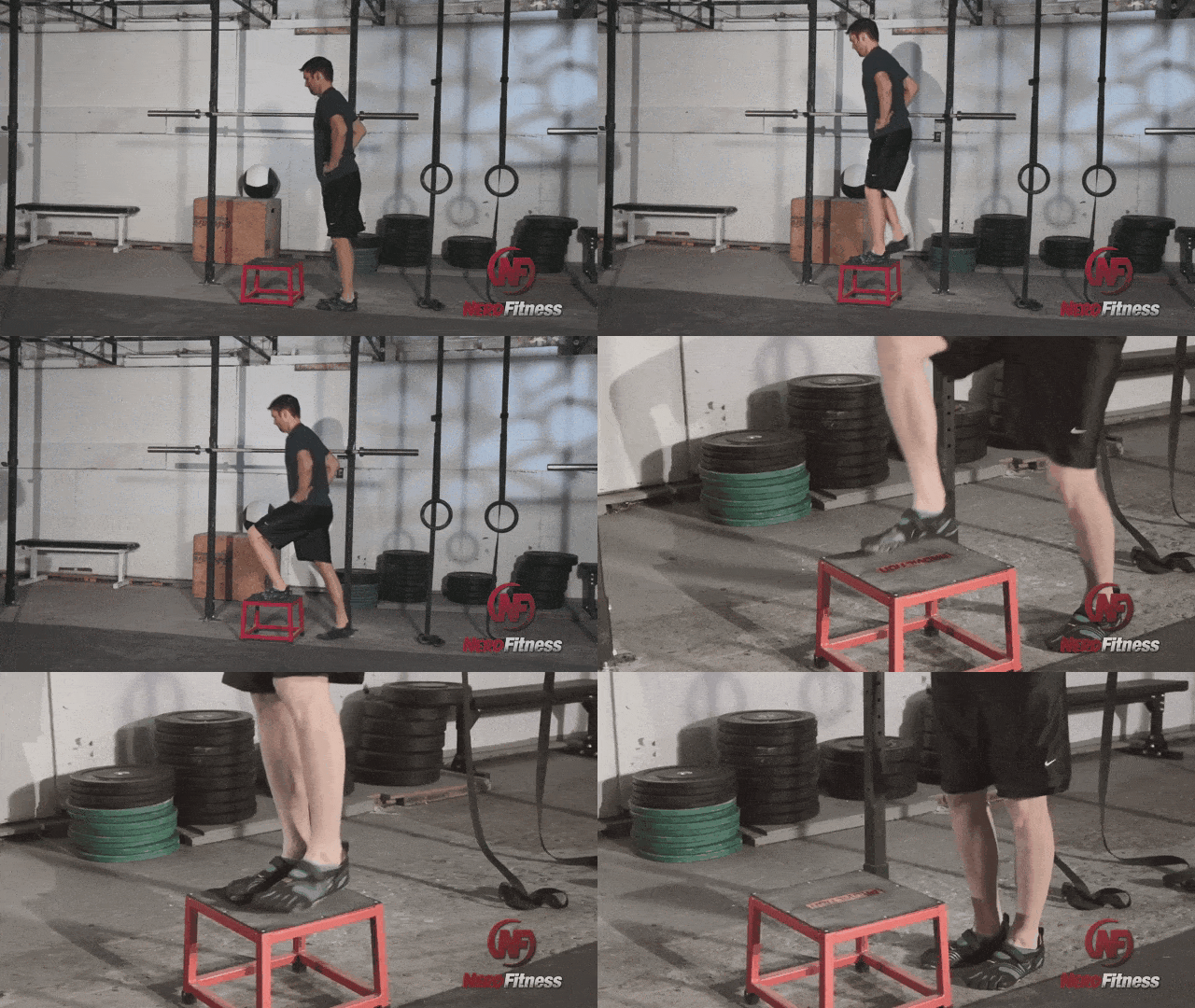
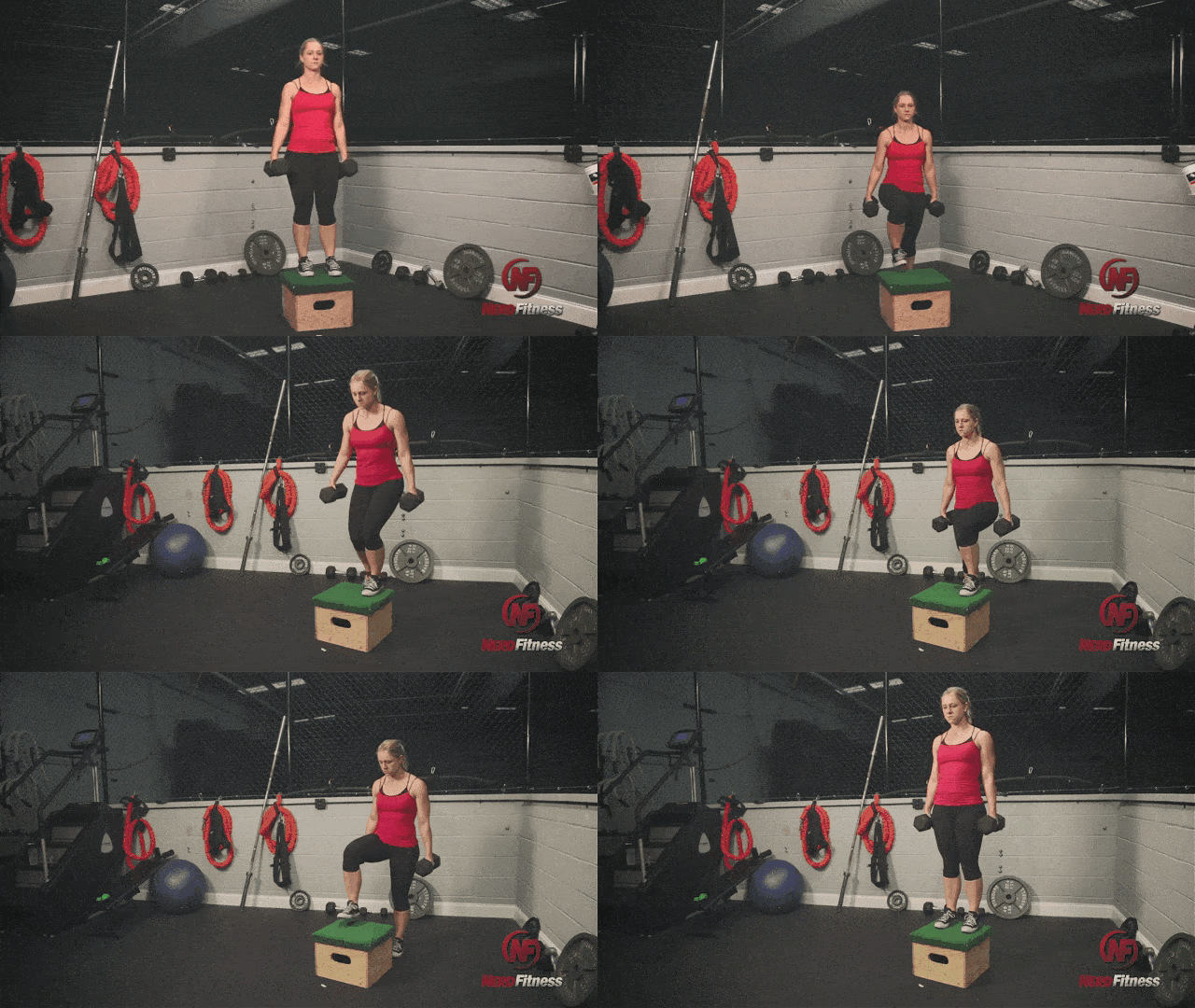
#10) Step Up
It doesn’t get much more functional than going up steps. Life doesn’t always provide us with elevators.
If this seems too easy, start mixing weights into the practice:
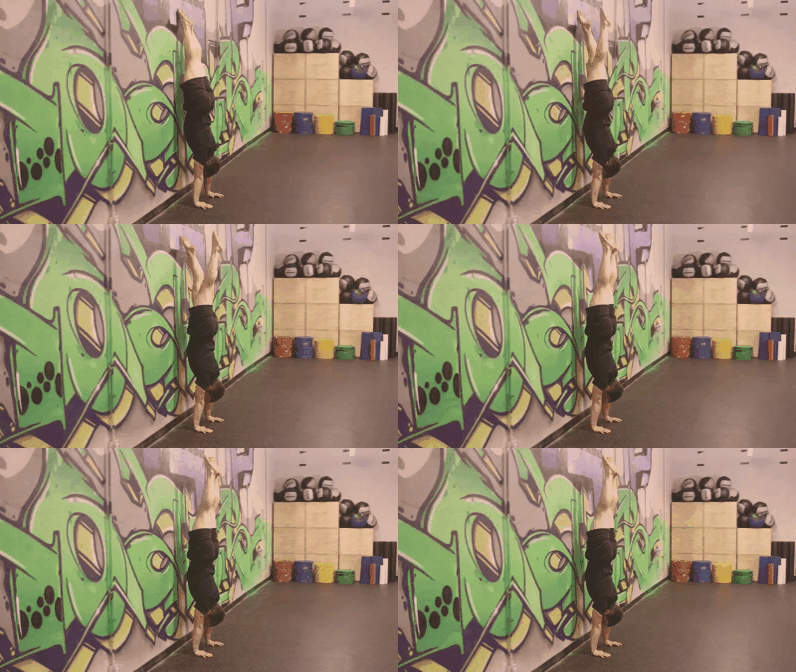
BONUS: #11) Handstands
On the one hand, handstands are really tough. On the other hand, the amount of strength and balance required to perform a handstand are central to functional fitness.
And…ah…you need both hands to do it…unless you’re Luke Skywalker:
Are you doing these moves correctly? A good way to check would be to record a video of yourself and match it against the gifs and videos here. If they look close, you’re doing great!
The other option would be to have a trained professional review your form, which we can do in our 1-on-1 Online Coaching Program!
Our spiffy mobile app lets you send a video of your training directly to your coach, who will provide feedback so you can perfect your technique.
They’ll also build a workout program that’s custom to your situation, which can improve your functional strength!
What Is a Functional Fitness Training Workout?
Now that we’ve gone over specific functional fitness exercises, let’s pull them together to build a workout routine!
For most beginners, I recommend creating a full-body practice at first, which includes:
Quads (front of your legs).
Butt and hamstrings (back of your legs).
Chest, shoulders, and triceps: (“push” muscles).
Back, biceps, and grip ( “pull” muscles).
Core (abdominals and lower back).
Since we prioritized compound exercises in today’s post (because they are more aligned with functional fitness), our muscle groups will overlap when we build our routine.
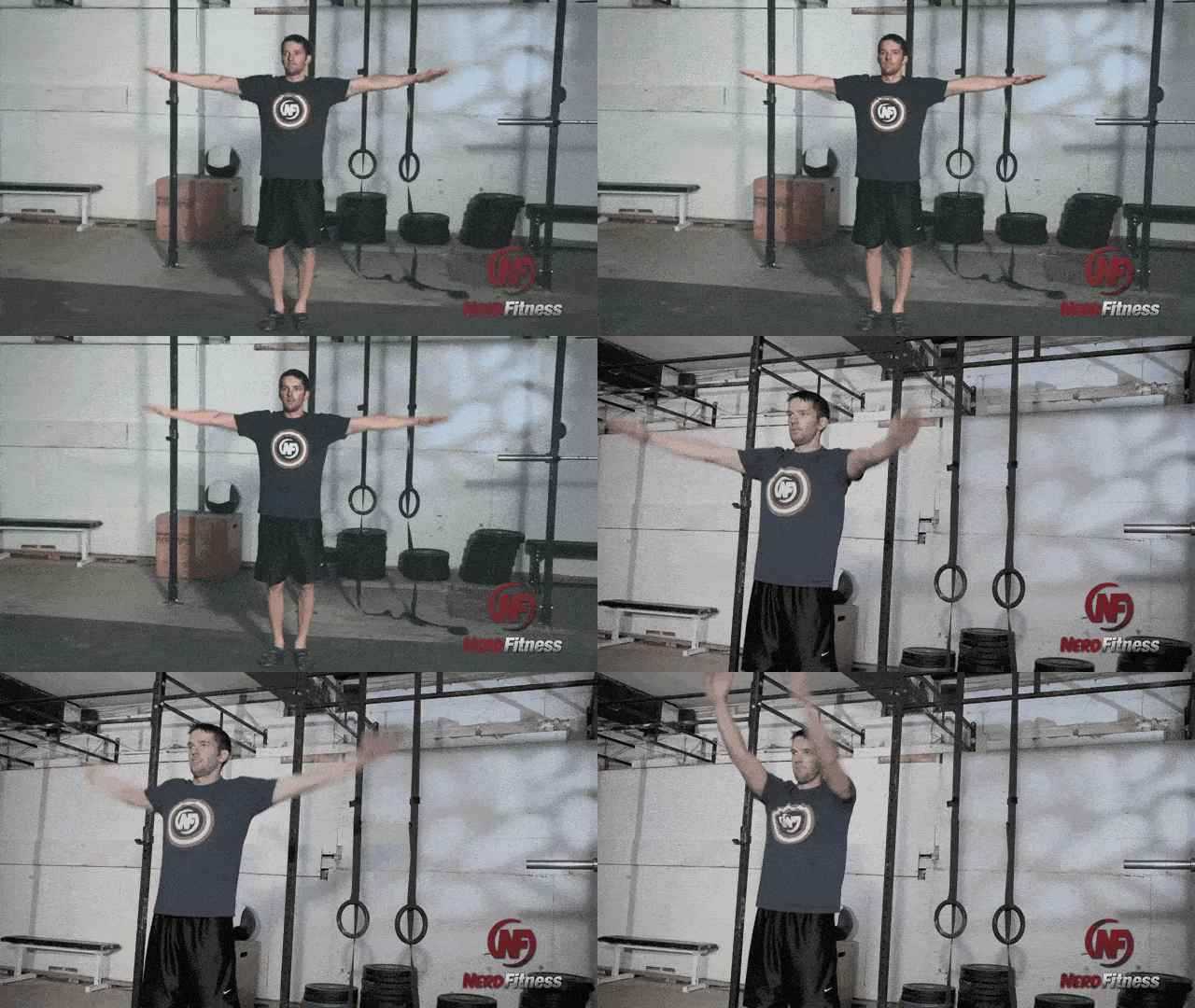
Warming up is important because we want your muscles engaged and loose before we jump right into our training. So warm-up for about 5 minutes before jumping into your workout.
As long as you include your warm-up, you now have what you need to start your training.
If you want more help building a functional fitness practice, I have a couple resources for you:
How to Build Your Own Workout Routine: our guide will walk you through building your own training practice. We’ll teach you what exercises you should do, how many sets and reps you should perform, and how often you should work out. It’ll help you start performing functional fitness exercises today.
Our 1-on-1 Online Coaching Program:if you want a more customized approach for your exact situation (kids, an old injury, you turn into a werewolf once a month), then check out NF Coaching. We’ll build you an exact plan of attack on how to become a functional fitness master.
Is CrossFit Functional Fitness?
CrossFit claims to support “functional movements” by using “safe, effective and efficient movements similar to those you use every day in life.”
So yeah, that does sound like what we’ve been talking about this whole time.
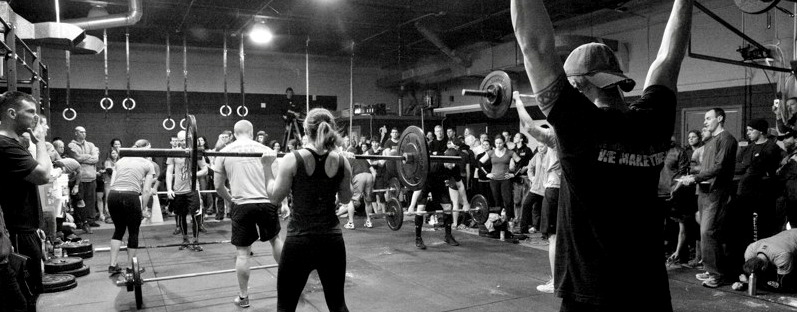
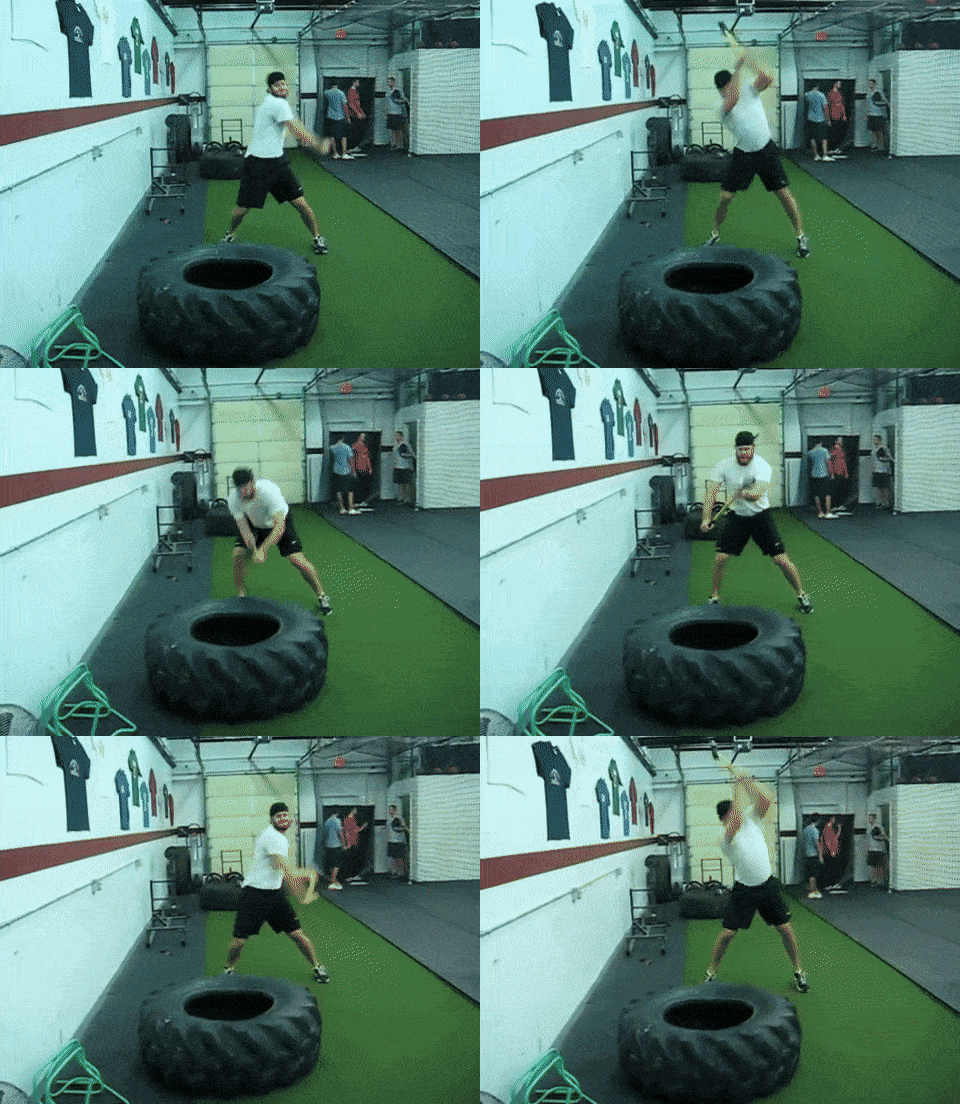
CrossFit does promote functional fitness.It’s why you’ll see people carrying sandbags, flipping tires, and wielding sledgehammers at CrossFit gyms:
But the intensity is another noteworthy aspect of CrossFit. Workouts are done in a group setting, with people cheering you on.
While this can be great for motivation, it can be less great when trying to move at your own pace and train with proper form.
Now, this is a generalization, and all CrossFit gyms will have their own characteristics and culture.
If you’re curious, it doesn’t hurt to walk through the door of your local CrossFit gym – just make sure you read our Crossfit Beginner Guide first. I’m sure they’d love to see you and show you around.
How to Build Functional Fitness (Next Steps)
We’ve covered a lot of different ways to increase and build functional fitness.
But our article barely scratched the surface:
Gymnastic rings would be a great way to promote functional fitness.
A yoga routine could also be considered as “functional.”
A hike would be a great way to prepare for traveling through natural landscapes.
Also, let’s not get close-minded here. Being strong will help you navigate the world in front of you, so in that sense, any form of strength training could be considered “functional fitness.”
So would parkour, which has you traveling through urban landscapes:
Just find something you like and get started!
The more you do, and the more variation you include (barbell training, yoga, and hiking), the more functional fit you’ll be.
Want a little help getting going? The perfect next step on how to begin your functional fitness journey?
No problemo!
Here are 3 options on how to continue with Nerd Fitness:
Option #1) If you want step-by-step guidance on how to get strong, lose weight, and level up your life, check out our killer 1-on-1 coaching program:
Option #2) If you want a daily prompt for functional fitness workouts, check out NF Journey. Our fun habit-building app helps you exercise more frequently, eat healthier, and level up your life (literally).
Try your free trial right here:
Option #3) Join the Rebellion!We need good people like you in our community, the Nerd Fitness Rebellion.
Sign-up below and receive our free guideStrength Training 101: Everything You Need to Know. It includes step-by-step instructions for theBest Functional Fitness Exercisescovered in today’s guide.
Download our comprehensive guideSTRENGTH TRAINING 101!
Everything you need to know about getting strong.
Workout routines for bodyweight AND weight training.
How to find the right gym and train properly in one.
Alright, enough from me. Your turn:
Do you practice functional fitness?
Do you have any specific exercises you cover?
Any tips or tricks for someone just getting started?
Let me know in the comments!
-Steve
PS:Strength training would be a great way to promote functional fitness. If you’re not sure where to start with your strength training journey, start here.