VISIT FOR THE BEST FITNESS AND HEALTH ADVICES

Blog Archive

Tuesday, August 9, 2022

Strength Training 101: How much weight should I be lifting?


Do you think he supplements with creatine?

“Do you even lift?”

After today’s guide, not only will you be able to say “YUP,” but you’ll also know exactly how MUCH you should be lifting!

We’ll help you get big and strong so you can fight back against your older brother when he tackles you in the hallway.

Get strong so you don't end up a victim.

As part of our Strength 101 series, we’re going to tell you exactly what you need to know about lifting weights and strength training:

If you find yourself with a billion other strength training questions as you build your own workout, or you’re overwhelmed at all of this and not sure how to get stronger…you’re in good company!

It can be scary enough to keep MOST people from starting, which is actually why we created our Coaching Program.

Your NF Coach will do an initial assessment to calculate exactly how much weight you should start lifting. They’ll then design a program that they’ll adjust regularly based on your progress and schedule.

Plus, with our app, your coach can do regular video form checks to make sure you safely make consistent progress. 

With that out of the way, let’s jump into the nitty-gritty of “How much weight should I lift?

Step #1: Why You Should Lift Your Own Bodyweight First
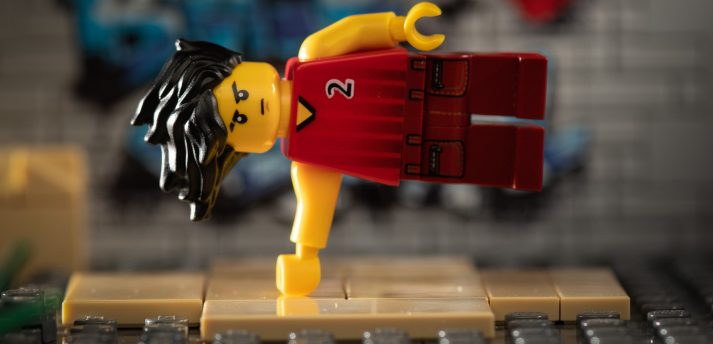
This LEGO lifts his own bodyweight no problem.

Stop! (Wait a minute…)

Before trying to figure out how much weight you can lift, let’s make sure you know how to do the movement, as flawlessly as possible, without any weight at all.

Why?

Because if you can’t do a movement correctly without weight, how can you expect to do it right WITH weight?

Think about it – if you can’t walk up a flight of stairs normally, would you expect to be able to walk up the flight of stairs carrying a sack of hammers?

No – you would only hurt yourself.[1]

Also, what are you even doing with a sack of hammers?

STEP ONE: learn each movement without any bars, dumbbells, or added weight.

Which might make you say:

Staci, how on earth do I do a deadlift or an overhead press without any weight? And I know I can do a bodyweight squat, but isn’t it completely different doing a barbell back squat?”

Easy – grab either a broomstick (be careful for splinters!), mop handle, or PVC pipe (I use a 1.25” PVC cut in half) and pretend it’s a barbell.

If you’re trying to mimic a dumbbell movement, either grab a short dowel, PVC, or just hold your hands in a fist as if you were holding on to something.

While it’s not the exact same as holding actual weight, it will allow you to practice getting into the correct positions.

Practice the movements in your own home without other people around you (so you’ll be less nervous).

Also, you can videotape yourself pretty easily. I’ve use my computer’s webcam, or my phone camera and a little tripod, then completed the movement with a broomstick.

Now, I can deadlift 455 pounds and I’m a Senior Coach for our Online Coaching Program:
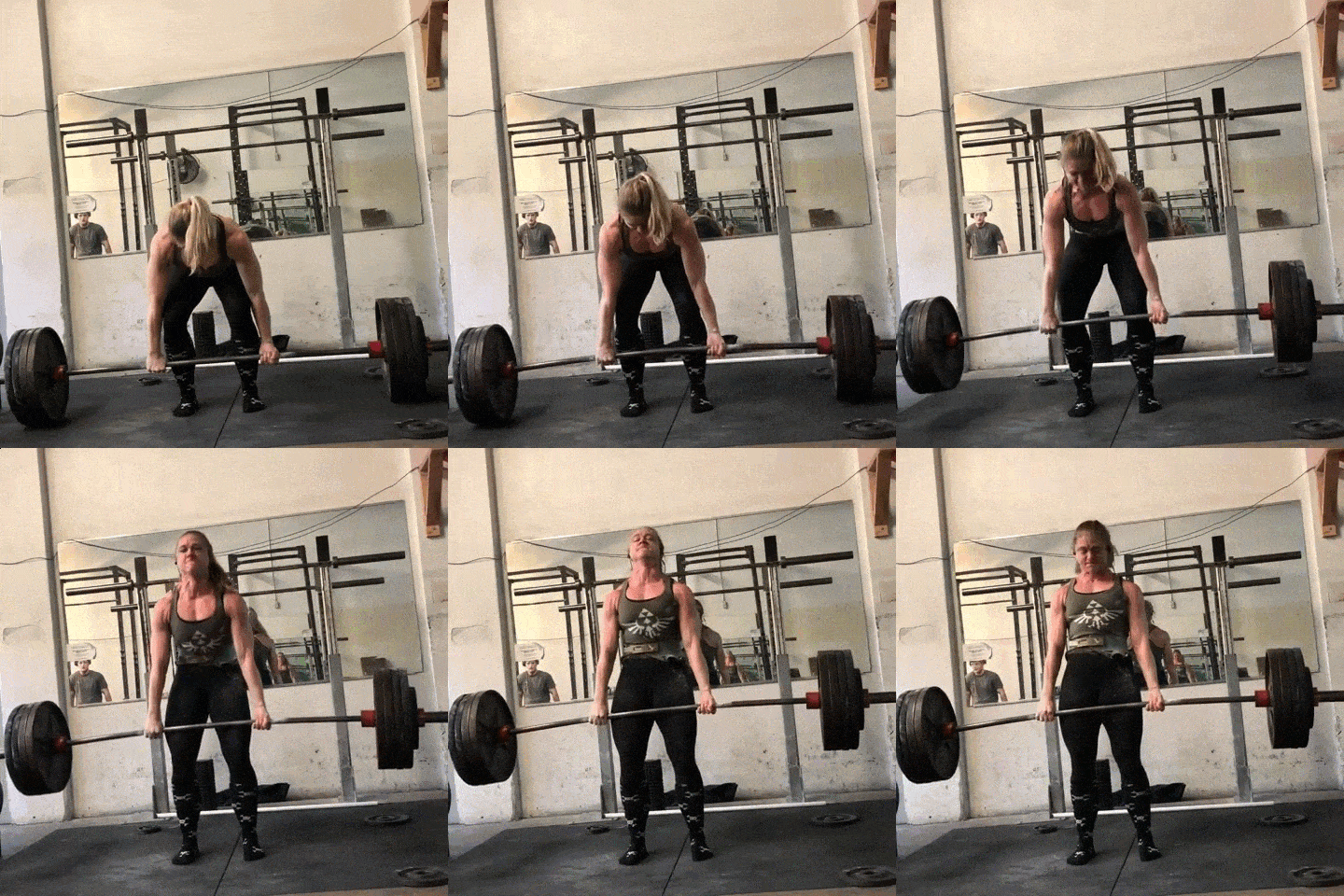
Staci showing you how to deadlift 455 pouds.

If you want a beginner strength training workout to follow:

If you are interested in nerding out about proper form for each barbell movement, start here:

We also HIGHLY recommend you pick up Starting Strength, widely considered to be the Bible of barbell training.

Once you feel good about your form, you can see if you can “pass the bar.”

(Guaranteed to be the nicest lawyer joke you’ll ever read on Nerd Fitness, by the way).

Now, if want a full Bodyweight Workout Program that you can follow along with at home that will help get you prepped to start strength training?

You can download the worksheet to follow along here when you sign up in the box below:

Step #2: How to Start Barbell Training with Lifting the Bar
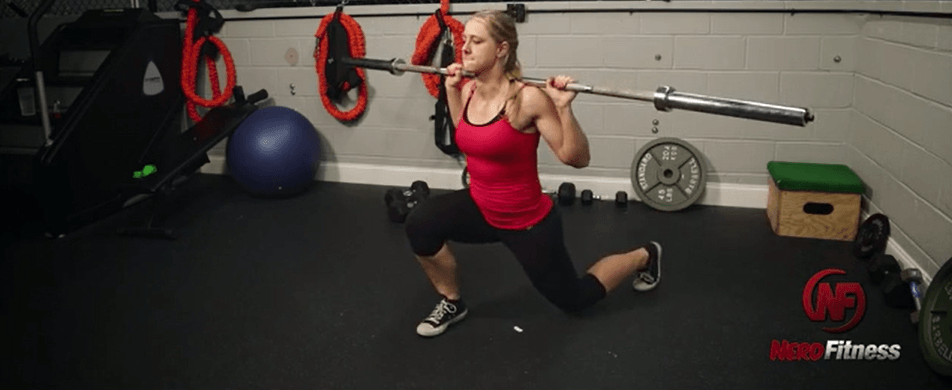
Coach Staci doing a barbell lunge, an advanced lunge variation.

Once you’re comfortable with each movement with a broomstick or PVC, then you can move to the bar.

Your first gym workout shouldn’t go any heavier than “just” the bar, which means the bar without any added weight.

How much does a barbell weigh?

  • A standard barbell weighs 45 lbs (20.4 kg).
  • A “women’s barbell” weighs 35 lbs (15.8 kg).

Now, don’t be discouraged if this seems really heavy – especially on upper body movements.

When I started out, I could not bench press or overhead press an empty barbell.
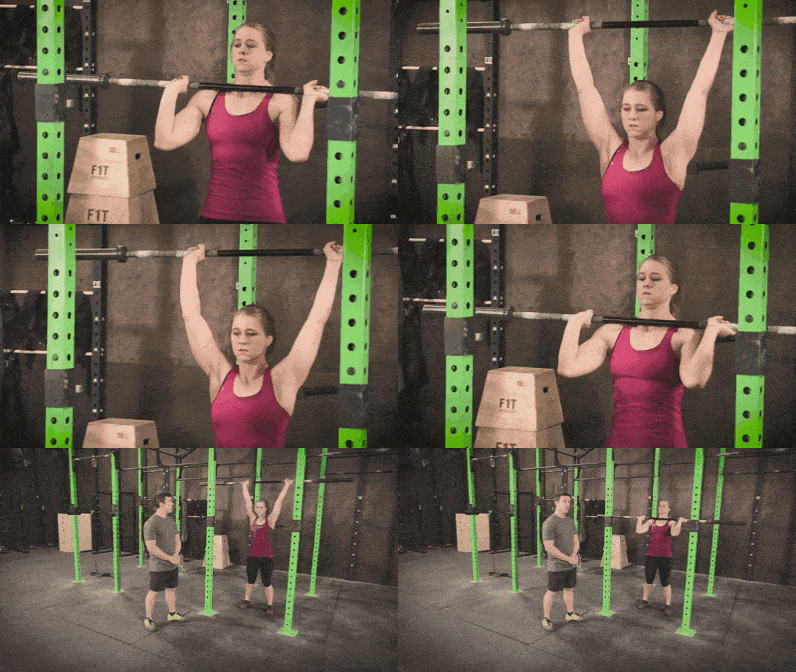
Here Staci is pressing just the bar, a could practice for warming up.

If the bar seems too heavy to start:

  1. See if the gym has a lighter barbell – some have a “women’s bar” or a “training bar” that usually weighs 30-35 lbs and 15 lbs, respectively. These are usually shorter, but that’s okay!
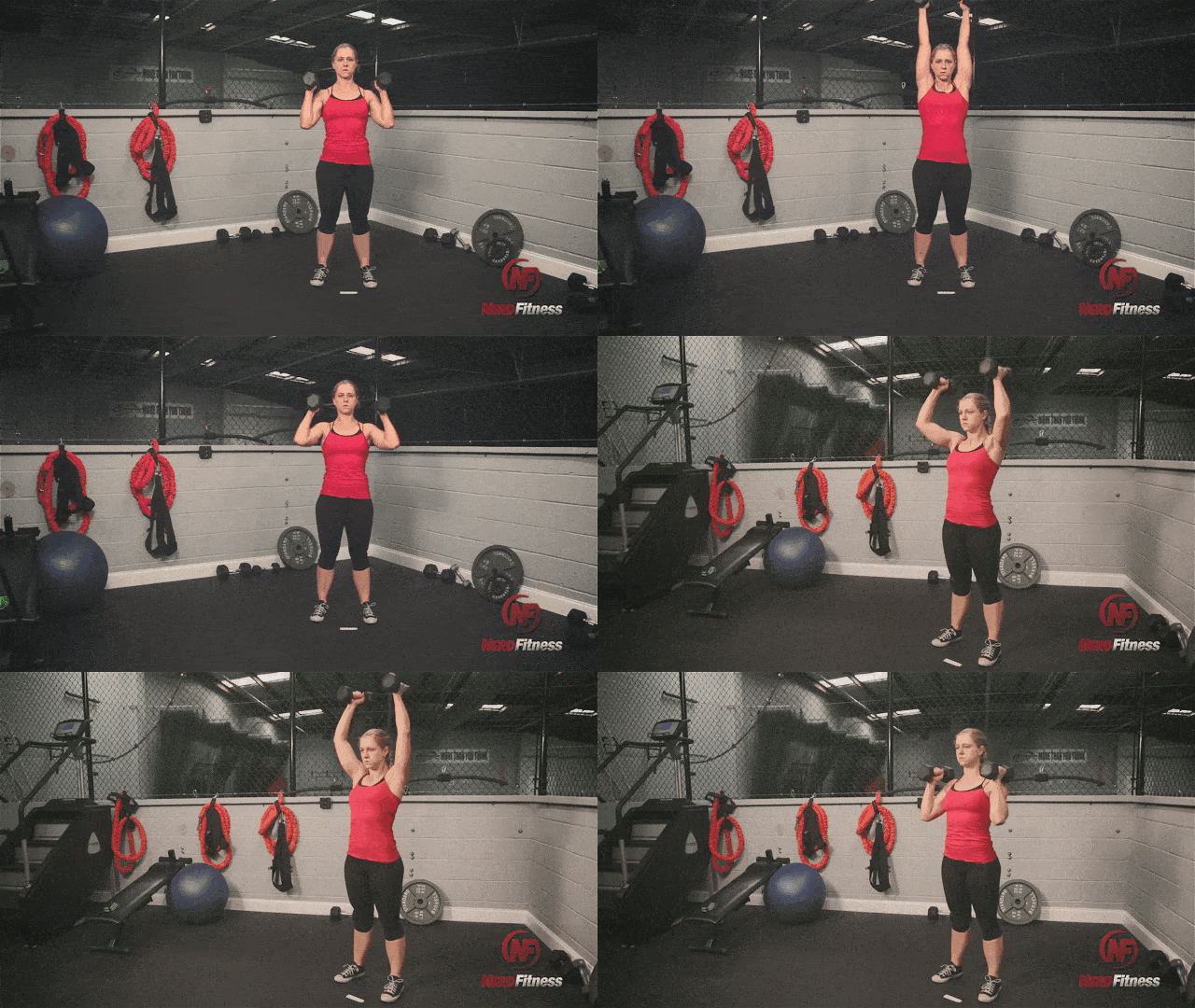
  2. Start out with dumbbells – while the movement is not the exact same, it allows you to build up the strength:In the neutral grip press, shown here, you have your hands together during the movement.
    This will help you handle a barbell down the road.
  3. Focus on bodyweight training (push-ups, pull-ups, lunges, squats) until you build the strength to handle the bar.

Now, on opposite ends of the spectrum, if the bar seems really light, I would STILL encourage you to complete your first workout with just the bar.

Why?

According to Mike Rebold from Hiram College, when you start lifting the barbell or dumbbells for the first time you will notice muscle deficiencies (i.e., one side that is weaker than the other). It can often come down to motor units, or the nuerons that help muscle fibers.[2]

Rebold explains:

When you first start strength training and lifting the barbell or dumbbells, your motor units don’t fire as quickly and smaller motor units that don’t generate a lot of force are recruited. As you continue working out and become more trained, your motor units fire more rapidly and your brain recruits larger motor units that can generate more force allowing you to lift heavier weights. This is why the progressive overload principle is important.

That means focus on getting each rep correct, and worry about adding weight next time.

Check your ego at the door!

I would rather see somebody in the gym lifting the bar with proper form than watch somebody with awful form lift 400 lbs.

That makes me…

Nick Offerman Cringes when people try to lift too much weight with bad form

Note: If you finish your first workout with the bar and still aren’t comfortable with the movements, it’s never a bad thing to do your next workout with just the bar again.

If you’re not comfortable with the movement and you start adding weight, not only will you be more likely to injure yourself because your body isn’t ready, but you’ll be more likely to hurt yourself because you won’t be confident under the bar.

Confidence is something that is very important as you start lifting heavier and heavier.

Mike Rebold supports this idea:

Self-esteem is confidence in one’s own abilities. Research has shown that in order to improve one’s self-esteem, or one’s confidence to exercise and lift heavier weights, you must first incorporate and master simple exercises.[3]

This is why we also recommend starting with the barbell or light dumbbells. Because as you master these simple exercises, that will result in your self-esteem being improved and then you will have more confidence to try new exercises and to lift heavier weights. 

Speaking of, if you’re planning on using dumbbells as your main lift (and not a barbell):

Start with 5-10 lb dumbbells to get a feel for things.
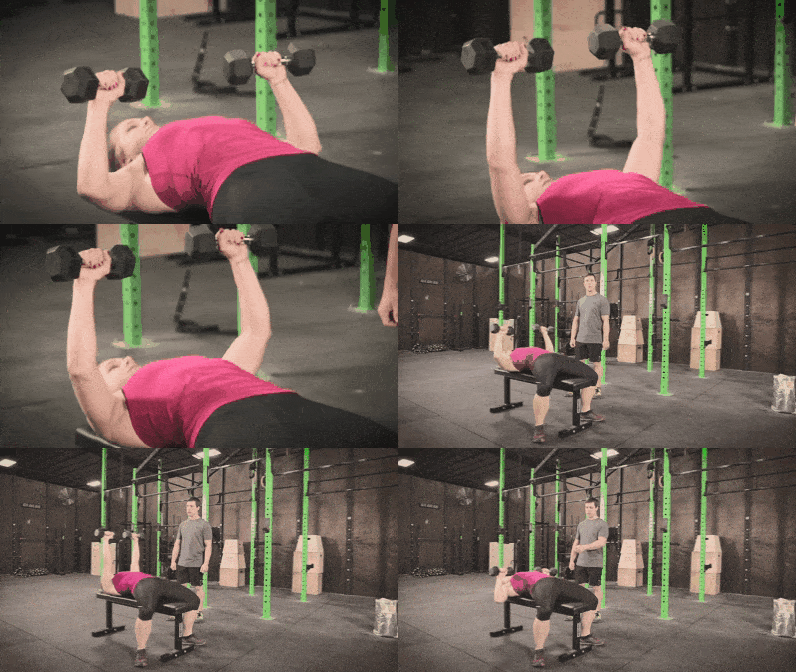
If you don't have a spotter, the dumbbell press can be a great chest alternative.

Whether you’re starting with dumbbells or ready to move onto a barbell, it’s important to do it properly!

We check the form of EVERY online coaching client on their workouts so they have the confidence that they’re doing these moves correctly!

We’ve also created a specific sequence of workout routines you can follow along with for free in our guide Strength Training 101: Everything You Need to Know.

Grab yours free when you sign up in the box below:

Step #3: How To Start Adding Weight to the Barbell
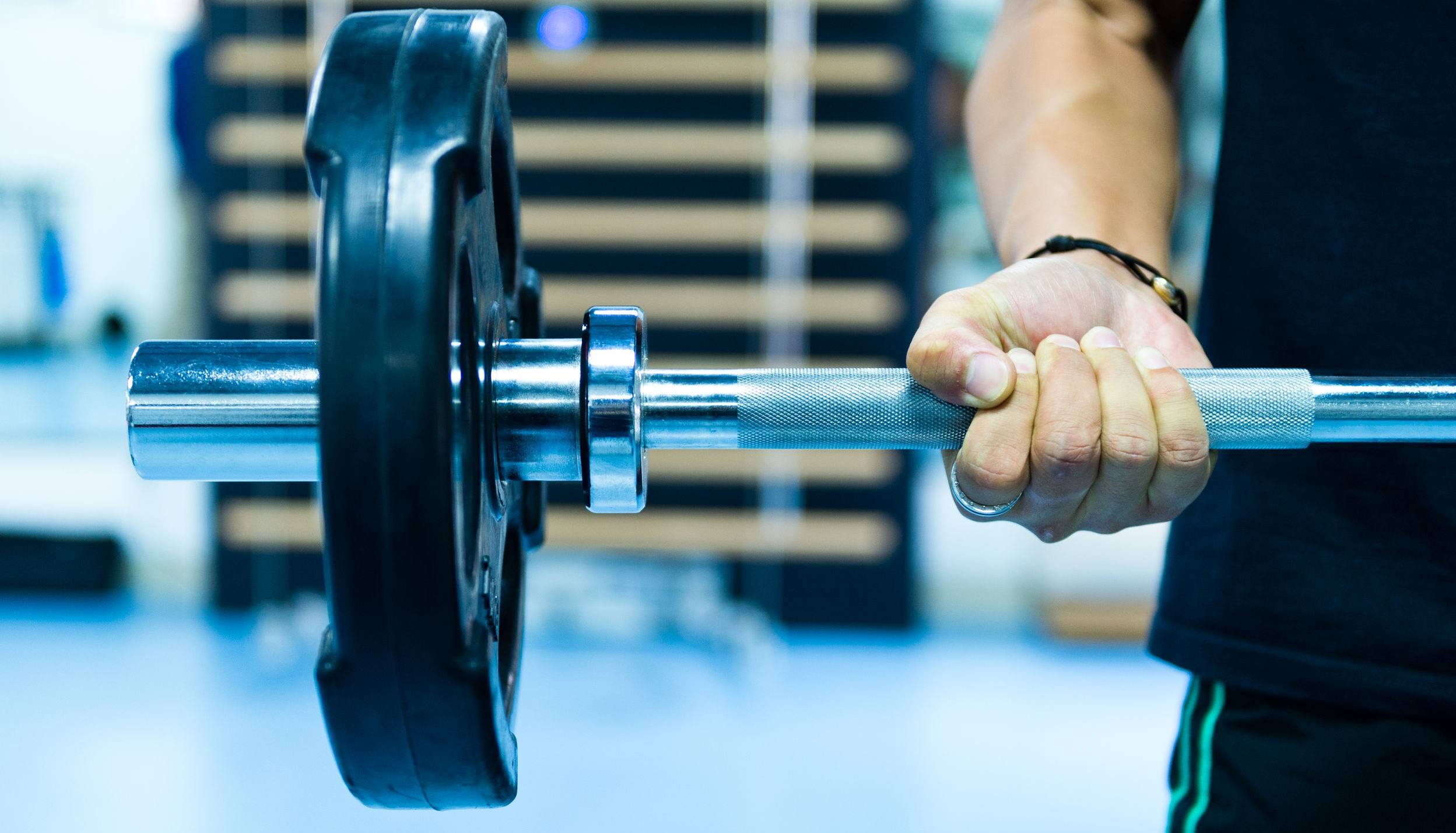
Man with weighted barbell at gym

If you’re looking to start on a beginner program, such as the workouts in our Beginner Strength Training Workouts or our 6 Beginner Gym Workouts, you need to start light!

A few common rep ranges for beginner programs are:[4]

  • 5 sets of 5 reps
  • 3 sets of 8 reps
  • 3 sets of 10 reps

Let’s do an example: your program has you doing 3 sets of 8 on a particular lift.

1) After a proper warm-up routine, start with the empty bar again, and complete the prescribed number of reps (for this, it would be 8).

“But I thought you said we could add weight this time?” you might be thinking.

You can – but no matter how heavy you are going, always start with just the bar to warm up for EACH exercise.
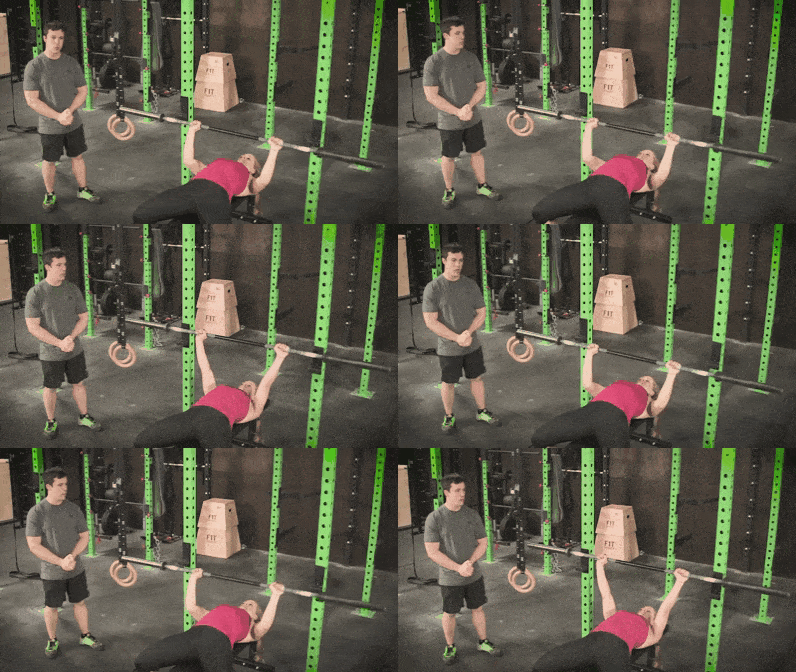
As Staci shows here, keep your arms vertical (as much as you can).

If you watch the best lifters in your gym, you will notice they all warm up with “just the bar” to start, often for multiple sets!

This helps get your body warm, primes your nervous systems and all of your muscles for that movement, and gets you ready to lift heavier weight.[5]

As a beginner to strength training, this is especially important to ingrain proper technique.

2) Add a small amount of weight to the bar. Depending on how heavy the bar felt, start by adding:

  • 2 – 5 pounds for upper body exercises.
  • 5 – 10 pounds for lower body exercises.

When in doubt, add the lower amount.[6] You can always add more! Do another set of 8-12 reps at this weight.

(Note: If you’re doing dumbbell training, instead of adding weight to the bar, increase the weight of the dumbbell. Start with 5 lb. dumbbells, then 10 lb. dumbbells, for example)

3) If you were able to complete those reps both without losing form and without the speed of the bar slowing, add more weight to the bar.

Base the amount of new weight off how it felt – if the last set felt really light, add 5’s, if it felt heavy, add 2.5’s’s.

Here’s a good guideline from NSCA :[7]

If a person can do two or more reps than the goal in an exercise on two consecutive training sessions, then they should increase the load.

4) Continue to do this until your form starts to break down or the speed of the lift gets slower on any of your reps.[8]

The weight you used right before your form started to break down is your starting weight on which you will base all future workouts!

5) If it is a lower number than you expect, that’s great actually!

Don’t try to be a hero your first workout, it is better to start out too light than too heavy.[9]

Remember – we’re trying to get solid, productive sets in, not find our max, so we want all of the reps to be fast and with as perfect form as our body allows.

Since you’re testing out heavier weights for the first time, never be afraid to have a spotter, or to use pins to ensure your safety!

If you don’t want to figure ANY of this out on your own, and you just want somebody to tell you exactly how much to lift, how many sets, reps, etc., I hear you.

I’ve had a lifting coach for years and it’s the best investment I make each month!

Step #4: How Do I Know When to Add More Weight?
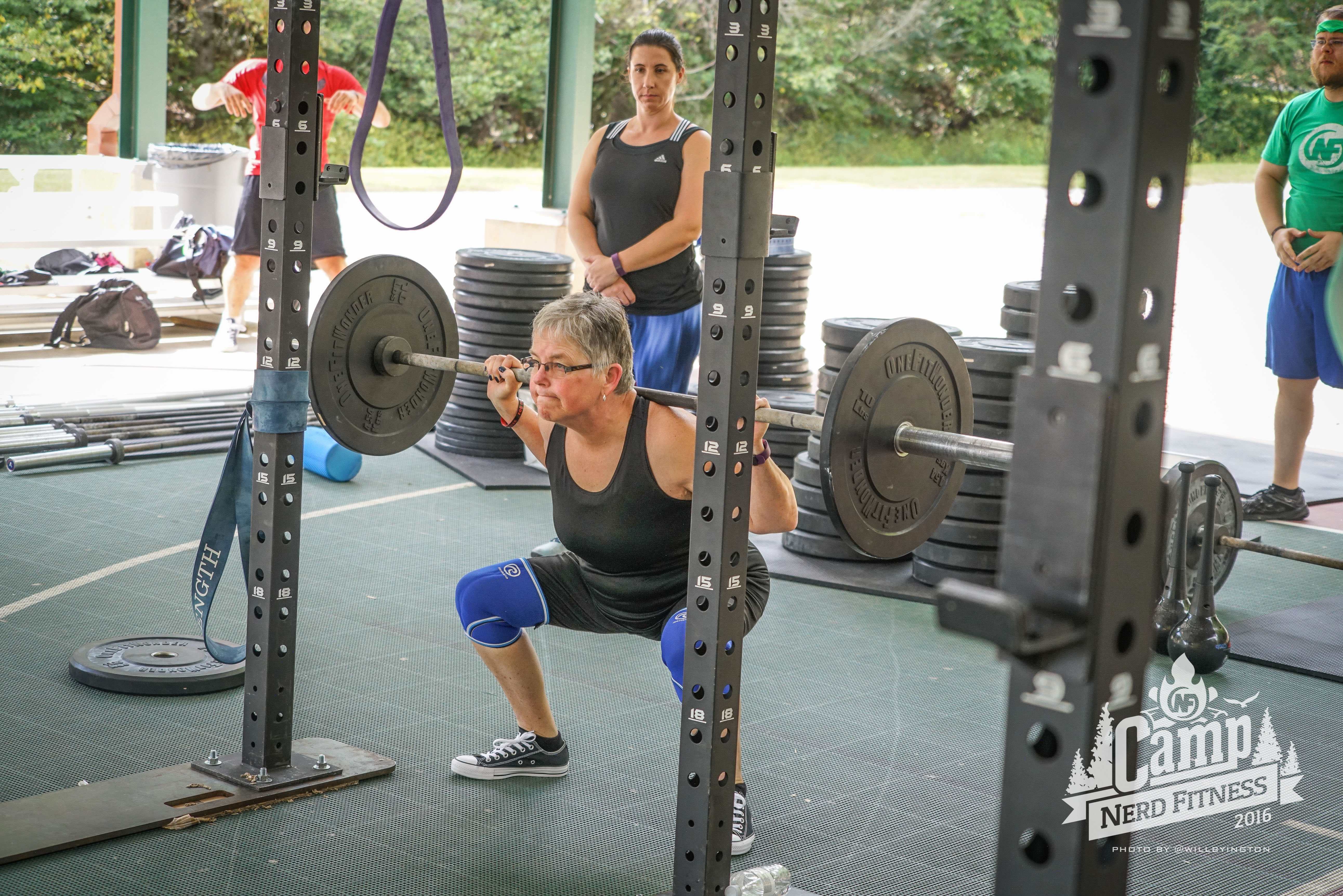
Joni doing squats at Camp Nerd Fitness, a great time for all involved.

Once you’ve found your starting weight, you’ll want to start using something called “progressive overload.”

This sounds a lot fancier than it really is.

As Coach Jim explains above, progressive overload means gradually increasing the stress put on your body during training.[10]

In other words, we need to increase something, regularly. Usually, this means the amount of weight we lift.

And for beginners, that can often happen after every workout.

During every workout, our muscles are torn and broken down. Then after every workout – for the next 24-48+ hours, our body repairs itself. If you’re getting proper sleep[11]  and nutrition,[12] it heals back stronger than it was before.
the "crushed it" gif from Pitch Perfect

Conversely, if you do 5 sets of 5 squats at 100 lbs every single workout for months, are you getting stronger?

Most likely not.

Your body is actually just getting more efficient at lifting 5×5 at 100 lbs, burning fewer calories, and using less energy to make that movement happen.

So, how much weight do you add when you’re ready to increase your workouts?

That depends on how difficult the set was last time.

This is where great note-taking comes in (I’m a huge fan of a simple notebook, or Evernote docs on my phone).

Be sure to document each workout with:

Did you go to failure on your last set?

Did your form break down on any of the reps?

You’ll end up in one of two positions:

PATH A: You failed to complete any of your reps or your form started to break down. Do the same weight again next workout, and focus on boosting your form and technique of each rep.

Remember, if you are doing the same workout as last time, but each rep is more solid and with better form than before, you’re still doing better than you were the last workout.

In other words, you’re still leveling up.

These characters know how much to lift, so they can get strong and defeat their enermies.

You don’t necessarily have to go up in weight every workout to see gains.

You could also focus on:

  • Less rest between sets.
  • More control and better form.
  • More repetitions.

All of which means you are getting stronger.

PATH B: You were able to get through all of your sets with great form, and without the bar slowing down. Congrats! Consider adding more next week. It’s not unheard of for beginners to add 10-20lbs a week to some lifts (especially squats and deadlifts), though don’t get discouraged if you’re only adding 2.5 or 5![13]

The BEST THING YOU CAN DO: slowly add the smallest amount of weight possible, and progress consistently. This is much preferred to progressing quickly and then hitting a plateau.

Each week, as you add a little bit of weight, you are building strength, confidence, and momentum.

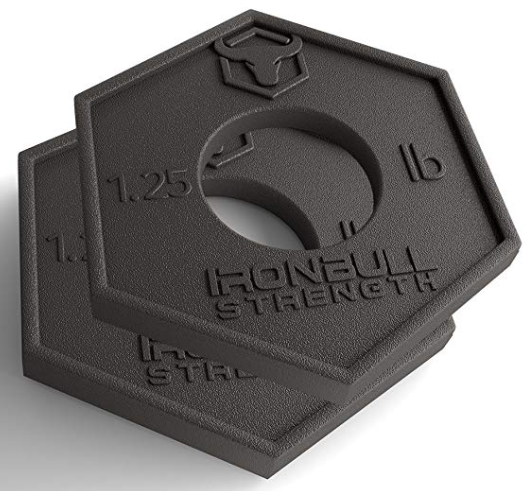
Note: For some lifts, especially the overhead press or bench press, adding just 5 lbs may be too much to go up per workout.

I personally have a set of 1.25lb plates that I bring with me to the gym so that I can still progress regularly.
Remember: You’re going to have shitty days at the gym. There will be days when you can’t add any weight, or you feel like you have to take a step backward.

So many things affect how your lifts are going to feel:

  • A baby crying all night – causing sleep deprivation and resulting in systemic inflammation and decreased GH release = poor recovery
  • Lots of stress at the office.
  • To drinking too much at the big game – causing stomach discomfort and bloating.
  • Just not eating enough for your goalsnot consuming enough carbohydrates and fats to support energy demands or not consuming enough protein to facilitate muscle protein synthesis and recovery.[14]

It’s important to listen to your body over listening to some number telling you what you should be lifting.

You want to make progress every time you walk into the gym, and that means having a specific plan to follow.

Don’t have a workout to follow? Tired of not getting results despite all the effort?

This is what we do for a living! Help people like you get out of ruts and finally get them the results they want.

After doing my own workout programming for 5 years, I hired a coach and it changed my life. Let us help you hit your goals too.

Step #5: How Do I Calculate My 1 Rep MAx?
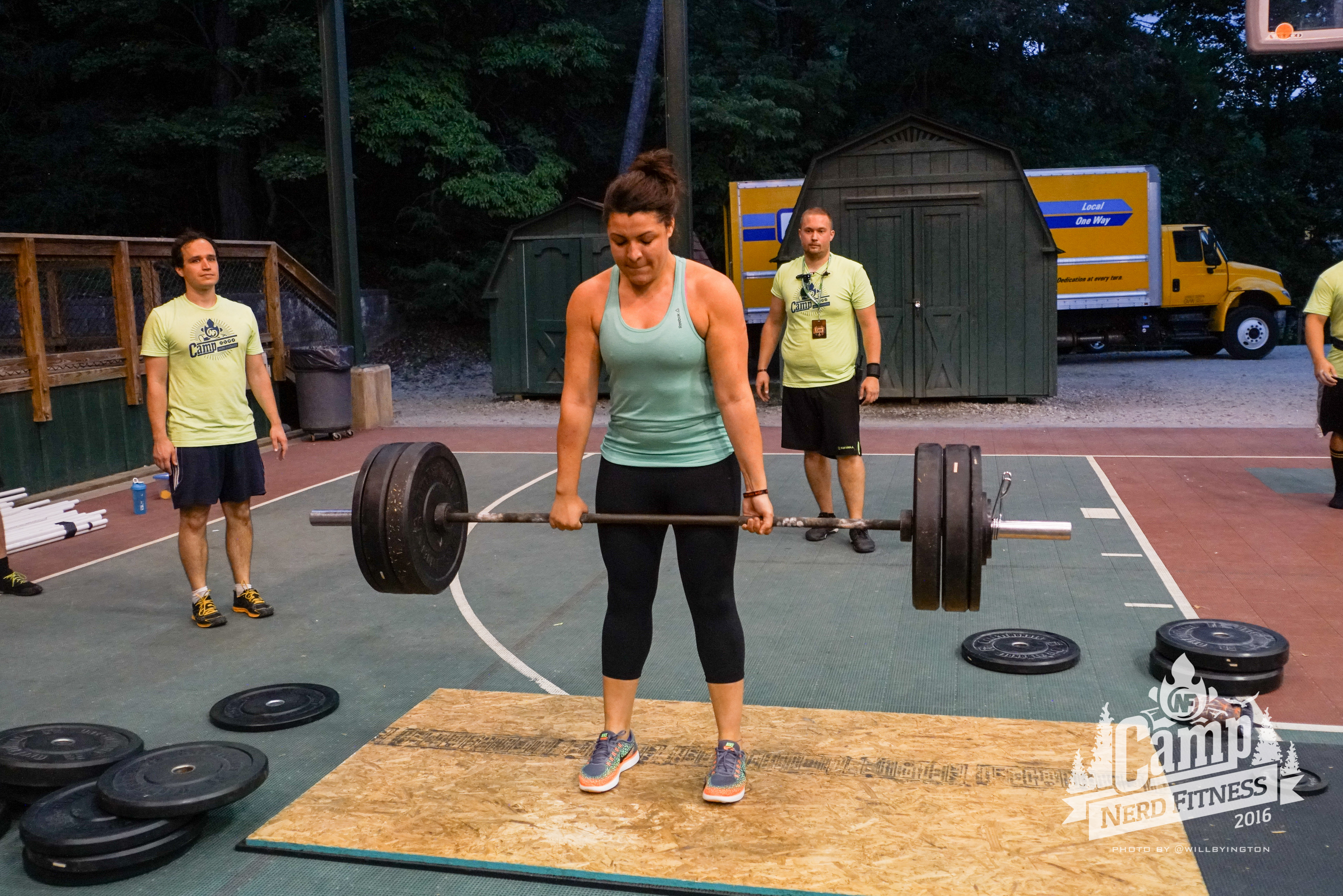
Deadlifts make a great addition when you build your own workout.

It’s really fun to find the maximum amount of weight you can do for one repetition (one rep max) every once in a while.

However, as a beginner who is just starting strength training, it’s better that you start with getting the movement right and adding weight slowly before trying to find a one-rep max.

I would suggest you follow a program for at least six weeks before even attempting “a heavy single”.

Why?

Even if your form is as good as you can get it now, you will get far better, learning how to make tweaks and corrections as you go.

When you first start out, you’re still getting everything down, so your one-rep max won’t be a “true” one-rep max.

Plus, when you train, you’re training everything in your body.

Some things, like muscles and bones, get stronger, while others, like your nervous system, get more efficient.

The more you do something, the better you get at it. And in the beginning you’ll get better very quickly.

It’s unwise to attempt a 1 repetition maximum when you’re learning the movement.

This is one of the classic blunders! The most famous of which is “never get involved in a land war in Asia.”

Vizzini from Princess Bride knows you shouldn't do 1 rep maxes as a beginner

But only slightly less well-known is this: “Never attempt a 1-rep max as a beginner.”

Even if you can do it with proper form with lighter weights, as soon as the weight gets close to your 1 rep max your form will start to break down, and you are more likely to hurt yourself.

Some words of caution here from Mike Rebold, an expert in exercise physiology:

During 1RM testing, fatigue will happen! One-repetition maximum testing has been found to overload the neuromuscular system resulting in lower motor unit activation, less force production, and ultimately more fatigue. This level of fatigue experienced by the lifter can be enough to result in injury, especially if the lifter is a novice (i.e., beginner).

When your form starts to break down, you need to have the experience behind you to finish (or bail out of) the lift safely.

If you watch any weightlifting or powerlifting competition, sometimes the lifts are not the prettiest lifts you’ve ever seen.

However, the lifters are experienced enough to handle this, and know how to bail if something goes wrong.

As a beginner, you are not.

Team NF’s Steve worked with a coach for 4+ years to finally get his 420 lb. deadlift:
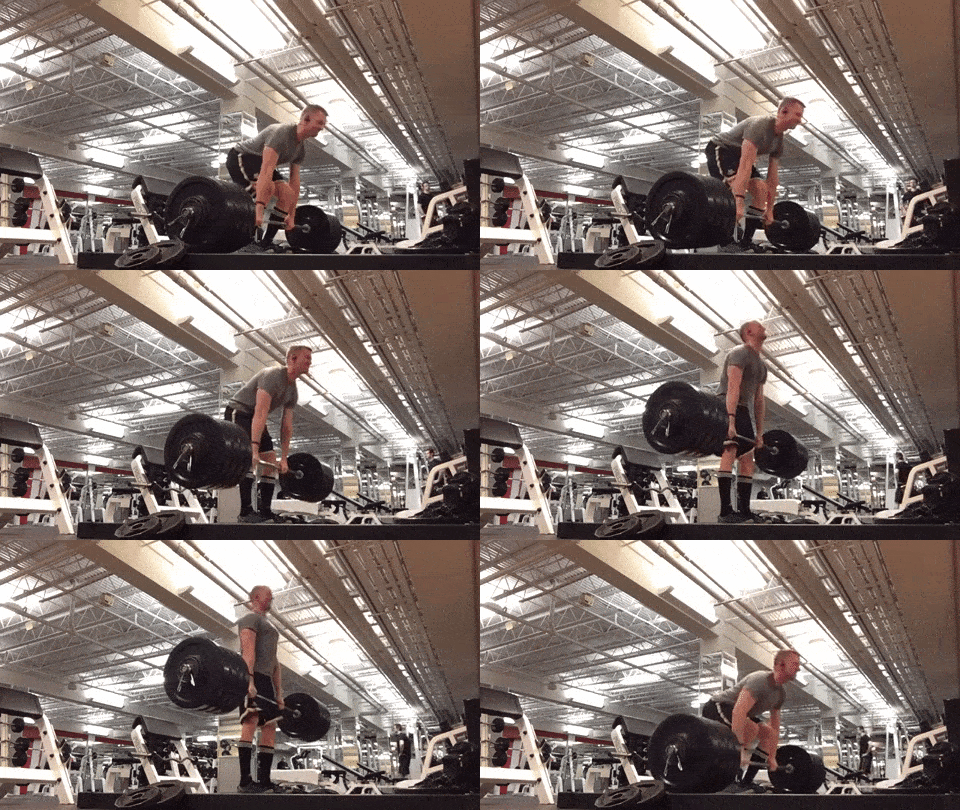
Rebel Leader Steve showing how to do a 420 lb deadlift at the gym.

If you want to work with a coach that can help you perfect your form and train to hit 1-rep maxes too, we’re here for ya! We’re slightly biased, but having a coach in your corner is an absolute game-changer.

Step #6: what is a respectable amount to be lifting?
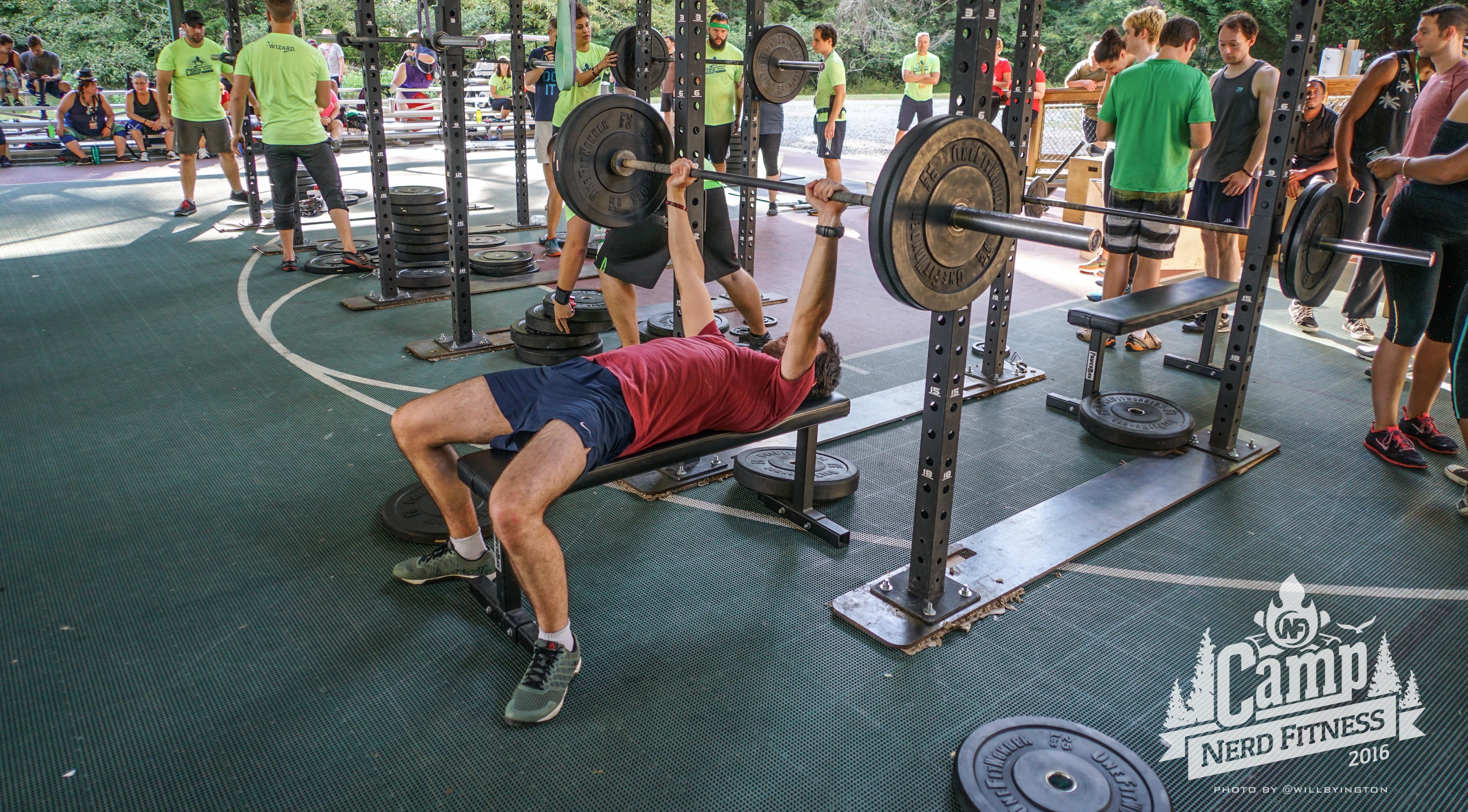
Camp was great, for lots of reasons, but mainly because we benched.

The simple answer? The weight that’s right for you.

You are not competing against the guy next to you; you’re competing against the YOU from last week (like racing your ghost in Mario Kart).
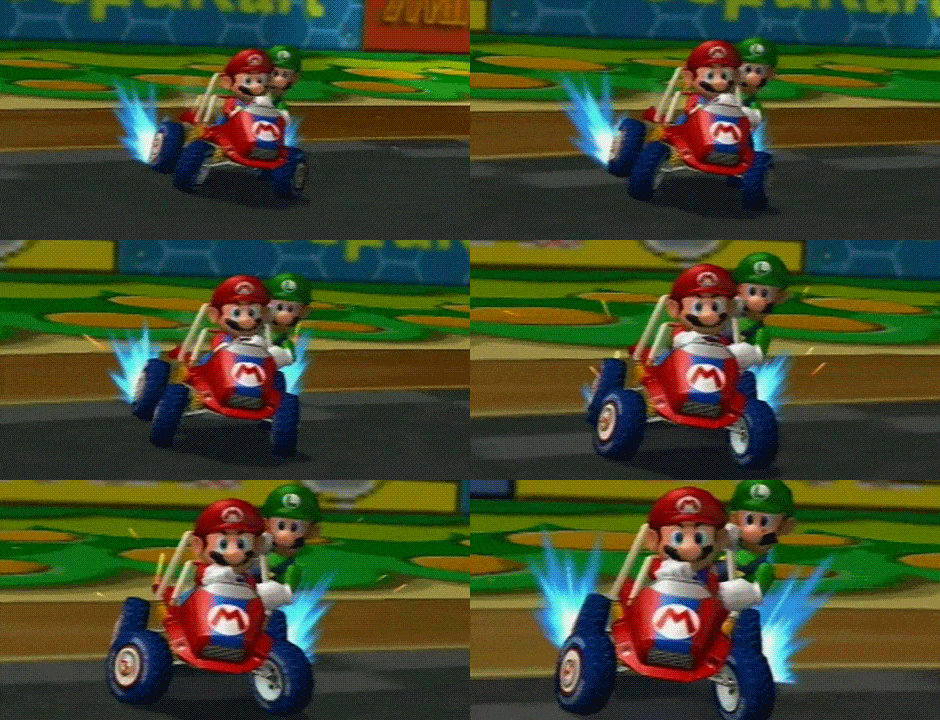
Lifting at the gym can be like racing against yourself in Mario Kart.

As far as what you can strive for, there’s no easy calculation or formula.

While some people have put out strength standards, it’s truly up to your body, your body type, your background as an athlete, your genetics, and many other factors.[15]

You should be lifting the amount that’s right for you today. In your next workout, you should be trying to lift more (even if you can’t do more weight, try doing one more rep, or with less rest between sets) than you did last time.

That’s it.

As a part of this journey, I want you to completely forget about strength standards and forget about everyone around you.

I don’t care if the guy (or girl) next to you is squatting 500 lbs for sets of 10.

If you’re squatting 50 lbs, and that’s the weight that is challenging for you, then that’s the weight you should be lifting.

These are the BIG mistakes you need to avoid:

Never EVER try to outlift the person next to you.

Never EVER adjust the weight to impress someone.

No one’s judging you based on the weight on the bar, and if they are, they aren’t worth your time or energy.

To recap “How much should I lift?”:

  1. The strongest lifters do a dynamic warm-up first.
  2. The strongest lifters warm up with “just” the bar.
  3. The strongest lifters focus on getting their reps in, and aren’t ashamed that they’re lifting less than the guy next to them.
  4. The strongest lifters take time to get things right, even if that means lifting less weight than they know they “can” do.
  5. The strongest lifters started off doing a beginners program just like you.

So remember – start slow, add weight slowly, and stay conservative.

It’s amazing how much even adding just 5 lbs (2kg) a week adds up to! It’s far better to play it safe in the beginning than to find yourself injured and frustrated before you have a chance to progress.

Do You Even Lift?
Hopefully, this article EXCITED you about strength training, and you now know exactly how much to lift. 

For people looking for the next step, we’ve got 3 options you want to check out:

1) If you want to follow a strength training program that’s specific to your goals, check out our popular Online Coaching Program.

You’ll work with a certified NF instructor who will get to know you better than you know yourself, check your form, and create a workout strategy that will evolve alongside you.

2) If you want a daily prompt for doing workouts at the gym (or at home), check out NF Journey. Our fun habit-building app helps you exercise more frequently, eat healthier, and level up your life (literally).

Try your free trial right here:
3) Join the Rebellion! Join hundreds of thousands of people like you. It’s free to join, and we have a dozen free guides for you when you sign up in the yellow box below.

Let’s get these questions answered so you can get back to getting stronger!

What are your other big questions about lifting weight and how much you should be lifting?

-Staci

PS: Be sure to check out the rest of Strength Training 101 series:

###

photo source: Strongman, Four Bricks Tall: Scenes from an empty lot in Brooklyn, vol 1., hxdbzxy © 123RF.com, Lego Lifting.

The post Strength Training 101: How much weight should I be lifting? first appeared on Nerd Fitness.


from Nerd Fitness https://ift.tt/cOSewl8
Ways to Boost Your Metabolism After 40


Sharing ways to boost your metabolism for my friends who are over 40, but these tips can absolutely help anyone who is trying to improve their metabolism.

Hi friends! How’s the day going so far? The kids are back in school this week (I can’t even believe it) so we’re finding our way into the new school/soccer/dance routine. Our internal clocks are still ticking at Hawaii time (3 hours earlier than it is here in AZ) so that first 6:30 wakeup is going to be REAL lol.

For today’s post, I’m sharing some ways to help boost your metabolism, especially if you’re over 40 (even in your 30s) and notice that results have slowed. Metabolism is the body’s natural process of turning food into energy and your metabolic rate can determine how quickly your body can burn calories. It also affects your body’s ability to lose or gain weight, and is affected by a variety of factors including a person’s age, body composition, hormones, thyroid function, sleep, and so much more. I’ll often hear friends and clients note that metabolism declines as you age, but there are ways you can boost (and repair) your metabolism after you hit the age of 40.

Friendly note here that if you suspect that your metabolism isn’t functioning the way it should (especially if you’re hitting all of the basics like fueling, sleep, hydration, stress management, and fitness), reach out to your health care provider for a personalized action plan. A functional practitioner will help you determine root cause and help you rebalance your body. This is not medical advice and intended for informational purposes only.

10 Ways To Boost Your Metabolism After 40

Strength train

Muscle is the best insurance policy for your metabolism. Muscle is *hungrier* than fat and since it has a higher caloric demand, it burns more calories than fat does at rest. Strength training can also help to protect bone density as we age, and from a functional standpoint, so many strength training exercises support our everyday movements as we age. If you don’t currently strength train, meet with a local certified personal trainer to develop a personalized strength routine. If you need help, I have a few 1:1 online fitness coaching spots open for fall! I’m happy to help ya accomplish your fitness and health goals. My application link is here.

Eat MORE

It may sound counterintuitive, but pretty much all of my nutrition clients need to eat more and increase their metabolic baseline following longterm dieting and deprivation. (Years ago, I was in this situation myself!) Each time you diet down to a certain weight, you may notice you regain the weight and that the results don’t last. Afterwards, you might even have to take more extreme measures to get the same results because the metabolic baseline has been decreased. The body wants to achieve homeostasis, so each time you cut your calories, it will decrease your metabolism to encourage your body to hold onto what it can. As your weight goes down, your calorie burn per day also goes down! If you know that you’re not currently eating enough to support your needs, try adding an additional 100 calories per day for a few weeks.

Work on stress management

Stress affects so many processes in the body, including immune system function, insulin sensitivity, fitness performance, mood, and hunger levels. Take steps to reduce your everyday stress, including taking time for yourself, meditation, walks in the sunshine, cultivating positive relationships, and hobbies! When we’re stressed, the body enters the sympathetic or flight or fight state. This is when we can do the bare minimum to survive, and fat burning is LOW on the priority ladder. When you can relax and bring your body into the parasympathetic or rest and digest state, this is our body has the capacity to do other things, like rebuild muscle and burn fat.

Sleep like it’s your job

ONE night of poor sleep can decrease our insulin sensitivity. Sleep is when the body repairs itself and if you have serious fat loss or body composition goals, make sleep high on your list. I have tons of tips for better sleep in this post!

Increase your daily steps and everyday activity

When women in their 40s notice that they’re gaining weight without making any changes to their nutrition or fitness habits, it’s sometimes because their daily activity has decreased. They’re sitting more and moving less. An easy way to combat this is to add at least one walk into your day. It’s also a great way to reset your mood and get in some sunshine and fresh air. Walking also has meditative properties. Find little ways to move more throughout the day and increase your NEAT (our non-exercise activity thermogenesis).

Add more fiber in your diet

Focus on fiber intake to help improve digestion, increase your micronutrients, and also help the body process hormones correctly. If we store too much estrogen in the body, this can lead to weight gain. Making sure that your digestion is on par is a great way for the body to remove excess estrogen.

Focus on water quality and reducing everyday toxins

As our body works to process the many toxins in our environment, this can lead to inflammation and affect our metabolism. Obviously, we can’t control every single toxin that we encounter in our lives, but I’m a big believer in controlling the variables we can control. A couple of simple ways: pay attention to ingredients in household products, beauty and skincare. Get a water filter for your house, or a countertop Berkey. (WE LOVE OUR BERKEY.) Pop filters on your shower head and bathtub.

Avoid drinking your calories

It’s easy to forget how many excess calories we can consume in our beverages, especially if you love sweetened coffee drinks, juices, kombucha, cocktails, and smoothies. While a little here and there isn’t a big deal, these things can add up if you’re trying to focus on improving your metabolic function. Focus on water, adrenal cocktails, and zero-calorie drinks (like herbal tea and coffee). Skip the energy drinks and soda.

Eat a variety of protein and track your protein intake

If you notice a decrease in lean muscle definition, pay attention to your protein intake. Aim for at least 4 palm-sized servings of protein per day (more or less depending on your age or goals). I like to hit at least 100g of protein per day. Vary the types of protein in your diet to diversify the nutrients, and don’t forget about fattier cuts of meat (chicken thighs, steak), eggs, fish, shellfish, or anything you particularly enjoy. We need enough protein to build and retain muscle, especially as we age.

Find a health-minded community or tribe in your area

When you feel like you’re losing your mojo, surround yourself with people who have similar goals as you. Community can make an enormous difference as we work towards our goals. Find a local gym, mom group, hiking group, running group, etc. that you can connect with for in-person support. The online world can give you lots of support, too, including this little spot on the internet right here. 🙂

So tell me, friends: how do you get more everyday activity into your life? I LOVE my daily walks with Maisey, and gardening outside is a great way for me to get some sun and extra movement. Laundry is my least favorite everyday activity, but definitely increases my step count 😉

xoxo

Gina

The post Ways to Boost Your Metabolism After 40 appeared first on The Fitnessista.


from The Fitnessista https://ift.tt/zgbuhYI

Monday, August 8, 2022

Our Waikiki Recap (+ what to do and where to stay)


Hi friends! I’ve missed you! This is the longest I’ve been away from blogging for a long time, but I’m back now and excited to chat with you. I hope you had a wonderful weekend and that those of my parent friends with kids heading back to school have an amazing week.

We’re back from Hawaii and I have so much to say. It was our first time in Oahu, and it was seriously the most magical, beautiful, relaxing trip. I feel so refreshed and my heart is very happy after a week away. It’s been a whirlwind couple of months (Vegas, staycation, dance competitions, family in town, and then our entire family got sick) and this was the perfect way to cap off an awesome summer.

I’m excited to share a recap from our trip, some of the adventures we enjoyed, and some of the food we ate!

The FOOD. It was everything.. and I’m still having malasada withdrawals….

(These are the malasadas from Duke’s Market, which we had a few times. They’re made from rice flour, slightly crunchy on the outside, soft and chewy on the inside. The purple ube one was my fave, followed by the haupia filled one. Haupia is a gorgeous coconut custard. #2 on the list of best donuts in my life)

One of the best parts is that my mom was able to join us! The Pilot had to work some of the days we were there, so we asked if we could fly her out to join us. We were all so pumped that she was able to make it and we had the best time with her there.

Our Waikiki Recap (+ what to do and where to stay)

Waikiki adventures:

Beach days

I knew that the kids would be happier just going to the beach than planning excursions with lots of travel time, and that was exactly correct. Also, for many of the snorkeling or sea turtle adventures, you need to be 10, so P isn’t quite there yet. The kids were perfectly content swimming in the waves and building sand castles for hours, so that’s exactly what we did. A huge advantage is that we were still on Tucson time, so we woke up super early the first few days and could rent two lounge chairs and an umbrella in the front. (For the day, it’s around $88.) I’d recommend getting in line by 7:30 or 8am for a good spot.

Paradise Cove Luau

The luau was incredible. I was wondering how the kids would hang since it’s a longer event (you get there around 4:30 and leave around 9pm) and they were captivated the entire time. This particular luau had lots of activities in various spots around the property, including canoe rides, spear throwing, photos with birds, and crafts. They had the Inu ceremony (where the unveiled the pig, which had been cooking underground), multiple artists and dancers, and then the full show, with hula dancers, singing, and fire dancing. The girls’ jaws were on the floor the entire time, and they’ve been taking about it all weekend.

As far as the food goes, I would give it a solid C-. When I read the reviews online, the food reviews were iffy, but this was one of the only luaus close by that wasn’t fully booked, so I went for it. It was ok; just mass produced and didn’t feel as special as the other meals we enjoyed in Honolulu. (Like the frozen veggies that were simply reheated.) The fish and chicken were great, they had a couple of salads (pasta salad broccoli and crab salad, three bean salad), rice, rolls, haupia (my fave), fruit, and cupcakes. The girls loved it and all of the adults agreed that it was ok. The drinks were… not good. Save your money on the drinks haha.

(Retro Hawaiian dress!)

All in all, the entertainment made it totally worth it. We loved the show and the entire experience. If you go, I recommend the Orchid package. The seating is right in the middle (so you can see well) and it’s fun getting a lei and drink when you arrive. (P was like, “That place was so fancy. They gave me a punch when we got there and I loved it.”)

Hiking Diamond Head Crater

This was one of my highlights of the trip! I feel like hiking is the best way to explore a new place, and this particular hike had excellent reviews. It’s about 1.8 miles out and back, with sweeping views of Honolulu, the ocean, and you’re on top of a crater!

There’s also a cave, which was a huge hit with the girls. The whole thing took us about an hour and 10 minutes, with lots of water breaks and time to stop and enjoy the view at the top. You need reservations in advance, just a heads up. You pick your time slot, pay for entrance and parking online (or you can Uber there), and the guard gate will scan the QR code from your phone.

Kid City Adventures

The kids went wild here and I WISH we had something like this in Tucson. If you’re visiting Honolulu with kids (any age, from toddlers to 11 or so), definitely make a stop here. It was raining one afternoon and a quick google search led me to this treasure. It’s a two-story indoor playground, with obstacle course, trampolines, a sand play table, imaginative play area, ball pit, Legos, a huge water play area, and it’s SO clean and beautiful. I reserved a two hour spot for the girls and they begged to go back every day!! Also: they have amazing massage chairs for the adults. My mom and I enjoyed 15 minutes of shiatsu bliss.

*Tip: make a reservation online. Kids can be barefoot or in grippy socks, and adults have to be in socks.

One more little note/tip: this booster seat is my fave for travel. It fits in my backpack and inflates easily for an Uber ride. I brought it with us on the plane in case we got stranded anywhere on the way, and it was so much more convenient than toting around a full booster seat.

Pearl Harbor

We visited Pearl Harbor and also had a fantastic tour guide aka the Pilot who explained the background about the various sites. He even shared some really interesting facts about what occurred that day, and while it was a somber experience, I’m glad the girls were able to visit and learn about the history behind it.

(Banana print top with these shorts <– on sale. Also I found P’s APL slides at Nordstrom Rack for $40! I was pumped.)

Standout meals in Waikiki:

Tommy Bahama

This was our first *real* meal in Oahu and it did not disappoint! They’re an in-house farm-to-table restaurant, using local ingredients and making everything in house (even all of the sauces). We had coconut shrimp, chips with guac and salsa, and I had the steak salad for my entree. The dessert (a chocolate caramel tart) was everything and the Mai Tai was one of my favorites from the trip. 10/10 recommend.

A House without a Key

This is such a special spot and I’d love to make it back here. We sat outside, surrounded by the ocean and lush grass, an enormous tree, and enjoyed live music and hula dancing with our meal. The service was AMAZING – everything was so fast and perfectly prepared- and I was blown away by this meal.

We had the coconut shrimp for an appetizer, I had the sea bass (with a miso ginger broth and veggies, with purple sweet potato) for my entree, and shared coconut cake for dessert. Highly, highly recommend, especially for more of a date night or special occasion spot.

(dress is here)

Poke Fix

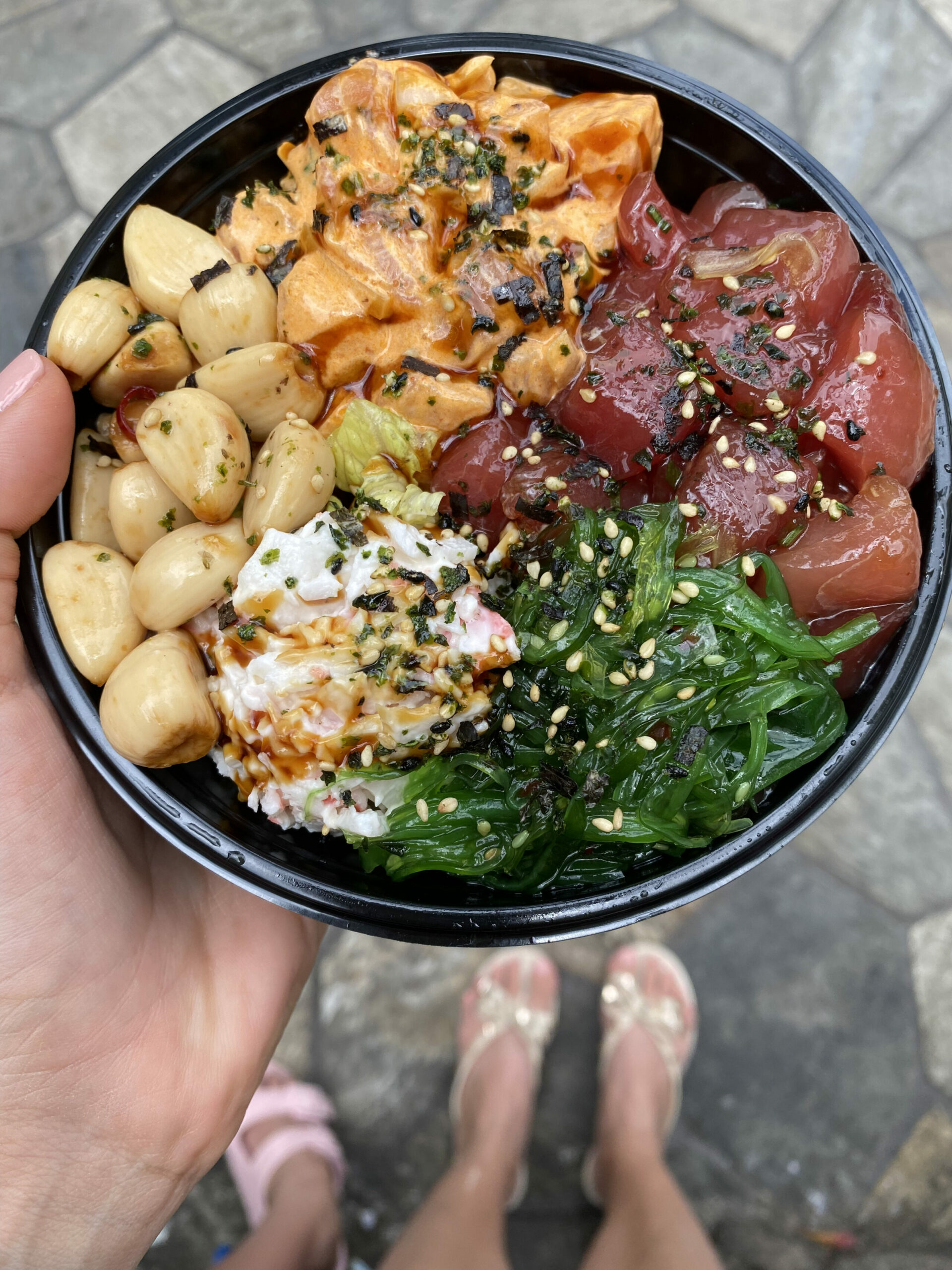
We had many poke bowls while in Waikiki (P wanted one every day, so I joined her!), and this is the #1 spot. The Pilot scoped it out before we got there and found this amazing poke bowl place, which has pickled garlic, kimchi, super fresh fish, and if you get salad greens instead of rice, they top it with a lovely ginger dressing. The girl working there put so much care into making the poke bowls, and everything was SO fresh and good.

I’m salivating looking at this pic right now.

Hula Grill

We had this for a more casual dinner, and enjoyed our spot on the patio, overlooking the Outrigger pool and the beach! Everything was amazing, and this was my mom’s #1 Mai Tai pick.

Alo Cafe

This was another spot the Pilot found before we got there for the best acai bowls, and they make their peanut butter in house. It was EVERYTHING. All of the acai bowls in Tucson will be blah and sad from now on.

Duke’s Market

Duke’s was right down the street from our hotel, and we went many times. They have the fresh malasadas in the morning, incredible coffee, pastries, and quick bites, like salads, wraps, masubi, and breakfast options. We had fried rice with over easy eggs on top one morning, and I also tried a veggie omelet with potatoes. This is the spot if you’re looking for a quick bite, or even want some more convenience type options (like drinks, fresh fruit, anything you may have forgotten).

Marakume Udon

This udon restaurant has a line out the door, at least 15 people long, from the time it opens until the time it closes. It’s for a good reason, too. They make the udon noodles fresh in-house, and the broth is one of the best things I’ve ever tasted. You can get your noodle bowl a variety of ways, with different sauces, meat options, eggs, and toppings.

The best pro tip I received from a friend: order your food online directly from the website. Don’t even wait in line. Your meal will be ready on a rack in the back towards the kitchen and you don’t have to wait! We got ours to-go and had a picnic lunch in the hotel.

Our hotel:

Beachcomber by Outrigger

This was booked through the Pilot’s work and we all loved the vibe and central location. It had a gorgeous pool, was super clean and cute, and you could see the nightly luau at the International Marketplace from our balcony. They also had laundry which was highly appreciated, as most of our clothes were drenched and covered in sand each day.

After exploring and checking out some of the nearby hotels, I’d love to stay at Moana Surfrider, Halekulani, or Aulani next time. (I was supposed to visit Aulani for a work trip years ago and still want to make it one of these days!)

(Pineapple dress is an old one from Rails)
My thoughts on staying in Waikiki:

I remember last time we went to Hawaii, and I was researching which island to visit and where to stay, and I saw so much Waikiki bashing. “It’s too busy.” “It’s too touristy.” It did not feel too busy to me and was no different than visiting Orlando or Las Vegas.

Also… I am a tourist. Obviously I’m not going to fly across the ocean to dine at Cheesecake Factory (give me all the local spots!), but if you plop me in a spot that’s surrounded by awesome restaurants and shopping, this makes me happy. I feel like when we plan certain vacations to get away from everyone, I wouldn’t want something like this – Sedona is more of an escape spot for us – but in this case, I loved the fact that there were people around, music playing constantly, and a bigger city feel.

The next few weeks are going to be busy with return to competitive dance for Liv, soccer and horseback riding for P, my high season on the blog and with coaching, and the kids going back to school. I’ll definitely be thinking of happy Hawaii memories, poke bowls and beach days when things feel overwhelming. It was a lovely trip with my favorite people. 🙂

I hope you have a happy Monday and I’ll see ya soon!

Have you visited Hawaii? What are some of your must-dos?

What’s on your vacation list right now?

xoxo

Gina

The post Our Waikiki Recap (+ what to do and where to stay) appeared first on The Fitnessista.


from The Fitnessista https://ift.tt/igAhXPB

Wednesday, August 3, 2022

How to Start Working Out (Consistently)


LEGO Rugby players in action.

So you’re having trouble working out consistently?

I get it. 

Life is busy and hectic. You probably wear multiple hats in your life.

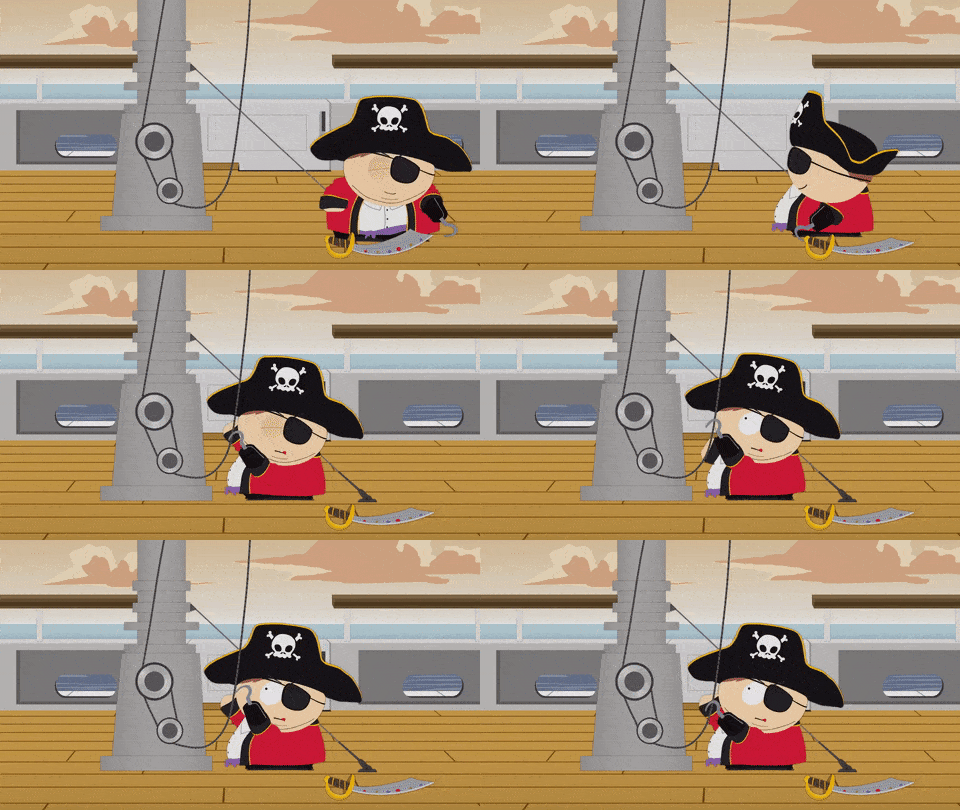
Hopefully, one of them is a pirate hat:

Cartman from South Park as a pirate.

If you are having trouble exercising regularly, know that you aren’t alone. 

Not being able to work out consistently is one of the top issues facing our clients in Nerd Fitness Coaching. Luckily, there are some tips and tricks that help them, which we’ll share with you right now too. 

Here’s what we’ll cover today:

Let’s jump right in!

Step 1: Why You Miss Workouts

As I mention in the video above, it’s okay to stumble – everyone misses a workout now and again.

Life happens:

  • Your job might need you to stay late. 
  • Maybe your spouse can’t pick up the kids today.
  • Or perhaps you just lost track of time while playing video games.

A black and white gif of hands using a video game controller.

These things happen, so don’t freak out whenever you miss a workout.

“Wait, wait, wait Jim! I thought this article was about consistency – then you start off saying it’s OK to miss a workout?”

What I’m saying is to not beat yourself up over it. I’ll see people be so tough on themselves for one missed workout, that it spirals downward and then they’re doing NO workouts.

It’s unnecessary, and it’s not sustainable.

Here’s something I remind my clients: If being tough on yourself helped with workout consistency, it would’ve helped by now.

So first of all, forgive yourself.

A gif of Woody saying "You'll be fine"

Then, I share with them a saying we have here at Nerd Fitness:

“Never Two in a Row.”

As Rebel Leader Steve mentions in the video below, it means aim to not miss two workouts, back to back:

It’s a mantra you’ll hear throughout the Rebellion (our community!). 

Here’s the justification: as I mentioned, missing one workout is nbd. 

However, two workouts in a row could be the start of a trend. If you’re not careful, after a few missed workouts, you could just stop exercising altogether. 

That’s the real danger.

So we aim to not allow the trend to start in the first place.

Takeaway: If you miss a workout, it’s fine. Just try not to miss the next one.

Step 2: Building a Workout Plan

 A statue of Ben Franklin

Here’s a great quote from Benjamin Franklin:

If you fail to plan, you are planning to fail.

When it comes to working out consistently, we need to define what “consistently” actually means.

For that, it’s time to build a workout routine.

As Coach Staci mentions in the video above, we want to focus on three key questions when programming our training:

  • What type of workout are you doing?
  • When do you plan on doing your training?
  • Where will this workout take place?

All three questions are important, but we’re going to focus on “when” right now.

Determining “when” you’ll train is easily the most important step for working out consistently.

That’s why I want you to place your workouts in your calendar!

A Calendar that says "Start Work" and "Finish Work."

Schedule your workout like it’s the most important meeting of the day!

(A reminder that you ARE important!)

That’s what I have my clients do in our 1-on-1 Coaching Program. It goes a long way to helping them stick to their workout schedule. 

So if you plan on training first thing at 8am, have a calendar reminder go off at 7:50am. 

It’ll make a difference. I promise. 

What days should be workout days?

For that, I have a couple of resources to share with you:

  1. How to Build Your Own Workout Routine. Our MASSIVE guide will teach you exactly how to create a training schedule, including what exercises to do and when to take rest days. If you want to get your hands dirty by building your own workout, this is the way to do it.
  2. Nerd Fitness Journey. Our fun habit-building app will tell you exactly when to workout, with video tutorials for every exercise covered. No need to create a plan, just open up the app and check your missions for the day. Plus, you’ll build your very own superhero as you go, which is totally sweet. You can try it out for free right below:

Step 3: Why “All of Nothing” Hurts Workout Consistency

A LEGO Firefighter on a bullhorn.

Another one of the best things you can do to improve your workout consistency: have a backup plan.

Let’s say a pipe bursts at your gym, and it’s closed for the next few days.

Does that mean you should stop working out until they resolve their plumbing emergency?

A gif of Mario and Luigi being forced down a drain.

It could be a while…

No!

It just means you’ll have to work out at home, in a nearby playground, or maybe you just focus on long walks for the next few days.

That’s why it’s always good to have a backup for any regular emergency like:

Remember, just because your initial plan falls through, doesn’t mean you have to completely throw in the towel.

Or as I jokingly tell my clients, just because one tire goes flat, doesn’t mean you should slash the other three.

A man slashing a tire

Just do the best you can to get back on the road.

Step 4: The Key to Getting in Regular Exercise

A picture of a LEGO dog sitter.

If I have one single piece of advice on how to get in more daily movement, it would be this: do something you enjoy.

Every workout doesn’t have to be a slog.

You can schedule things you enjoy like:

We 100% endorse this game.

If you enjoy the activity, you’ll be WAY more likely to exercise consistently.

For more tips here, here are 40 Ways to Exercise (Without Realizing It)

Here’s another trick to start enjoying your workouts – do them while listening to some of your favorite music, or a podcast you enjoy.

Heck, you can even flip the TV on in the corner and watch your favorite show while you train.

We call this “Temptation Bundling” and I’ve seen it help a lot of my clients:

  • If you only listen to your favorite podcast when you run, eventually, you might start looking forward to running.
  • The same thing could happen with music. If you start to associate your favorite tunes with building up a sweat, one day you might actually enjoy building up a sweat.
  • Let’s say you only watch The Great British Bake Off while on your elliptical. If that’s the case, you’re going to start protecting your time exercising (“Don’t bother me now”).

Don’t overlook the power of coupling activities you enjoy with your workouts. 

Step 5: How to Build Workout Accountability

Two Legos about to workout together.

Another strategy we can deploy when improving workout consistency: accountability and support.

There’s nothing quite like being accountable to another human being when it comes to exercising regularly.

There are a few ways we can create workout accountability:

#1) Tell Friends and Family

Share your goals with your loved ones, then let them know the times you’ll be working out.

This will help for a couple of reasons:

  • We’re more likely to follow through with action if we commit ourselves in front of others.
  • If we don’t show up for a workout, they may politely call us out on it.

A Police Officer at the door saying Someone saying "I Know You're In There"

#2) Join an Online Community

In the 21st century, it’s very easy to find a group of people who are on a similar mission.

If you want to exercise regularly, I’d wager you aren’t the only person on the internet working towards that goal.

So join a digital community! That way you can get in on some group accountability.

We regularly hold group challenges through our app, Nerd Fitness Journey. I’ve been told by countless Rebels that they’re more likely to get their training in if they know everyone else in the community is doing it too.

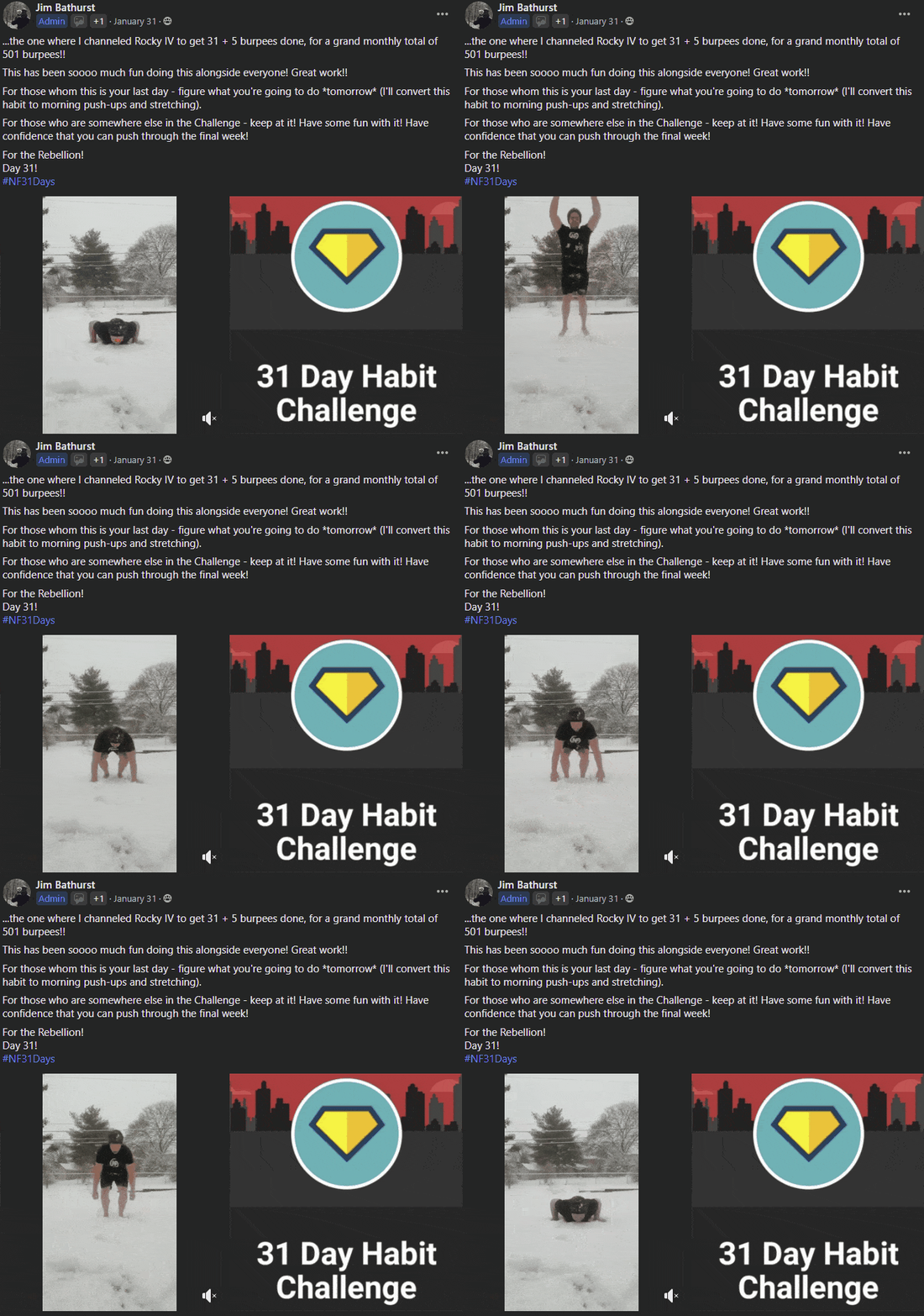
Heck, I did burpees in the snow because everyone in the Rebellion was doing a burpee challenge.

Jim doing the burpee challenge

If you want to try out some of these experiences, you can sign-up for a free trial to our snazzy new app right here:

If you want some next-level accountability, I have to mention the ultimate power-up: hire a coach.

It could be a personal trainer in a gym, or you can go digital with an online coach.

Either way, having someone you check in with weekly (who will also program your workouts) is one of the best ways to exercise consistently.

If you know a coach will ask you about your workouts, you’re going to be more likely to do them.

If you’re interested in learning if you’d be a good fit for one of our online coaches, you can click on the big yellow button below:

Step 6: The Problems With Exercise and Workout Motivation

In the video above, Steve outlines the problems with motivation

I think all of my clients should watch the video. 

That’s because I’ll often hear them say “I need more motivation to workout” or “I’m just not motivated to exercise.”

This is the wrong frame of mind.

Action creates motivation, not the other way around.

For example, let’s imagine a new client. They don’t particularly like working out and they aren’t very motivated to do it.

But they do it anyway.

Then, after a few weeks of successful workouts, they’ll start to recognize the trend they’ve begun.

A gif of Anakin saying "It's Working!"

Our coaching app tracks all the training we assign, so I’ll often see my clients rejoice when they’ve “hit 20 workouts!” 

It feels good to recognize they’re making progress, which often makes them more motivated to exercise.

So they keep working out. 

The problem: getting started in the first place can be tough.

That’s why you should start with ANYTHING that breaks the inertia.

Coach Matt breaks it all down for you here:

As a beginner, your first step is the most important. And often the hardest.

In our Beginner’s Guide to Starting Your Fitness Journey, we recommend your first workouts be something simple to get started: a walk.

It could be a half-mile around the block. Or it could be to the mailbox and back. 

The exact amount doesn’t matter, but being intentional is. That’s how we work to build consistency.

So do a short walk today. Then another one the day after tomorrow. Then a third two days from then.

Boom, three workouts in one week, all by just walking. 

Step 7: How to Find Time to Workout

A picture of three hourglasses.

I’ll be real with you: no one is sitting around, twiddling their thumbs with time to kill.

If you’re going to make time to work out, you’ll need to figure out what activity in your life you can change or eliminate:

  • Maybe your two-hour nightly TV ritual can come down to an hour.
  • Maybe you start biking home from work instead of driving.
  • Maybe you catch up with your spouse over an evening walk instead of a drink.

This is why scheduling your workouts in your calendar can be so critical – it helps you see what needs to be moved around to get your training done.

Also, it’s okay to experiment here.

A god doing a science experiment

If you create a schedule, and you don’t hit it all, it’s okay. 

Perhaps you just created an unrealistic schedule.

If so, then modify the workout:

  • Try a 30-minute workout instead of an hour.
  • Try two workouts a week instead of three.
  • Go around the block once instead of twice.

Again, we’re not worried about the amount of time here. Instead, we’re concerned about you hitting your workout schedule consistently. It’s okay to scale down to do that.

Once you’re rocking and rolling, we can always scale it up if it seems right.

If you want some tips on how to gauge your adherence to sticking with your workout schedule, then check out How to Track Your Fitness Progress.  

Start Working Out Consistently

This runner definitely has a strong core!

There you have it, my friend. 

To recap…

Here’s How to Work Out Consistently:

  • Step 1: It’s okay to stumble (Forgive yourself). Everyone I know misses a workout here or there. It’s nothing to feel shame over. 
  • Step 2: Have a plan! Without scheduling your week’s workouts, how do you even know if you’re being consistent or not?
  • Step 3: Have a backup plan! (Lose the “all or nothing” mindset). If your first plan falls through, nbd. Just move onto the next one. “Some” workout is always better than “no” workout. Do the best you can.
  • Step 4: Make it fun. Your workout doesn’t need to be something you dread. If you like hiking, go hiking. If you like swimming, go swimming. Any movement is beneficial and should be encouraged. No one said you have to hate it.
  • Step 5: Find an accountability partner. Going alone is almost always harder. If you can find a friend or coach to team with, it will make working out consistently easier.
  • Step 6: Embrace “action” not “motivation.” If you have to wait around for motivation to start working out, you might be waiting for quite a while. You’ll become motivated after you act.
  • Step 7: Don’t find time, make time. Your schedule won’t magically free itself. Look at your calendar and start prioritizing.

That’s it.

The most important thing you can do now today: START!

If you wanna win a race, you need to start it!

Not tomorrow. Not next Monday.

Today!

If you don’t know what to do, look at the next free spot on your calendar. Then schedule a walk.

Then schedule it a couple of days later.

Then the following week.

BOOM! You just started a plan for working out consistently.

As always, if you need any help here, we gotcha. 

Here are three ways that Nerd Fitness can help you exercise regularly:

#1) Our Online Coaching Program: a coaching program for busy people to help them make better food choices, stay accountable, and get healthier, permanently.

As I said, this is the ultimate way to build workout accountability. Not only will a NF Coach build your workout, but they’ll check in with you too to make sure you’re able to do it.

If you can’t? 

No problem, they’ll work with you to create a new plan.

You can schedule a free call with our team so we can get to know you and see if our coaching program is right for you. Just click on the image below for more details:

#2) If you want an exact roadmap for working out consistently, check out NF Journey. Our fun habit-building app tells you exactly what days to exercise, what days to rest, and helps you track it all so you know if it’s working for you.

Interested?

Try your free trial right here:

#3) Join the Rebellion! We need good people like you in our community, the Nerd Fitness Rebellion.

Sign up in the box below to enlist and get our Rebel Starter Kit, which includes all of our “work out at home” guides, our Strength Training 101 eBook, and much more!

Alright, I want to hear from you now:

What’s your biggest issue with working out consistently?

What tips helped the most?

Are we missing any helpful suggestions for a beginner?

Let me know in the comments!

-Jim

###

Photo Source: Rugby Player, Bruce Emmerling © 123RF.com, Firefighter, Dog Sitter, Bicycle, Toxic, choneschones © 123RF.com, Morning run with the Fitbit

The post How to Start Working Out (Consistently) first appeared on Nerd Fitness.


from Nerd Fitness https://ift.tt/slG5b9N

Monday, August 1, 2022

How to teach kids about nutrition


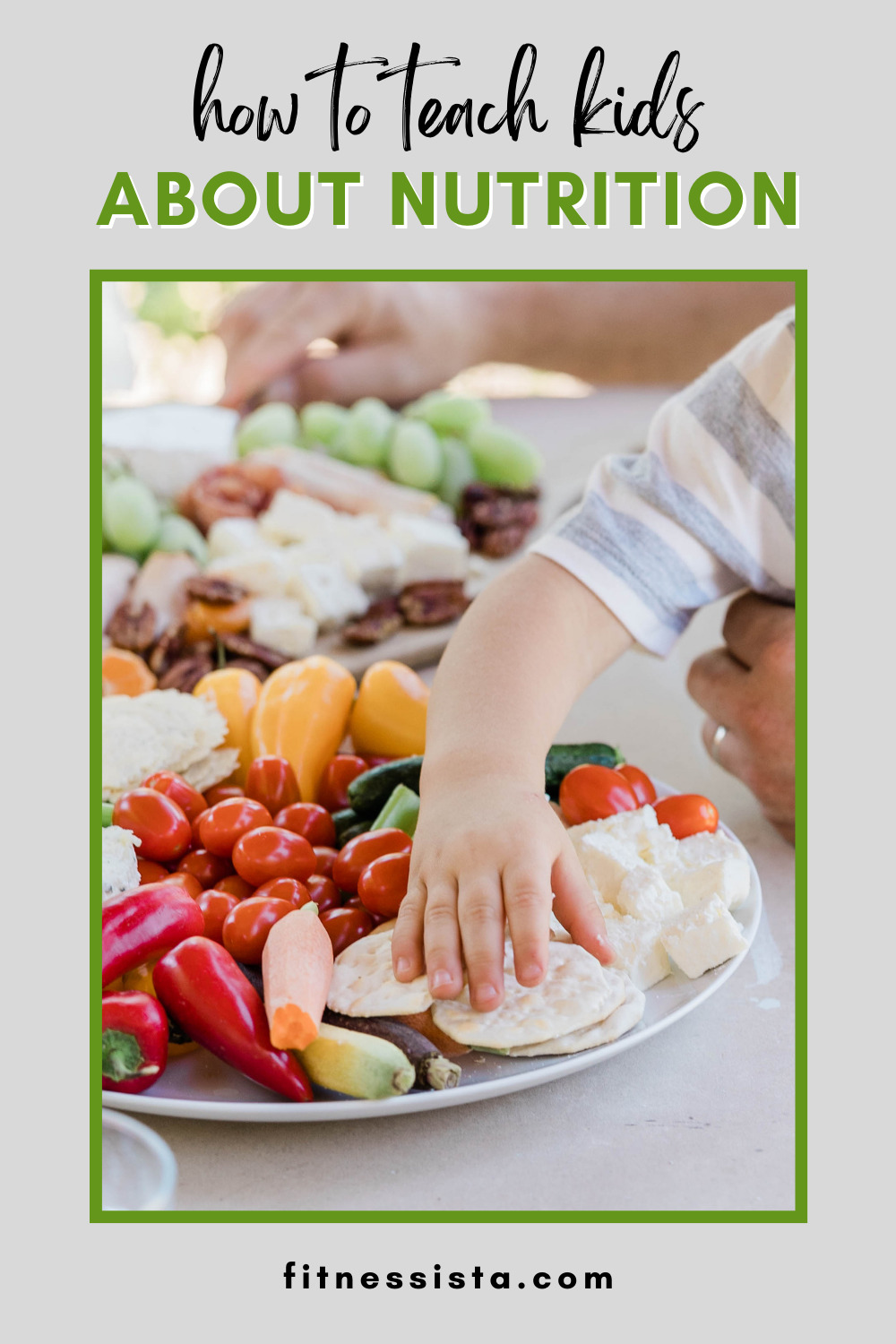
Sharing some ideas on how to set healthy examples for kids, teach them about health, and get them excited about nutrition.

Hi friends! How’s the week going? We’re having the dreamiest time in Hawaii; I never want to leave.

For today’s post, I’m answering a reader’s request about teaching kids about nutrition and setting a healthy example for kids as they grow up. While I’m not an expert in this (please keep in mind that I’m NOT an RD), it’s been important to me to model healthy behaviors our babies can keep for life. In today’s post, I’m sharing some of the things that have worked for us, and as always, I love hearing your input, too!

How to teach kids about nutrition

Show, don’t tell

This is my #1 tip and I could probably just end this post here. A lot of the things the kids know about nutrition, they’ve learned from watching us and how we eat, how we plan our meals, and how we shop. I don’t have to really “tell” them anything; kids are little sponges and are always soaking up information from the world around them.

I love the fact that our kiddos are adventurous eaters who seem to enjoy food as much as we do. They’re not picky and will try anything, and while they each have a giant sweet tooth (I do, too!), they also enjoy lots of fresh produce, protein, healthy fats, and nutrient-dense starches on their plates. One of my biggest goals for nutrition for the girls was to teach them about balance, which they can only learn if I model that myself. I’ll have a giant salad, but I’ll also have a cupcake or ice cream with them, and it’s no big deal. We order Domino’s pizza (they love it) and get donuts weekly. I never want anything to be *weird* or forbidden, and they know that we focus on colorful, fresh foods from the earth + room for the soul-hugging stuff in there, too.

(Their favorite snack: smoked oysters and skinless/bonless sardines. They eat them straight-up out of the can.)

This can be hard if you’ve grown up with a tricky relationship with food, but remember that kids are always watching. Enjoy treats guilt-free and don’t talk about how food affects your physical appearance. Instead, you can say things like, “I’m going to have so much energy after this salad” or “soup always makes me feel better when I’m under the weather.” Or, you could also say nothing. I find that whatever I’m eating, the girls want to eat, too. I’ll often make my portions larger because I know at least half will be “tasted.”

Eat the rainbow

I don’t think kids *need* to know the vitamin, mineral content, or macro balance of their foods. Instead, they can focus on eating the rainbow. You can ask them, “Hey, did you have anything green yet today? Do you want salad, broccoli, or zucchini with dinner?” “How many colors of the rainbow can we put on our plate for lunch?”

Having a little garden has encouraged them to try new things, too. They love going outside to pick carrots, bell peppers, or salad greens. (We have melons growing right now, too!)

Give them freedom within parameters

For this one, if I know they’ve already had more sugar during the day (like a boba tea AND an ice cream at the pool), I’ll give them some more nutrient-dense choices for other meals. “Hey, do you want chicken or fish tonight?” “What veggies or fruits do you want with your meal?” The girls know that for every meal they’ll get a few constants: a protein, a starch, a healthy fat, and always a fruit or veggie (usually both with lunch and dinner). I hope that by setting up our meals this way, they’ll inherently know how to balance a plate when they get older.

Let them go shopping with you and choose new produce options

This is definitely the most fun one! Whenever we go to the store or put in an online grocery order, I let the girls each pick a new fruit or vegetable. They often surprise me with their choices and we’ve been able to discover new things this way. This makes them excited to try these new options, and I find that it also keeps us out of the monotony of having the same fruits and veggies in our rotation. It’s also fun to take them to the farmer’s market and pick out some new finds that feel exciting to them.

Involve them in the cooking process

Kids are ALWAYS more excited to eat when they helped to prepare the meal. For our dinners, I try to find age-appropriate ways to let them help, whether it’s peeling carrots, putting a salad kit together (P can do the whole thing from start to finish), washing and seasoning vegetables, harvesting herbs or greens from the garden, measuring ingredients, or chopping (with supervision the whole time, obvs). Cooking with them usually takes a tiiiiiny bit longer, but it’s totally worth it. I want them to enjoy cooking and it’s another way that we can enjoy time together. If you’re looking for a kid-friendly cookbook, the girls LOVE this one. (Liv recently told me it’s “too easy” for her, so we’re looking for a new one!)

So, tell me, friends: what habits are you trying to set up for your kids as they grow? What are some resources that have helped you?

How do you involve kids in the cooking process?

xoxo

Gina

The post How to teach kids about nutrition appeared first on The Fitnessista.


from The Fitnessista https://ift.tt/qlO0ZTo