VISIT FOR THE BEST FITNESS AND HEALTH ADVICES

Blog Archive

Friday, May 28, 2021

How to Train if You Have an Injury (7 Steps)
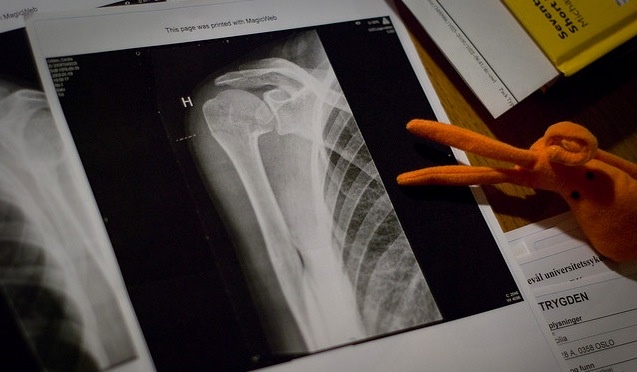

There’s no gentle way to say this – training with injuries SUCKS!

The most important thing you can do now is to let yourself heal.

However, depending on your injury, there might be quite a few ways to stay active while also recovering.

We do this all the time in our Online Coaching Program. We’ll build workouts for clients who are dealing with pre-existing injuries, so they can make the most of their recovery time.

Today, we’ll share these same tips with you.

Here’s what we’ll cover:

REAL QUICK: If you’re worried about hurting yourself while lifting, I would encourage you to check out our guide, Strength Training 101: Everything You Need to Know. We cover all you need to begin a strength training practice, from equipment, starting weight recommendations, and proper form techniques to prevent injuries. You can grab it for free when you join the Rebellion below!

NOTE: I am not a doctor (in fact, I’m not even wearing pants right now). You should really seek medical attention for any injury you receive. 

Step 1: Preventing Injuries in the First Place (Warming-Up)

LEGO Rugby players in action.

Now, it should go without saying: the best way to handle an injury is to prevent it in the first place.

So always start your training with a dynamic warm-up.

Studies have shown that a brief warm-up before your workout can help prevent injuries.[1]

Here’s why:

You can think of your muscles like rubber bands:
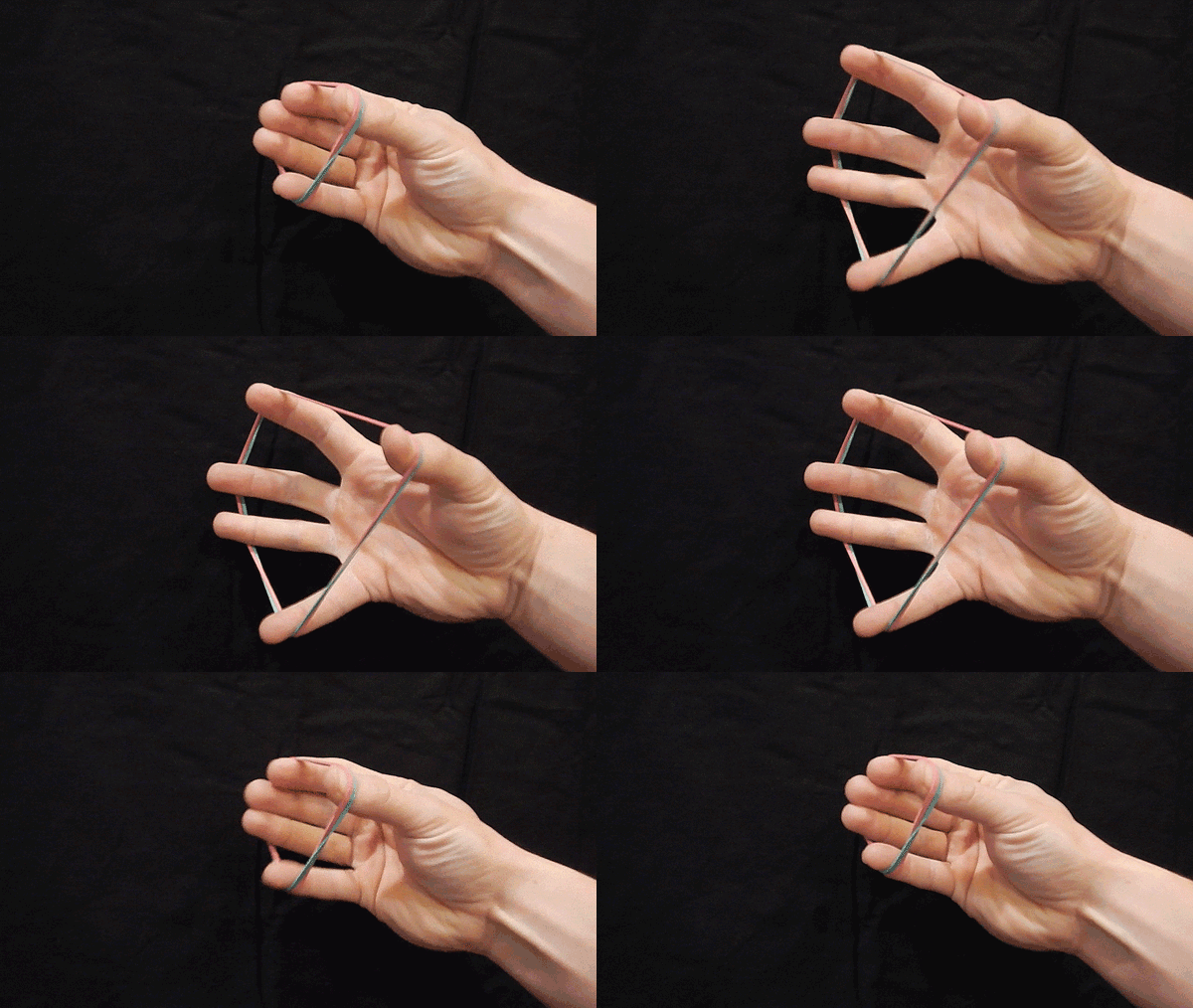
Your muscles are kind of like this.

Should you start your workout by immediately lifting heavy weights or sprinting really fast, those cold, unstretched rubber bands can get pulled apart very quickly. They can then get snapped or pulled out of shape.

Ouch.

That’s why every workout should start with a warm-up.

We are such big believers of this, that when we program workouts through our Online Coaching Program, we ALWAYS kick it off with a warm-up. It’s one of the tools in our kit to help clients stay injury-free.

What’s that? You don’t know how to warm up?

No prob.

Here’s a beginner warm-up routine you can try:

If you want more, check out The 15 Best Warm-Up Exercises & Routines to Prevent Injury.

Step 2: When Should I See a Doctor After an Injury?

As Coach Jim mentions in the video above, the FIRST thing to do after an injury is to seek a professional.

All the internet advice in the world won’t take the place of a single session with a doctor or physical therapist.

After you get hurt, really the best thing you can do is have the injury examined by someone who knows what they’re doing.

I will say, that not all doctors are created equal…
The Doctor saying "Let's not get the law involved."

…but that’s not another article. 

Next, we need to get your headspace in proper order (even if you don’t have a head injury)

Step 3: How to Mentally Deal With Injuries
clown lego minifigures toy on white background .

The SECOND thing to do right after an injury: realize it’s going to affect you mentally…just as much, if not more than physically.

So be prepared!

There are numerous studies showing the different negative emotional reactions that people have when injured.[2]

But just from the School of the Obvious – if you’ve ever had an injury – you know how it puts you in a bad mood.

We've all felt like this..minus the pizza maybe.

What may help, is recognizing and reframing negative thoughts, like with some quiet meditation or journaling. Or even seeing a therapist or sports psychologist

Just make sure you don’t overlook the mental aspects of recovery.

Step 4: Testing Movement Around the Injury
After you’ve seen a doctor and prepared for the mental battle ahead, I want you to test all movements.

And by test, I mean work through as much of the range of motion of an exercise as possible with zero additional resistance and without feeling any pain.
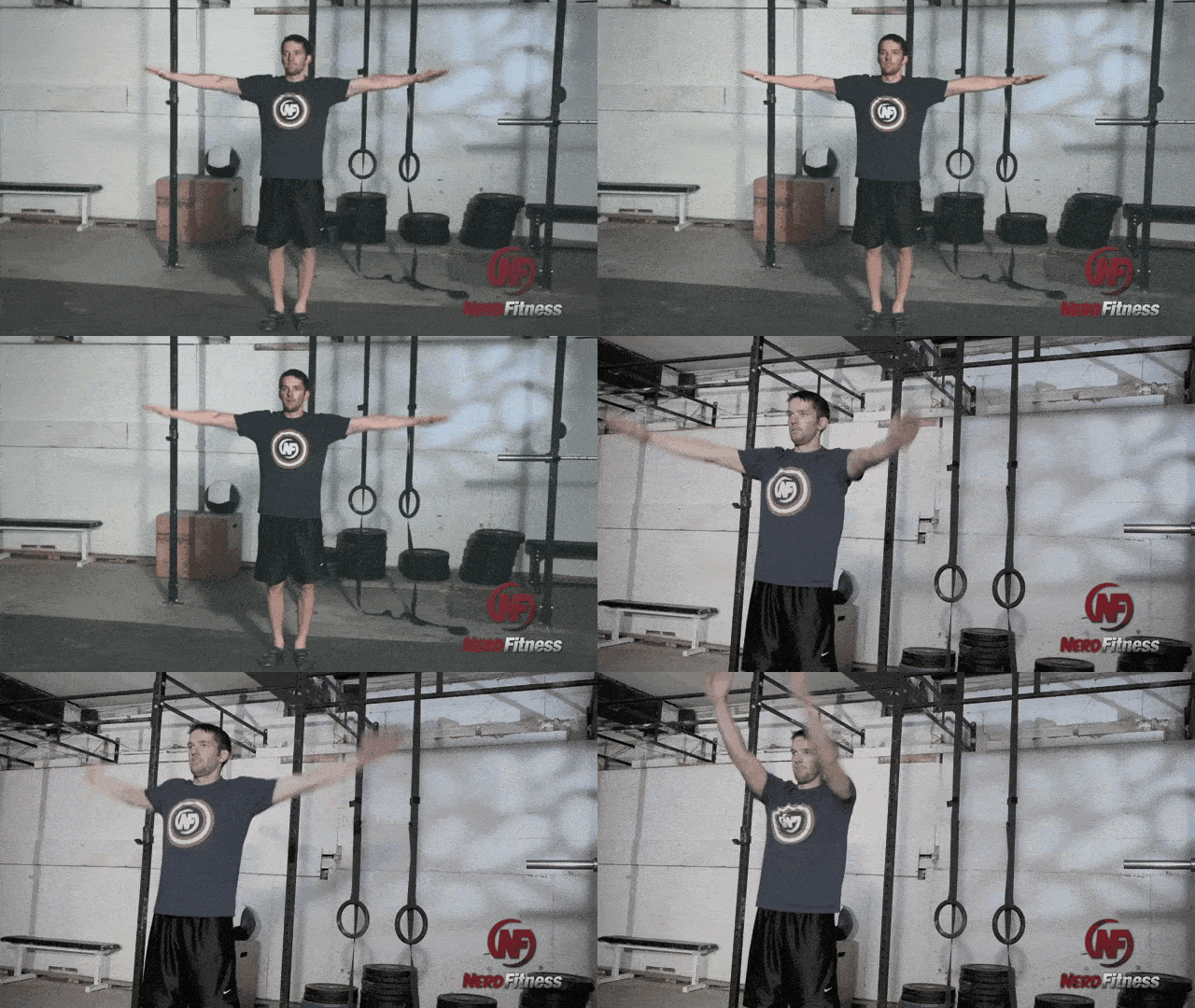
Arm circles like so are a great way to get your heart rate up before doing HIIT.

That means if your shoulder bothers you, just see if you can extend your arms all the way above your head. Do this before you even consider doing a push press or shoulder press.

After that, make sure to test movements that you don’t suspect will be a problem.

A shoulder injury could very well make box jump sessions impossible, due to the arm swing involved in the movement.
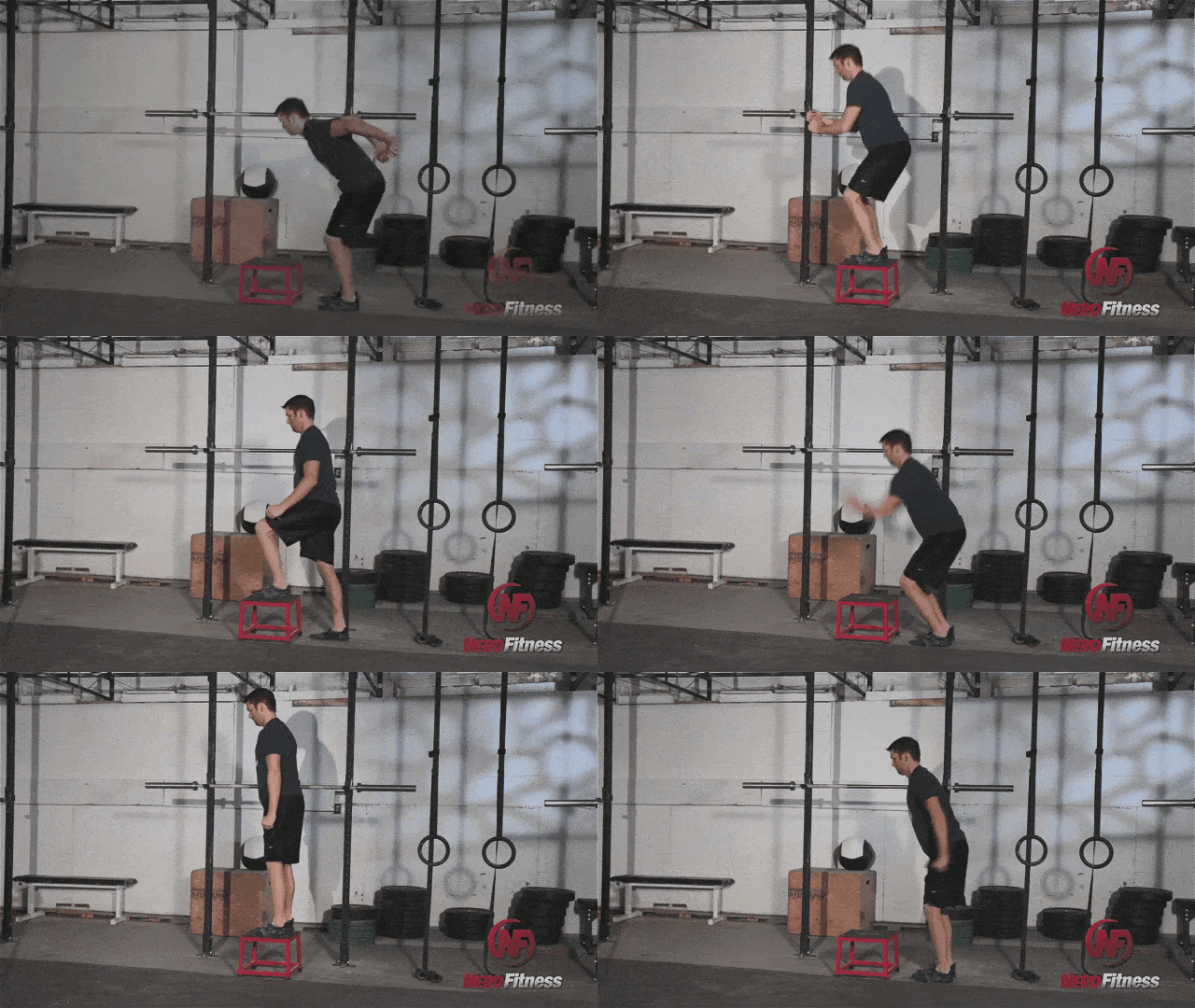
Be careful on your box jump! But it is a bodyweight exercise.

Try out each movement cautiously!

Something to keep in mind: just because you have pain with a push movement, does not necessarily mean you will have pain with a pull movement.

I have had a shoulder injury where dips and push-ups were out of the question…but pull-ups were fine.

And that is why you should test all movements – you may have more training options than you expect. Then again, your injury may limit movement more than you realize.

Last time I’m going to say it – test.

Step 5: How to Make the Most Of Your Recovery (Sleep and Nutrition)
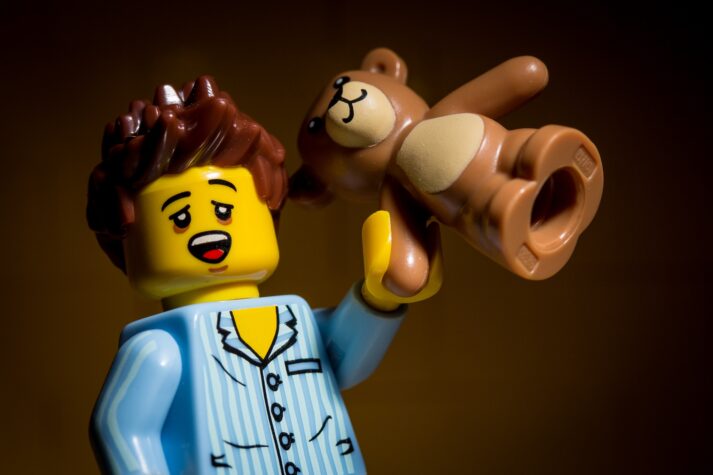
Next, rest.

And by rest, I mean completely stop doing movements that cause you pain until you are healed.

If you feel any pain during your test (especially joint pain), then you should abandon that movement until the injury heals.

You cannot “suck it up” and just grind through joint pain without hindering healing at best…
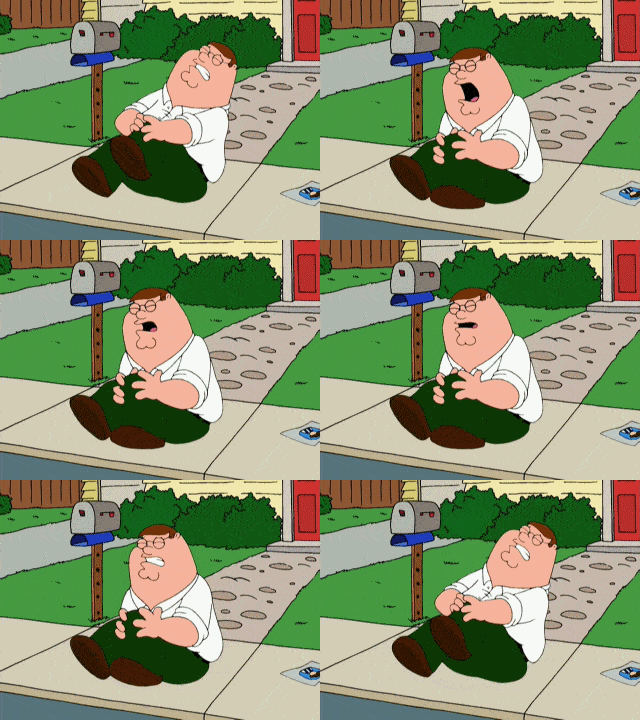
Peter holding his shin in pain

…and causing further damage at worst.

Along with rest, a recovery regimen to accelerate healing should be considered. Ideally, this would be done under the care of a physician. I have been to the doc for injuries in the past and have found that those that use “Sports” in the title of their practice (Sports Medicine, Sports Therapy) do their damnedest to keep you active.

Here are two often overlooked components of recovery:

  1. Sleep
  2. Nutrition

Sleep and nutrition are always important when it comes to fitness. But for the swiftest recovery from an injury, you need to get your food intake and sleep schedule dialed in extra tight.

If you want to do everything within your control to sway the healing forces in your favor, be extra diligent with your sleep and eats.

Step 6: Staying Active While Injured
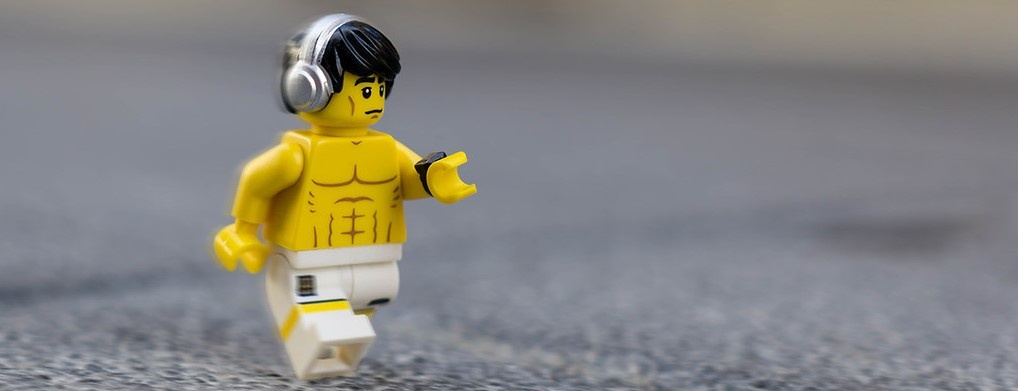
This runner definitely has a strong core!

If your doctor has okayed it, stay active any way you can.

This is often the opposite of what many people will do – which is to completely stop using the injured area.

We want to move pain-free, of course, but any light movement is often going to be more beneficial than just stopping movement altogether – as it gets the blood flowing through the area and helps recovery.[3]

This might mean lowering the weights used, doing an assisted or even unweighted variation of an exercise.

Like by busting out a resistance band:
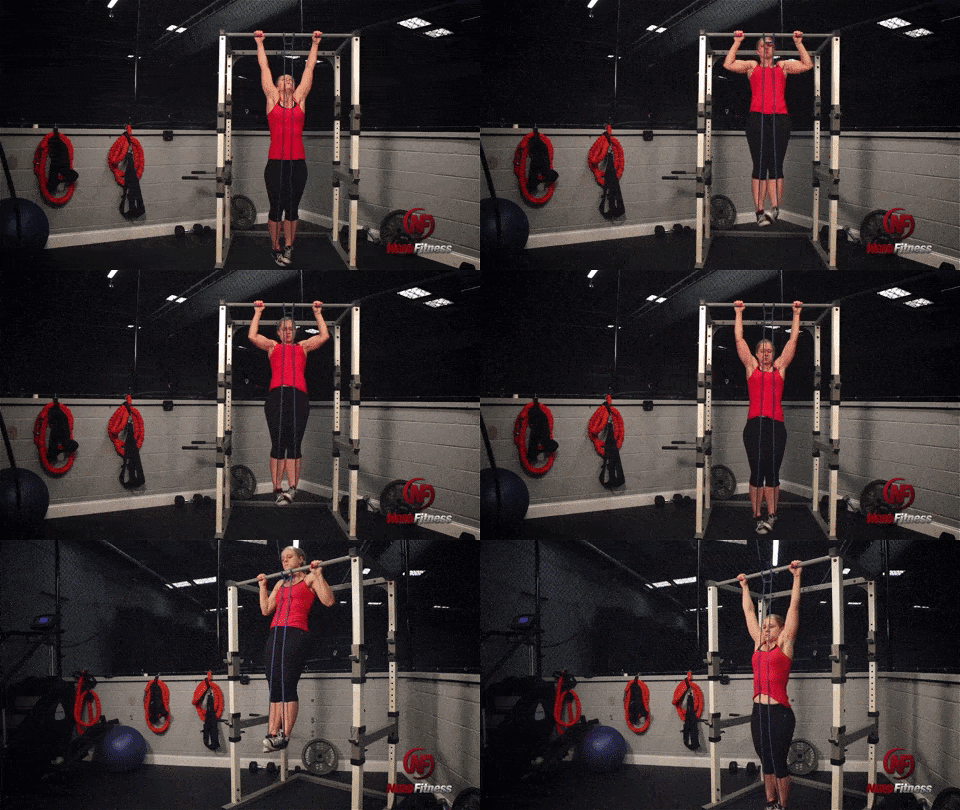
Staci using a band for an assisted pull-up, a great exercise for a bodyweight circuit.

But if you can still safely move the injured area without causing added pain or setbacks – then it’s often a good idea to do so.

If that’s not an option, consider different ways to move while injured:

  • If you can’t run, how about an elliptical or stationary bike?
  • If you can’t use one leg or the other, can you work out your upper body?
  • If you can’t use one arm/shoulder, can you still do lower body exercises like lunges/squats/step-ups?
  • If you can’t do any resistance training, can you still go for walks?

Let’s dive into this point a little more.

Step 7: Getting Creative While Working Out With an Injury

My dear friend, it’s time to get creative.

When you get injured, start thinking outside of the box to find the opportunity in the obstacle.

A shoulder injury may make back squats incredibly painful. But holding the bar for a front squat instead could feel fine…
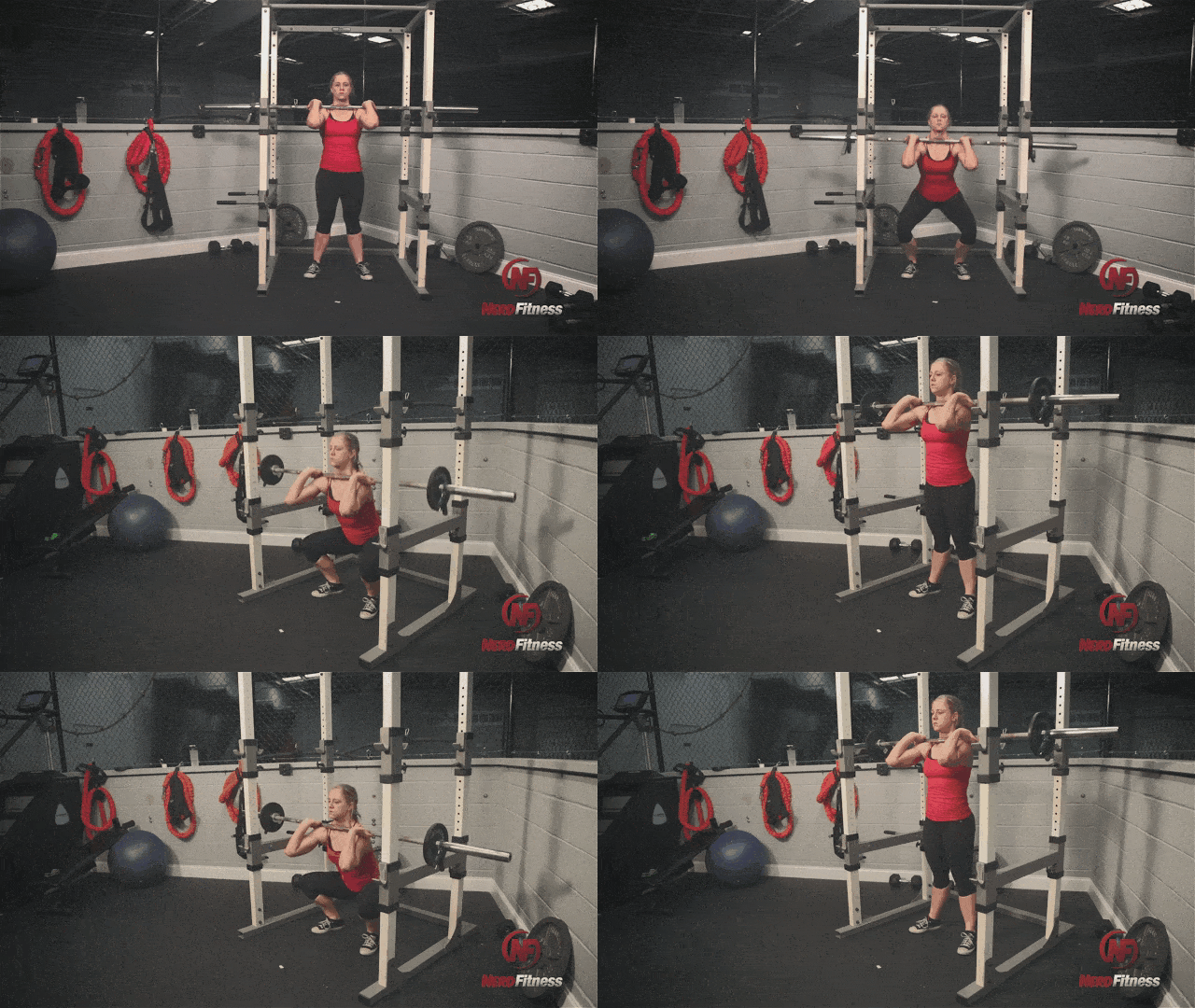
Coach Staci performing the barbell front squat

…and perhaps it just so happens that you have neglected the front squat lately.

So instead, try to look at an injury as an opportunity for you to focus on a weakness. Strengthen your weaknesses, become more well-rounded, and better equipped to deal with rigorous activity.

That’s how you become “antifragile.”

But enough of the generalities.

You want some specific recommendations on how to train around your injuries…

Here are some tips for training around common injuries:

#1) Training with Lower Back Pain

A gif of someone with lower back pain.

If you have any lower back pain, forgo any spinal loading. Period.

That means no squats for sure.

But it also means no deadlifts.

It also means using no additional resistance in any movement where your shoulders should be higher than your hips.

That pretty much limits you to the bench press as far as free weights go, which you’re gonna want to make sure you do correctly.

You could also spend your recovery time exploring various bodyweight exercises.

#2) Training with an Injured Wrist

Wrist pain is most commonly complained about when doing the traditional push-up:
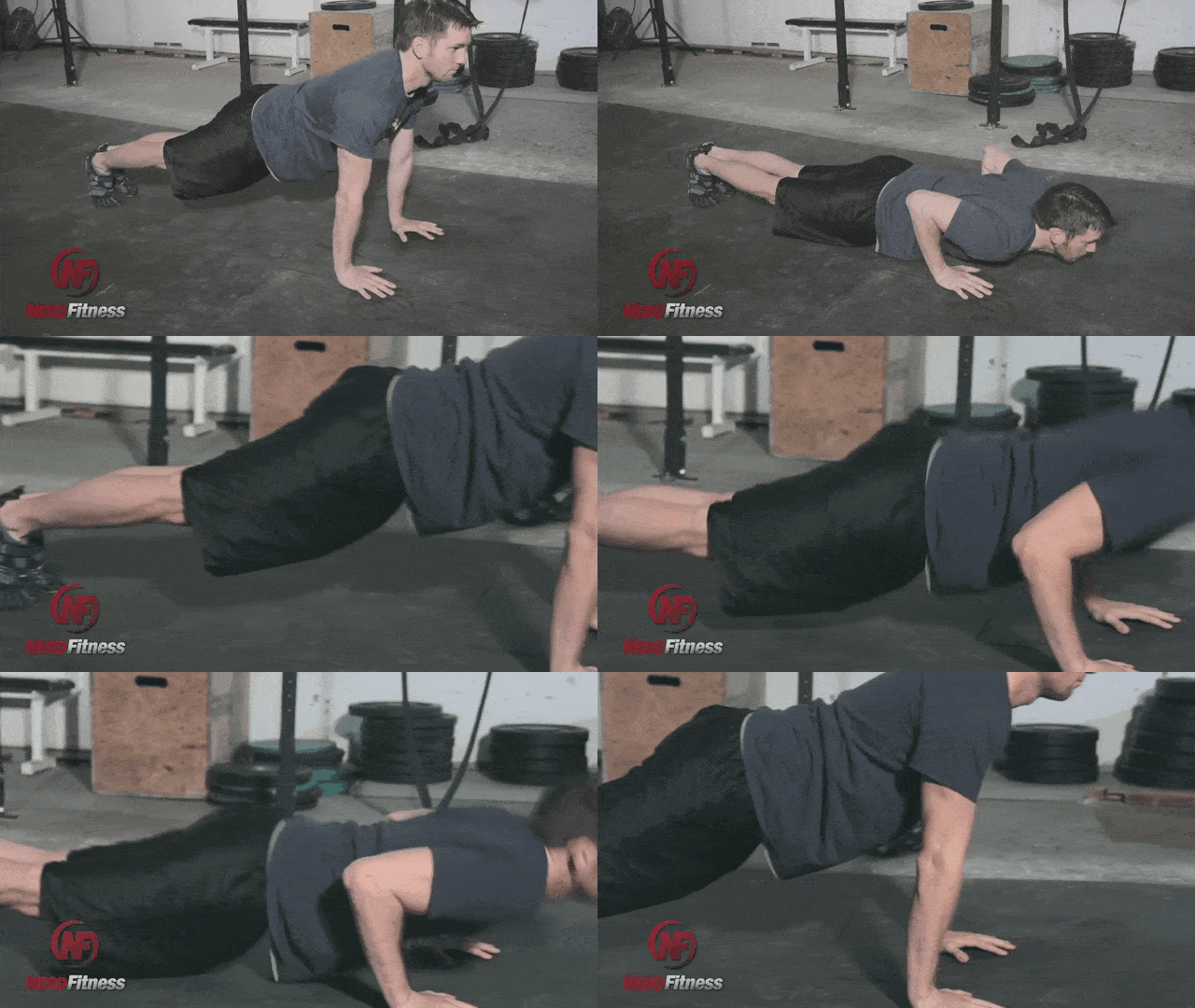
Here Rebel Leader Steve shows you the classic push-up.

You might be able to alleviate this pain by using push-up bars and even (believe it or not) knuckle push-ups.

This is because you might be dealing with a flexibility issue and not an actual injury.

Front squats and power cleans done with the Olympic rack position may also lead to complaints of wrist pain.

To eliminate wrist pain in the front squat, try the more common crossed-arm rack position:
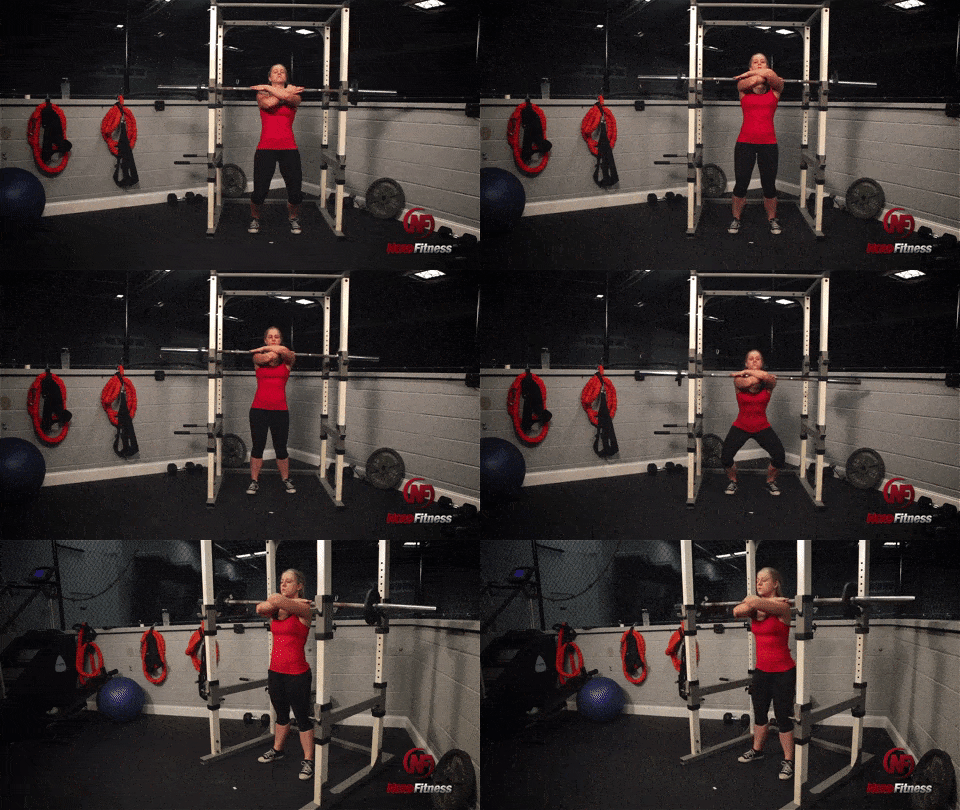
The Genie Squat is a great way to start Front Squatting!

For the power clean, concentrate on getting the bar on top of the front of your front deltoids (shoulders) – if the bar is touching your throat, you are getting there.

Here are 15 wrist mobility exercises for more help here. 

#3) How to Train with a Knee Injury

Knee pain typically comes in a fitness setting as the result of one of three things:

  1. Deep bending such as with a squat or lunge
  2. Impact that corresponds with landing from jumping.
  3. Lateral (side to side) movement, especially for participants of sports like soccer, rugby, basketball, and other “man to man” athletics.

Knee issues can be especially frustrating for those trying to lose weight because exercises involving squatting, lunging, and jumping are ideal for accelerating fat loss.

In this situation, I typically recommend a kettlebell swing as my first alternative option.
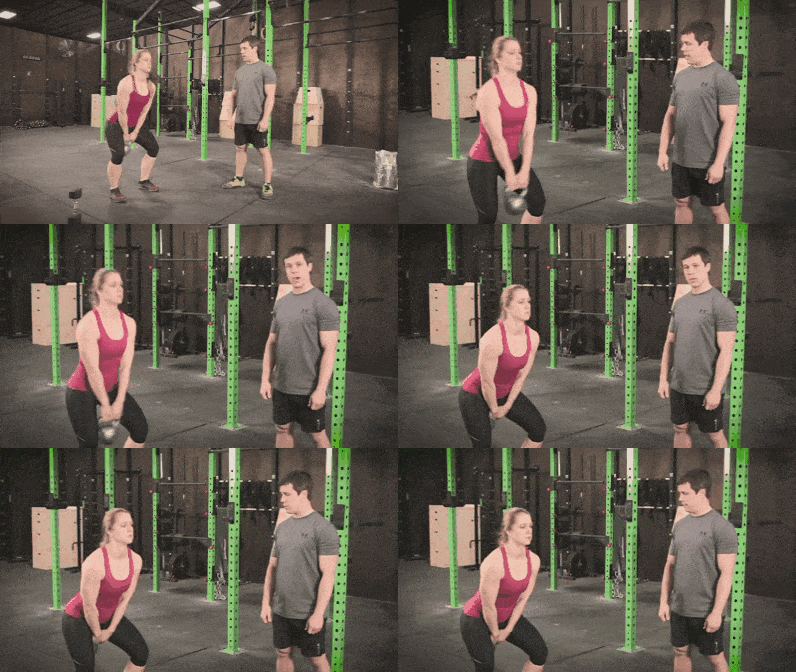
Coach Staci showing you the kettlebell swing

A properly executed swing does not involve much bending of the knee. In my experience, most people who cannot squat can handle swings without screwing up any preexisting knee conditions.

If you’re trying to lose weight, another option you could try is boxing drills:

However, it is important to work slowly at first to be sure that the twisting necessary for generating punching power from the hips does not aggravate the knee condition.

#4) Can I Lift with a Hurt Elbow?

You’re out of luck on this one, unfortunately. Sorry.

Nearly any upper body exercise, push or pull, will hinder your recovery time.

Instead, focus on lower bodywork such as barbell squats, sprinting, and lunges.
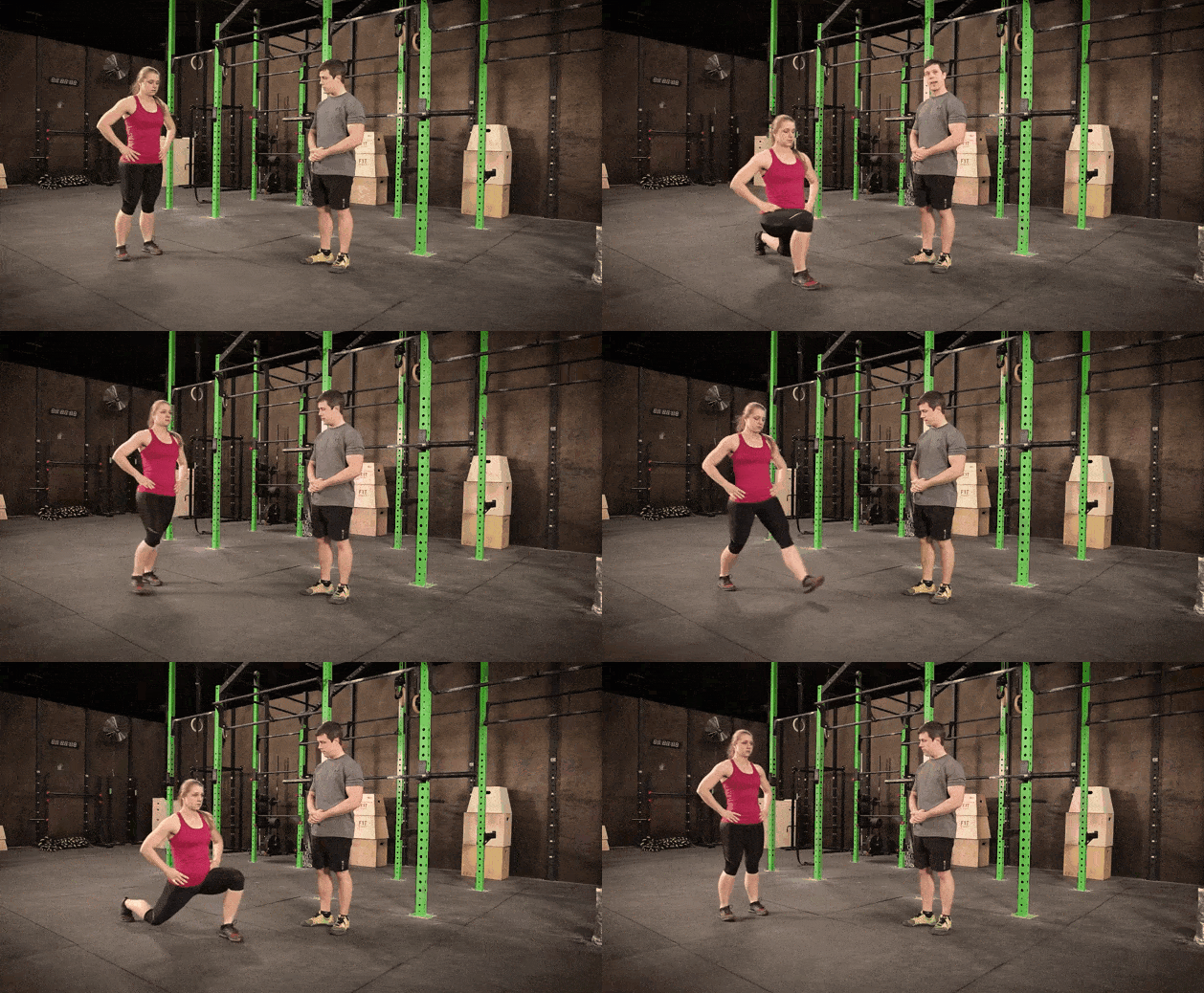
This gif shows Staci doing a forward bodyweight lunge, the most basic lunge variation

#5) Can I Exercise with an Injured Ankle?

Avoid any high-impact movements with a hurt ankle.

And all that means is do not jump.

But other movements that involve more subtle ankle movement such as squats may also have to be put on the back burner as you heal. It is possible (likely?) that you may have to focus on upper body movements and use seated versions of movements such as rows and overhead presses instead of standing.

This will help let your ankle heal.

#6) What Should I Do With Shoulder and/or Hip Pain?

Sheldon with shoulder pain

Test, test, test.

These ball and socket joints can be the most unpredictable when it comes to training options.

Start slow, start light, and back off the second you feel any pain.

MOVING FORWARD WITH AN INJURY (Next Steps)
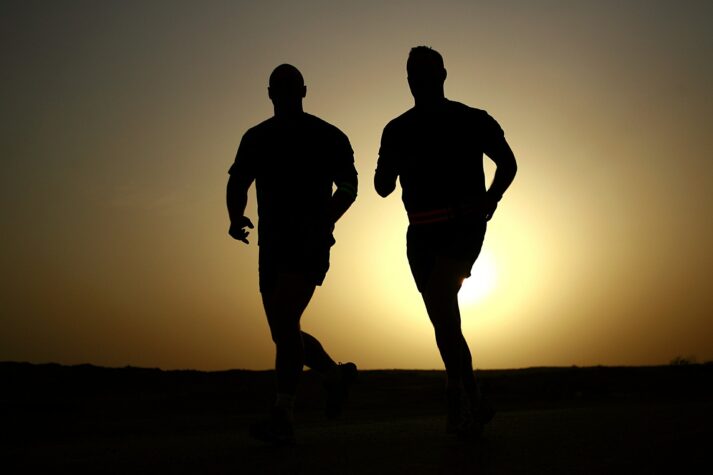
Injuries are always frustrating when they happen.

But I don’t know anyone with any significant amount of training time under their belt who hasn’t had to deal with one.

When injured:

  • Seek a medical opinion[4]
  • Be smart with your exercise selection
  • Dial-in your nutrition and sleep
  • Stay active
  • Be aware of training opportunities that you would not have considered without the injury

If you want any more help along your journey, you know we’re here for you.

Here are three ways that Nerd Fitness can help you level up.

#1) Our Online Coaching Program: a coaching program for busy people to help them make better food choices, stay accountable, and get healthier, permanently.

They can build you a custom program so you can grow strong, to hopefully prevent you from getting injured in the first place. Plus, they can do form checks to help make sure you’re doing all your training correctly. 

You can schedule a free call with our team so we can get to know you and see if our coaching program is right for you. Just click on the image below for more details:

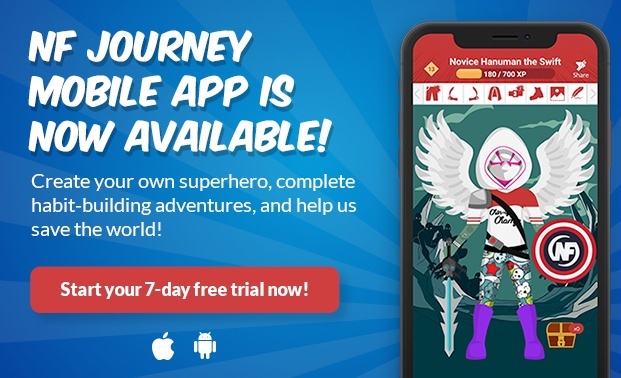
#2) If you want a roadmap for getting in shape, check out NF Journey. Our fun habit-building app will help you exercise and eat better, all while you build your very own superhero.

Interested?

Try your free trial right here:
#3) Join the Rebellion! We need good people like you in our community, the Nerd Fitness Rebellion.

Sign up in the box below to enlist and get our Rebel Starter Kit, which includes all of our “work out at home” guides, our Strength Training 101 eBook, and much more!

Alright, I think that about does it for today’s articles.

Now, I want to hear from you!

Do you have an injury that is preventing you from training?

Do you have any tips and tricks to keep moving while still recovering?

Did you seek advice from a doctor who gave you good information?

Let us know in the comments!

-Steve

###

All photo sources can be found right here: January 27, 2009-22.05, Rugby Player, ©Rattanachai Singtrangarn/123RF.COM, Going to bed, Morning run with the FitbitBatman, Runners

The post How to Train if You Have an Injury (7 Steps) first appeared on Nerd Fitness.


from Nerd Fitness https://ift.tt/3fuddz6

Best Resistance Band Workout for Abs


Resistance band workout for abs

Complete 3 rounds of the exercises below for an incredible resistance band workout for abs in under 15 minutes!

Get more workouts just like this one in the LSF App plus new bonus challenges targeted to specific muscle groups! Hello abs!

Russian twists x30

Begin in a side forearm plank with shoulders stacked over the elbow and resistance band around the thighs just about the knees. Engage your core and drive your upper knee toward your chest as you reach your arm and pull your elbow to meet the knee in the middle. Repeat. 

Bicycles x40

Lay on your back with the band around your thighs and just above your knees. Bring your hands gently behind your head with your elbows out wide. Bend your knees to a 90 degree angle and engage your core. Lift your shoulders off the mat and extend your left leg out long to hover as you twist your right elbow to your left knee. Switch sides and continue alternating right to left.

Side plank crunch x10 each side

Begin in a side forearm plank with shoulders stacked over the elbow and resistance band around the thighs just about the knees. Engage your core and drive your upper knee toward your chest as you reach your arm and pull your elbow to meet the knee in the middle. Repeat. 

Oblique Jackknives x15 each side

Start on your right side with the band around your ankles. Bring your legs a few inches in front of you and press into the band to create resistance.. Exhale, engage your core and bend at the waist as you lift your legs and left arm to meet in the middle. Lower to a hover and repeat (same for left side of the body).

Mountain climbers x40

Start in a full plank position with the band around your thighs, just above your knees. Drive your right knee toward your left elbow then step back to starting. Repeat with your left knee to right elbow and try to move from left to right as quickly as possible.

The post Best Resistance Band Workout for Abs appeared first on Love Sweat Fitness.


from Love Sweat Fitness https://ift.tt/3gyml3s

The Number 1 Reason You Didn’t Lose Weight


how to lose weight

When I started my weight loss journey, I spent so much time trying to figure out how to lose weight. I read a ton of articles and tried about a million different things.

But it can get confusing, right? Like, some people tell you that you shouldn’t be eating any fat if you want to shed pounds, but then you turn around and other people will say you NEED fat to lose weight. Same goes for carbs. Long story short, there’s a whole bunch of conflicting information out there about how to lose weight. And if you’re stuck staring at a number on the scale that you don’t like, that can be pretty frustrating.

Well, have I got some good news for you. There’s one MAJOR reason that holds a ton of people back from weight loss, and it’s pretty darn simple. Do you want to hear the #1 reason why so many people aren’t dropping the pounds they want?

They don’t have enough. 

What does that mean? It means that in our chase to figure out how to lose weight, we often neglect what our body is trying to tell us. And when we don’t get enough of a certain thing, whether that’s water or protein, your body can start to freak out. If it thinks you’re going to be short on what it needs, it goes into survival mode. That means holding onto resources it has now in case it needs them later — including fat. 

So let’s talk about a few areas where your body might not have enough, and what you can do about it. 

fit girl, how to lose weight, fitness, nutrition, community

Not enough protein

A protein deficiency is no joke. Not only do you need protein for muscle health, but you also rely on it for energy, healthy hair and nails, and strong bones. Ultimately, not getting enough protein is going to be bad for your body — but it’s super common, especially for people who are counting calories. 

And if you’re wondering how to lose weight, a protein shortage will get in your way because it will probably leave you feeling super fatigued. And that means not having enough energy for your workouts. Plus, when we’re tired, it can be hard to muster up what we need to skip the junk food and make healthy food choices. That leads to even more protein deficiency — and the cycle continues. 

If you’ve been feeling sluggish and you’re not losing weight, look at your protein intake. You can use this calculator to figure out how much you need based on your activity level, but it’s usually somewhere between 50 and 60 grams a day for women. 

Not enough sleep

Okay, I already started hinting at this. But tiredness and weight loss go together just about as well as oil and water. 

In fact, multiple studies have linked not getting enough sleep and weight gain. If you’re not getting enough zzzs, you might not only struggle to lose weight, but you might even see the scale tip in the opposite direction. Ugh!

Research has found that not getting enough sleep can increase your appetite and make you crave carbs. Scientists think the link between sufficient sleep and weight loss probably centers on your hormones. When you get enough sleep, your body has ample time to make leptin and ghrelin, which control your hunger. 

So if you’re wondering how to lose weight but you’re also burning the midnight oil on a regular basis, it’s time to turn in early for some good rest! And if sleep is a problem for you, consider trying some natural sleep remedies to get the quality rest you need. 

Not enough relaxation

No, really! Your self-care regimen should be an integral part of figuring out how to lose weight. Stress is a major obstacle to weight loss.

Why? When you get stressed, your body releases a hormone called cortisol. This basically gives your body the cue to release a bunch of glucose (read: sugar) into your bloodstream. Your cells then use that glucose for fuel, allowing you to speedily get out of a bad situation.

At least, that was the way it worked back when we were hunters and gatherers. Now, you’re probably not stressed about some animal chasing you — you might be stressed about your upcoming presentation or finals. Cortisol goes to work in your body, but you don’t really need any extra fuel. Instead, you’re just left craving sugar. 

Oh, and to make this whole situation even worse, cortisol also slows down your metabolism! 

Basically, if you’re wondering how to lose weight and you’ve been eating right and working out and the pounds are just refusing to come off, it could be stress! Check in with yourself. How are you feeling, both physically and mentally? Are your shoulders tense? Is your mind racing? 

If you’re feeling stressed, prioritize getting calmer. We have some yoga moves that can help and more in LSF the App, which is a great place to start. I also recommend unplugging and doing some self-care — whatever feels right for you. 

Isn’t it crazy how frequently obstacles to weight loss really just come down to our bodies not getting enough? We so often deprive ourselves because we want to get to a certain number on the scale, but that deprivation could actually be the whole problem! Take care of yourself, girl, and listen to what your body is telling you. Figuring out how to lose weight is different for everybody, but it can also be pretty simple. Eat nutritious, balanced meals with all of the stuff your body needs, cut out the junk it doesn’t, and get moving. You’ve got this!

The post The Number 1 Reason You Didn’t Lose Weight appeared first on Love Sweat Fitness.


from Love Sweat Fitness https://ift.tt/2RKGKf3

Thursday, May 27, 2021

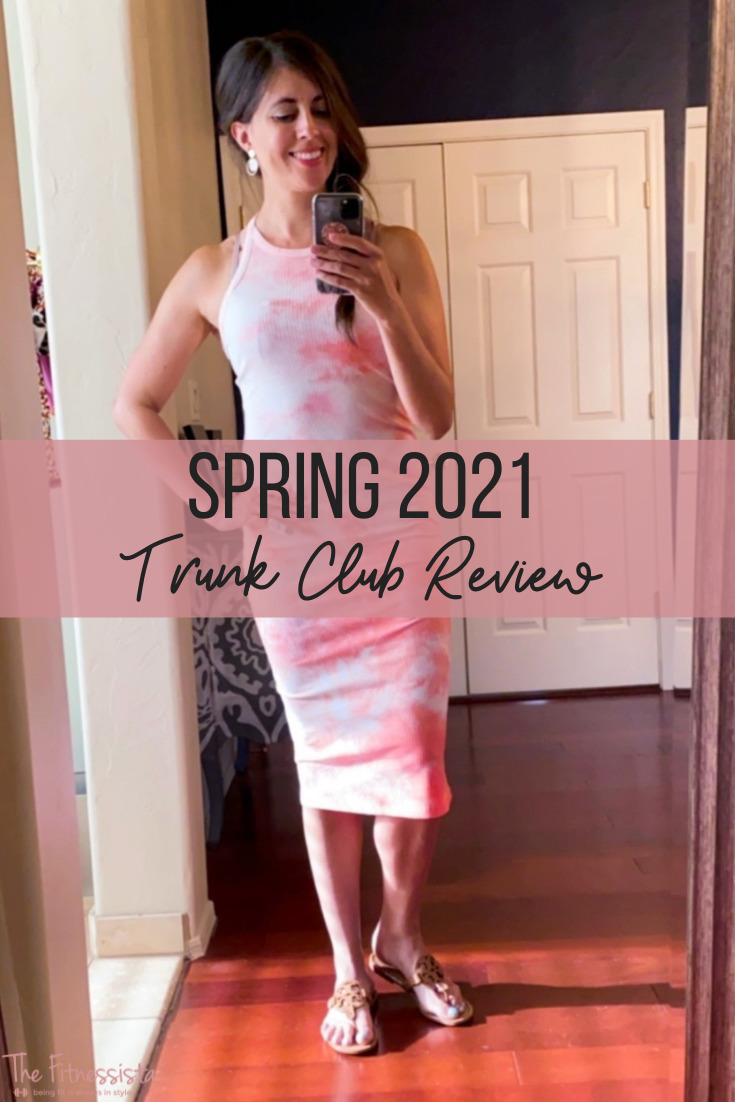
Latest Trunk Club – Spring 2021


Sharing a review of my latest Trunk Club shipment + what I kept and what I sent back. This post isn’t sponsored, but you can use my referral link for $50 off if you decide to give it a try. I’ve been using it for years now and absolutely love it.

Hi friends! How’s the week going? I hope you’re enjoying the day so far. It’s been a good week over here. It’s P’s last day of school – HOW is she heading to kindergarten next year?!- and we’ve been starting to enjoy some summer fun. Livi and I are getting our nails done today and we’ll spend the rest of the afternoon swimming until it’s time for their gymnastics classes. 

For today’s post, I wanted to share my latest Trunk Club shipment! It’s been a little while since I’ve received a trunk because the last one was a giant flop. (They sent a bunch of wintery stuff and black leather boots and it’s 90+ degrees here.) I figured it was an outlier and decided to get another one since we’re out in the world a bit more and I feel like my wardrobe needs an update after wearing athleisure most of the time for the past year and a half.

This one ended up being a home run and I’m excited to share the goods with you!

Latest Trunk Club – Spring 2021

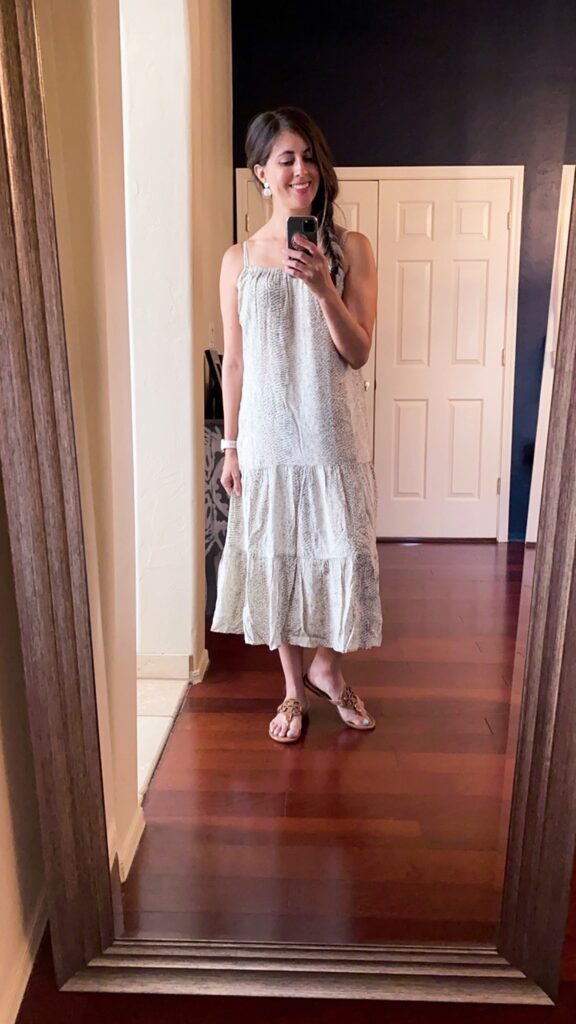
1. Rails Adora Snake Print Dress

Rails Adora Snake Print Dress

I’m a huge fan of anything Rails and I’ve noticed that while I’ll pay a bit more for their clothing, it always lasts and continues to look good. I also like that it’s a little trendy but mostly classic, so I can wear my Rails stuff for years. (I have a couple of dresses that I’ve had for at least 4 years.) I loved the breezy fit of this dress and feel like it will be cute with wedges and fun jewelry or a messy bun and sandals. It is a little shapeless though so I’m wondering if I should rock the baggy look or send it back. Verdict: leaning towards keeper.

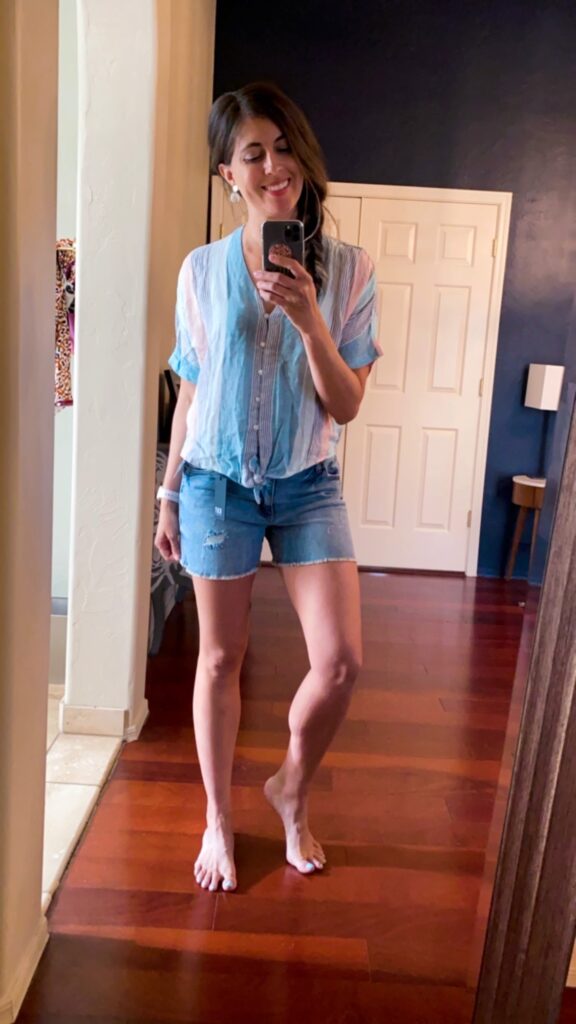
2. Rails Thea tie front top

Rails Thea tie front top

I had a feeling I was going to like this top because it’s also Rails. The fabric is super soft and even though it’s a little boxy, I like the stripes. It feels a little pricey for what it is, but last time I paid a lot for a Rails top, it was worth it and I still wear it today. Verdit: leaning towards keeper.

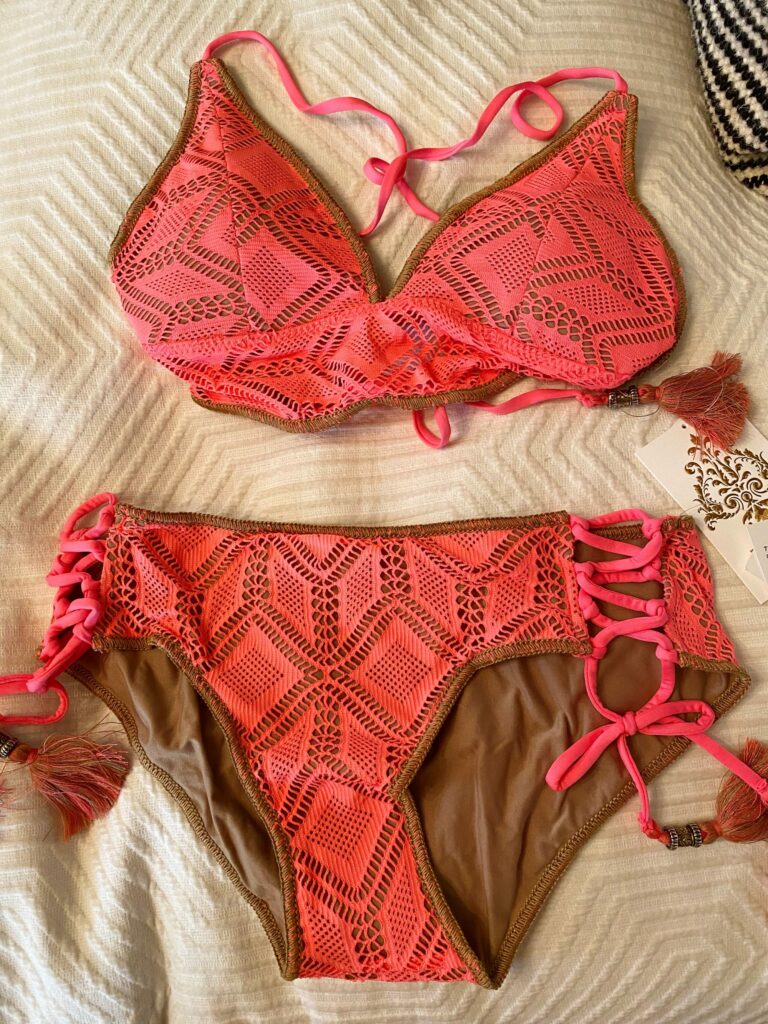
3. Becca Wanderlust swimsuit

Becca Wanderlust swimsuit

I was super skeptical about getting swimwear in the Trunk Club, but also thankful they sent one because it’s so hard to buy swimsuits right now. Dressing rooms are still closed here, and when I order online, I have to expect that most of it will go back. (WHY OH WHY do they all show my butt cheeks? lol) I like Becca swimsuits and own a couple, so I was hopeful for this one. I feel like it was tasteful and I love the pink color, so I think I’m keeping this one. Verdict: probably keeping.

4. Kut from the Kloth High Waist frayed denim shorts

(Pictured above with the striped Rails top)

Kut from the Kloth High Waist frayed denim shorts

This brand always runs a bit big, so my normal size was too big on me. I wasn’t crazy about the cut, so decided to send them back and keep trying. I definitely need a new pair of jean shorts, though. Verdict: sending back.

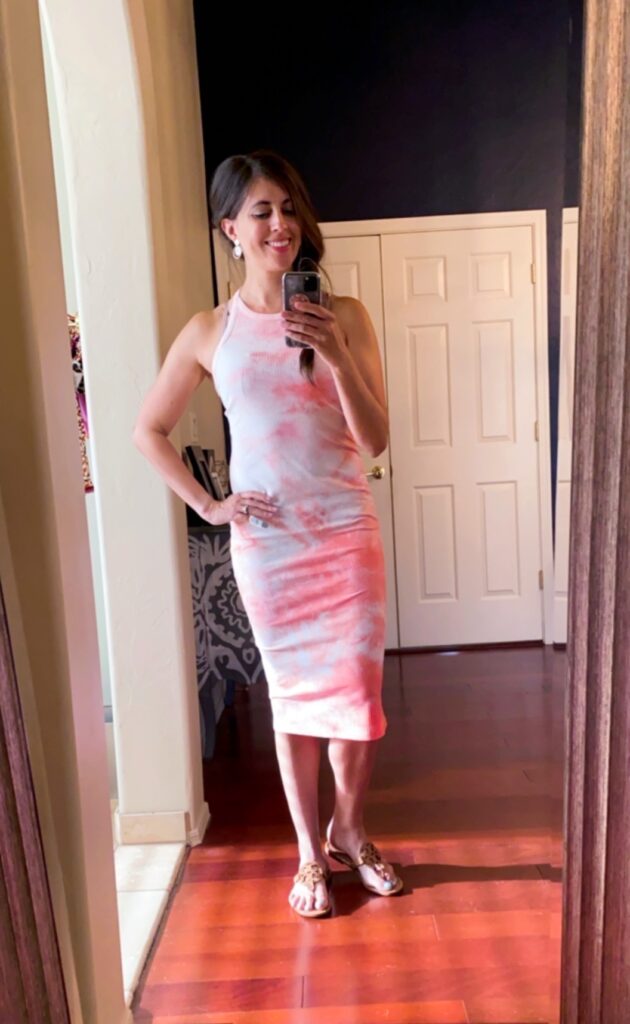
5. Heartloom Kaunas Rib tank midi dress

Heartloom Kaunas Rib tank midi dress

I’m on the fence about this one. I love the color and the fit but is tie dye sticking around for a while or is it on the way out?? Halpppp me. Verdict; no clue!

6. Free People Makai ribbed cutoff demin shorts

Free People Makai ribbed cutoff demin shorts

I loved these jeans shorts but honestly, but the waistband cuts into my soul and they’re too similar to the ones I bought at Target for like $20. Verdict: sending back.

7. Lucky Brand embroidery eyelet tank

(I forgot to snap a pic of this one!)

Lucky Brand embroidery eyelet tank

I think this stylist knows I like pink? I thought I was going to love it the most but it’s too big and I don’t like that it doesn’t have a liner. The eyelet parts are totally see-through. Verdict: byeeeee.

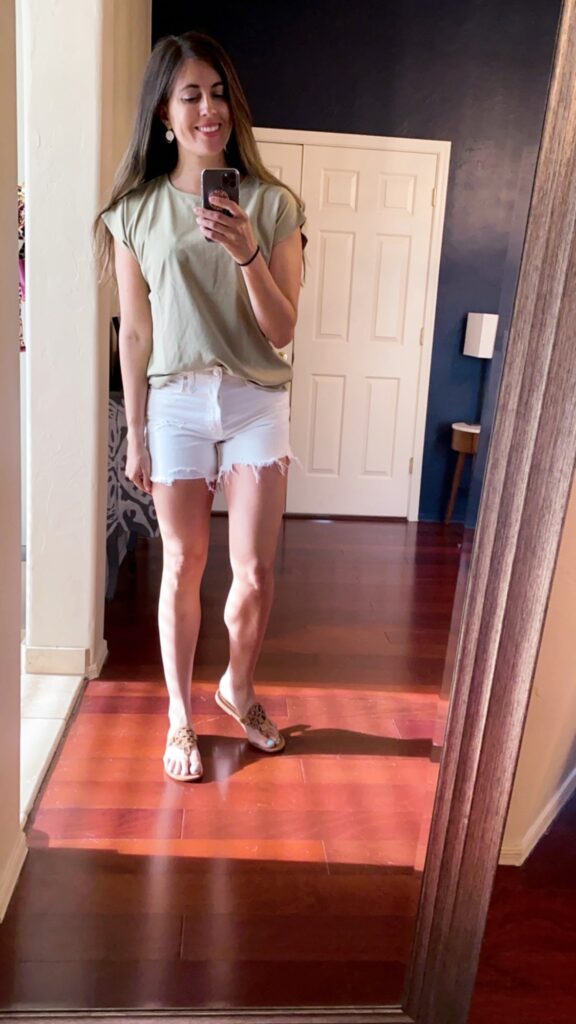
8. Madewell shoulder t-shirt

(Pictured above with white shorts)

Madewell shoulder t-shirt

Madewell tees are my go-tos. They’re awesome quality, a great price, and they’re classic everyday pieces. I don’t have any shirts in this color and thought the cut was a bit different, so I’m keeping this one. Verdict: keeper.

9. Tory Burch Miller Sandals

 Tory Burch Miller Sandals

I started wearing these sandals when Liv was a baby, and I ended up going through a pair a year. I’ll wear the heck out of them and then get a new pair, usually in black or nude. My current nude ones are trashed, so I was excited to replace them. (Also I’ve found that the shiny leather lasts much better than the matte.) Verdict: keeper!

You can check out my full Trunk Club review here and if you have any questions, please hit me up in the comments! This is my current favorite styling service. All of he products are from Nordstrom and I love that you can decline pieces in the app to be replaced, plus add items from certain categories that you’d like (like beauty products, everyday staples, athletic wear, accessories, etc.).

If you’d like to try Trunk Club, use my link to get $50 off your first box. I hope you love it as much as I do!

xo

Gina

Some Trunk Club posts:

Trunk club review

Trunk Club sept 2020

Trunk Club sept 2019

The post Latest Trunk Club – Spring 2021 appeared first on The Fitnessista.


from The Fitnessista https://ift.tt/3fM1hYt

Wednesday, May 26, 2021

How to Reduce Symptoms of Hypothyroidism


reduce symptoms of hypothyroidism

You probably don’t spend a lot of time thinking about your glands. I mean, why would you?? But I’ll tell you what, even your body’s tiny glands can have a big impact on the way you feel day in and day out.

I know that first hand. I’m years into my hypothyroidism diagnosis, and I finally feel like I have a handle on my symptoms. 

Quick refresher: hypothyroidism is a condition you get when your thyroid gland — the little butterfly-shaped gland in your neck — doesn’t make enough of its hormones. Since it’s such a small gland, that might not seem like a big deal. But my hypothyroidism symptoms absolutely shaped my life until I got them under control!

Whether you know you have hypo or you’ve been feeling off and you’re trying to figure out what’s up in your body, this blog is for you.

fit girl on beach, reduce symptoms of hypothyroidism, fitness, nutrition, community

Common hypothyroidism symptoms

Hypo affects different people differently. (The big bummer? It affects more women than men.)

On top of that, hypo symptoms can ebb and flow or totally change over time. That said, there are a bunch of hypothyroidism symptoms I want to list here so you can get a better idea of if this condition might be affecting you. Some of the top signs of hypo are:

  • Brain fog/trouble remember things
  • Fatigue
  • Mood swings
  • Weight gain and a puffy face
  • Dry skin
  • Constipation
  • Weak muscles
  • Thinning hair
  • Achiness and stiffness in your muscles and joints
  • Constipation
  • Being more sensitive to cold
  • Depression

Like, what the heck? It’s not enough that hypo can make you exhausted or irritable, it also has to make it harder to lose weight?? It’s a bum deal, I’m telling you. 

If a bunch of those symptoms sound like you, I can NOT encourage you enough to go see your doctor. Figuring out the right medication to balance out your thyroid hormone levels takes time, but the sooner you start, the sooner you get to feel like yourself again.

And you don’t have to wait until your first doctor’s appointment to start doing things to help reduce symptoms of hypothyroidism! Here are a few things that made a big difference for me: 

Foods for Hypothyroidism Symptoms

The cleaner and healthier my diet is, the better I feel. It doesn’t have to be crazy complicated just because you have hypo. Really, you should try to get lots of fruits and veggies, high-quality protein, and whole grains. Avoid packaged foods, especially ones with trans fats, lots of sugar, or a bunch of sodium.

Beyond that, those of us with hypo may benefit from getting more of certain nutrients, like iodine and zinc. I have a bunch of other resources you can use to dial in your diet and help reduce symptoms of hypothyroidism:

Get in a routine — and stick with it

When it comes to managing your hypothyroidism symptoms, it’s definitely a trial-and-error situation. That’s why I’m SO reliant on my routine. When you’re in the groove and you’re staying consistent, it’s easy to know what caused you to feel differently. 

Like, if I’m sticking to cooking at home but I eat out one night with friends and I feel my hypothyroidism symptoms flare up after that, I can pretty easily trace it back to what I ate/drank at that dinner. 

Try to get in a routine with what you’re eating, how much you’re exercising, when you’re sleeping and waking up, and your self-care. That way, you can get a better feel for what affects you positively and negatively. And then you can keep tweaking to feel better and better! 

Don’t forget the little things

Here’s the thing with hypo. Doing all the things you should do to feel your best can def feel like a lot of work. And when I’m feeling good, it’s easy to be like, “Is it even worth it??” 

But then I slack off with my supplements, or maybe even my medication, and soon I’m not feeling so good anymore. Now I’m back to managing my hypothyroidism symptoms. 

If little things help you feel better, stick with them!!! Even when you feel awesome — because they’re probably a big part of why you’re feeling good. 

fit girl on beach, reduce symptoms of hypothyroidism, fitness, nutrition, community

For me, a huge part of feeling my best is sticking with my supplements and vitamins. It’s such a little thing that it can feel easy to let it slide. But if I miss my doses for a bunch of days in a row, I start to feel worse and worse. And then I’m playing catch-up. 

Really, it makes so much more sense to stick with it so you can just keep feeling better and better! It might be helpful to make a list of all the stuff that helps you keep your hypothyroidism symptoms under control. Then, keep that list somewhere you’ll see it regularly. That way, if a little thing starts to slip through the cracks, you’ll get reminded to work it back into your routine. 

Managing hypothyroidism symptoms is an ongoing project. But I’m right there with you! Together, if we keep our diets clean, stick with our routines, and continue doing the little things that help us, we can all feel our best! Let’s stick it to those stupid thryoid glands, girls!!

The post How to Reduce Symptoms of Hypothyroidism appeared first on Love Sweat Fitness.


from Love Sweat Fitness https://ift.tt/3hT1HPq