Hi hi! Happy Friday! I hope you had a wonderful week. What’s going on this weekend? We have a fancypants event for the Pilot’s work in Phoenix, and are also going to a birthday party, I’m training a client, and teaching a live HIIT and strength class for Fit Team members. I hope you have a happy weekend ahead!
Speaking on Fit Team, new workouts went out TODAY. If body recomposition is your goal, you would definitely benefit from a structured plan (with room for flexibility because life), group accountability, and motivation. If you want to join us next week, email me gina@fitnessista.com with FIT TEAM and I’ll send ya over a private invite.
It’s time for the weekly Friday Faves party! This is where I share some of my favorite finds from the week and around the web! As always, I love hearing about your favorite things, too, so please shout out something you’re loving in the comments section below!
Friday Faves
Life:
Wicked with the crew!
We saw Wicked yesterday and it was amazing. It’s one of my favorite shows – I’ve seen it at least 9 times?- and every time, I noticed something different. Liv has seen it, but P hadn’t, so I couldn’t wait to hear her thoughts. She really enjoyed it, but ended up taking a cat nap and totally missing “Defying Gravity.” Next time. Next time.
Are you guys into Wordle?! I have to admit, I look forward to it every single day. They also have a Spanish version, which I’ll do for kicks every now and again. The Pilot and I are in a constant Worldle battle.
Ruuuuuun to Nordstrom Rack if you’ve had your eye on a Barefoot Dreams blanket. They’re $60!! I ordered a few for gifts….and one for myself. 😉
Health, good eats, fitness:
A couple of new health purchases: this book and a PEMF Go Mat!
This book dives into insulin resistance and how it affects the progression of common diseases, and while I’m only about 30 pages in, I’m learning a lot. I’ve had my eye on the PEMF Go Mat for a while and can’t wait to start using it for meditation. The pulses mimic the natural vibrations of the earth, and can stimulate the body’s natural restorative response. It can be beneficial for injury prevention, workout recovery, and meditation, and it’s combined with warm and toasty infrared heat. I’m going to try it today and will absolutely report back!
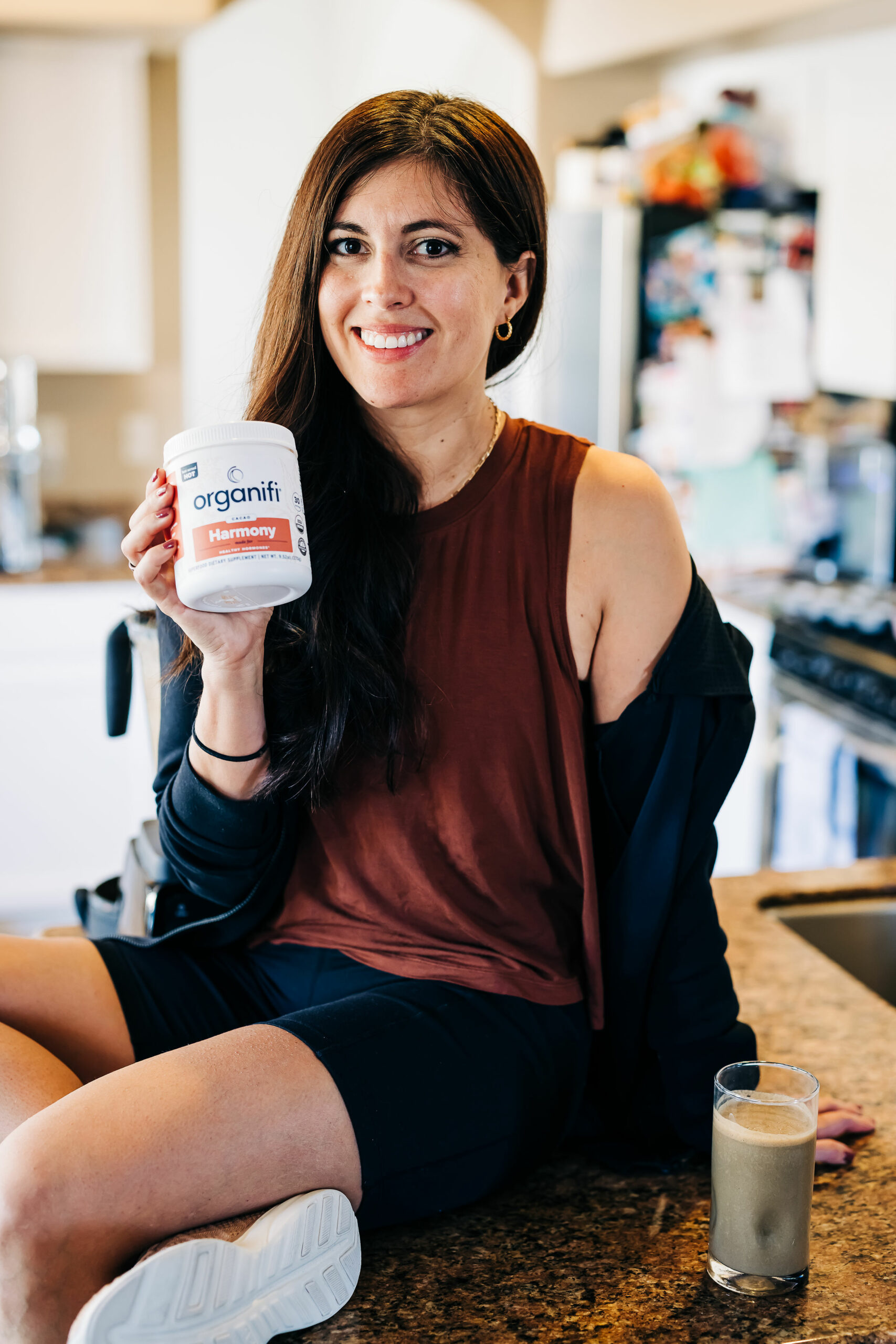
Organifi Harmony. I think I’ve shouted this out on the blog before but feel like it needs another shout out since I’ve had it in my smoothie every day this week! It’s filled with superfoods and adaptogens and when I add this to my smoothie, I skip my usual adrenal support vitamins. It has a rich chocolate taste and is also soooo delicious in warm almond milk with cinnamon.
I promise you, if you follow the videos in our guide, you will be more flexible in 30 days.
Let’s get bendy!
What Are the 3 Best Flexibility Exercises? (Intro and Benchmark Test)
The above video comes from Nerd Fitness Prime, kicking off our 30-day challenge “Flexibility for the Inflexible.”
In it, Nerd Fitness Coach Matt discusses the tools he uses for improving mobility with his clients.
The 3 Best Exercises to Improve Flexibility:
The Toe Touch
The Back Scratch
The Butterfly Stretch
Let’s go over each of these moves now.
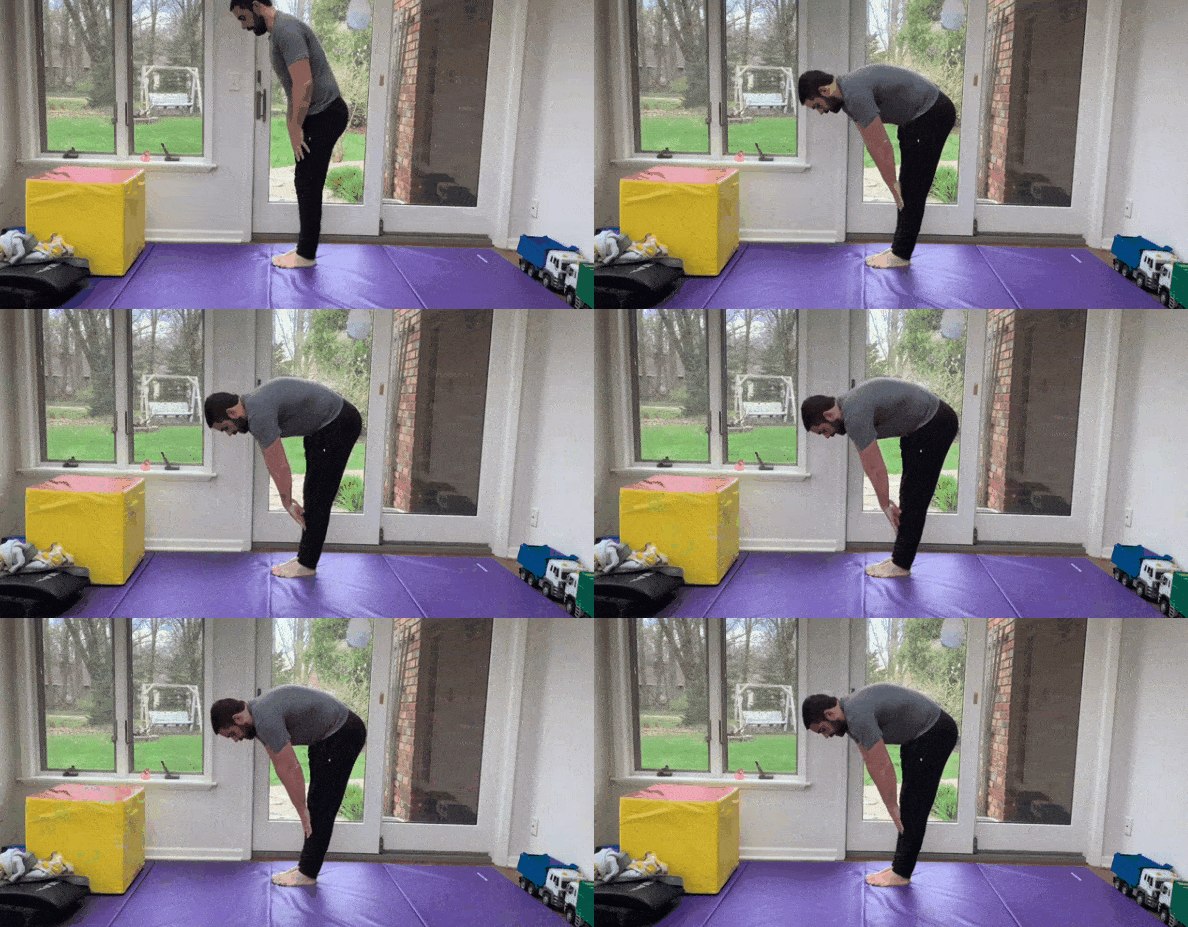
#1) Toe Touch
To perform a standing toe touch:
Stand straight with your legs about hip-width apart. You want your legs to be straight, but don’t aggressively lock out your knees either (this feels like a “microbend” to a lot of people).
Begin by bending and leaning forward towards the ground with your quads (front of your legs).
Let your body rest naturally, as if you were a ragdoll. Keeping your hands relatively close together, straighten your fingers and begin to stretch down slowly to the ground.
The goal here, ultimately, will be to touch your toes.
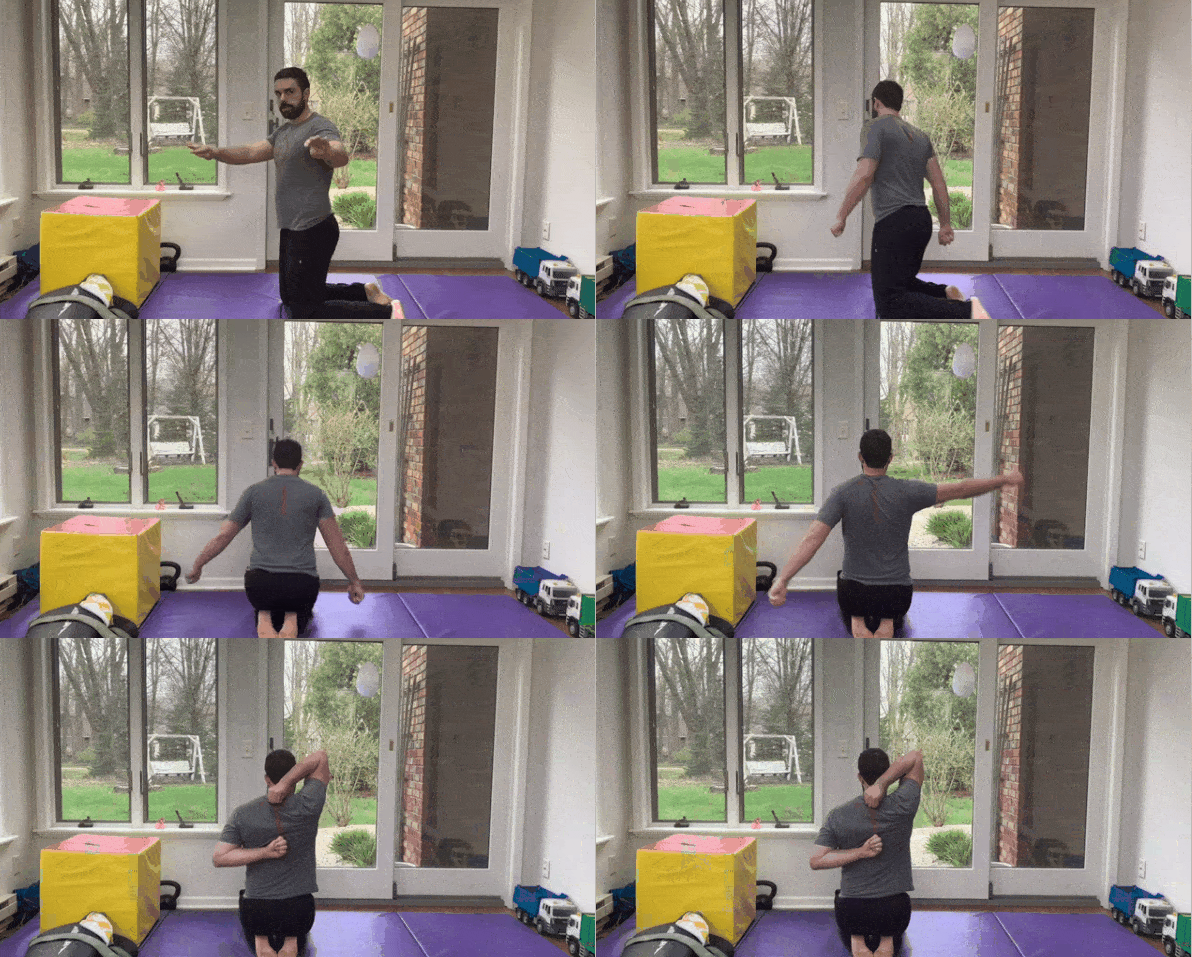
Take a comfortable seat (or stand), with your torso and back tall.
Tuck your thumbs inside of your fist.
Place your right hand behind your head, down back over your shoulder. Reach as far down the middle of your back as possible, palm facing you.
Your other arm (left) is going to go behind and up, with your palm facing away. Reach this hand toward your upper hand (don’t strain).
Switch arms and reverse the moment.
Over time, we are going to work to bring your hands closer together.
#3) Butterfly Stretch
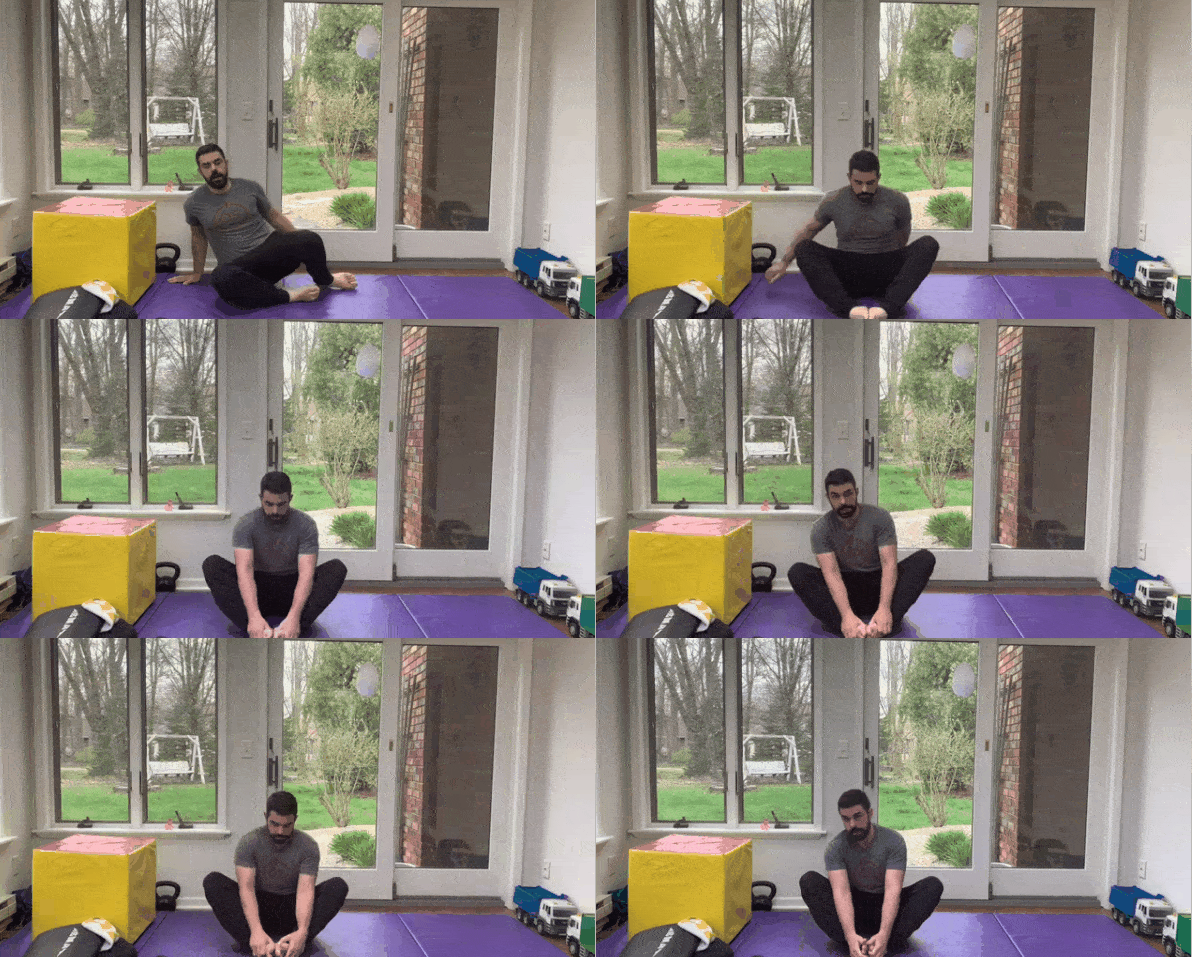
To perform a butterfly stretch:
Take a seat, with your legs facing out in front of you.
Bring both of your front feet together, with the bottoms touching, by bending your knees away from each other.
Grab both feet with your hands, with your elbows coming down toward your knee (they don’t have to touch).
Keep your back straight, and allow your knees to come down (if they can, don’t force it).
The goal here will be to bring your knees lower and feet closer to your groin, but don’t fret if this is challenging. Even Coach Matt has trouble with butterfly stretches.
Why these three exercises?
Coach Matt refers to the toe touch, back scratch, and butterfly stretch as “benchmarks.”
If you have decent mobility in these three exercises, you’re probably pretty flexible.
Improving these will be our mission for the next 30 days!
Each week, Coach Matt will provide three different video routines with exercises designed to target these specific benchmarks.
So in Week 1, you’ll find a video for:
Toe Touches
Back Scratches
Butterfly Stretches
You can do these videos all at once if you want, or break them up throughout your week.
Maybe you do a routine Monday, Wednesday, and then on Friday.
We’ll end this guide with some tips on starting a recurring practice.
At the end of our 4-week series, we’ll check in, to see how everything is coming along.
Here’s what we need you to do right now: record where you are with these moves.
How far down can you reach with your toe touch?
How far apart are your hands during the back scratch?
How close are your feet and how high up are your knees during the butterfly stretch?
Coach Matt recommends a few ways to measure these benchmarks in the introductory video above, but even some subjective tracking would be useful:
“On a scale of 1 to 10, this move was tough, so I’d give it an 8.”
Don’t forget about this initial tracking, even if you don’t have a measuring tape. Just go through the initial benchmark tests the best you can.
Before we jump into the series itself, let’s discuss some general tips and tricks for improving flexibility.
Tips and Tricks for Increased Flexibility
First and foremost, all bodies are different.
You might have a great range of motion in your back scratch, but can’t get much range on your toe touch. Or maybe you’re like Coach Matt, where butterfly stretches are challenging.
Our goal here is to improve YOUR flexibility. We’ll all have different mobility ranges on Day 1.
All of us have to start somewhere, so don’t stress if you feel inflexible…
…that’s why you’re reading this guide.
No matter what, by going through this process, you’ll learn more about your body and develop tools for increasing your range of motion.
Next up…
Coach Matt highlights two general ways to increase your flexibility:
Function. This is your technique and awareness of your flexibility. Think of this as maximizing the potential of your current body.
Structure.This would be your body itself, and the range of motion of muscles, tendons, etc. Structure is about changing your body itself through these flexibility exercises.
You’re probably not going to increase the structural flexibility of your body after one stretching session. These things take time
However, you very well may increase your flexibility by improving your function or technique. As you go through the videos, Coach Matt will offer instructions on how to position your body for proper stretching.
This alone may very well increase your range of motion.
We’ll also be using three specific movement tools for improving flexibility:
#1) Active Range of Motion
This would be doing the complete movement of an exercise, fluidly.
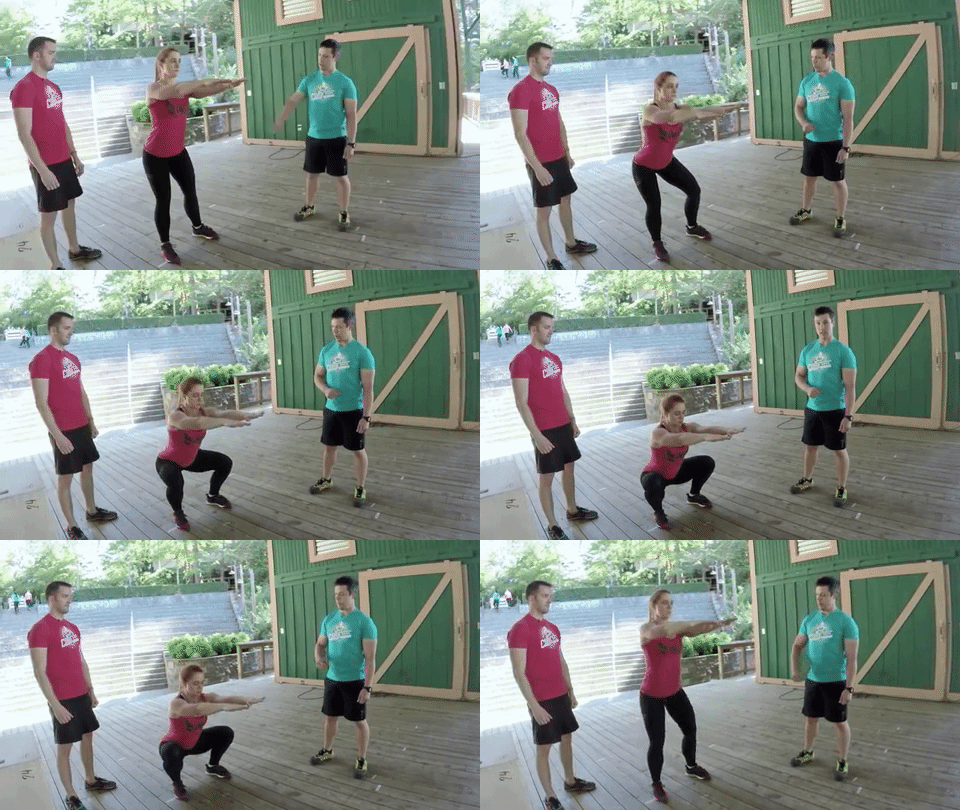
So a normal bodyweight squat would be an active range of motion if you did the entire movement:
By going all the way down and back up with your squat, your muscles are engaged evenly throughout.
#2) Pulses
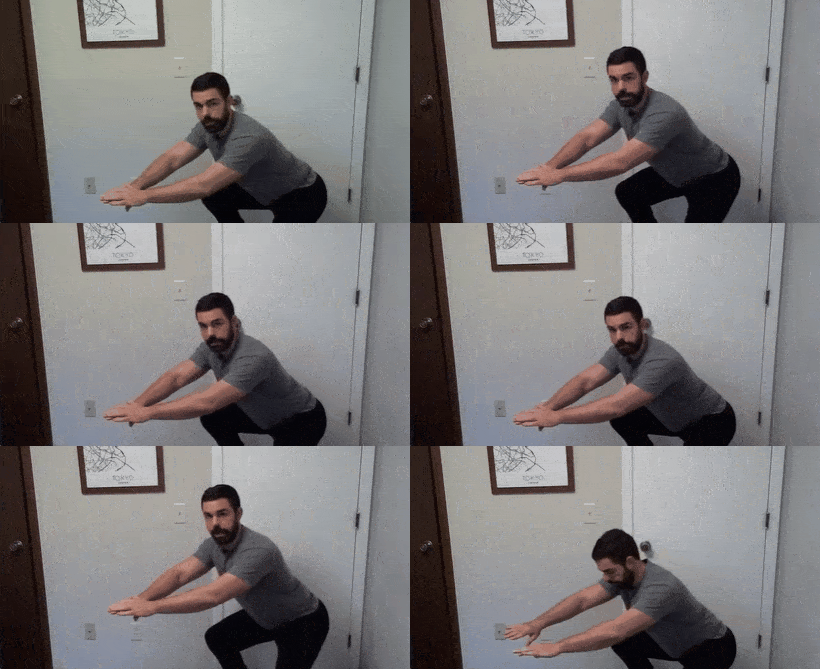
This movement has you stopping at a particular point of an exercise, like the bottom of a squat, and slowly and in control, pulsing slightly up and down:
You’re really only moving about an inch here for your pulses.
This will help you gain control of that particular area.
#3) Holds
As the name would suggest, here you’ll hold the position at a specific point of the exercise.
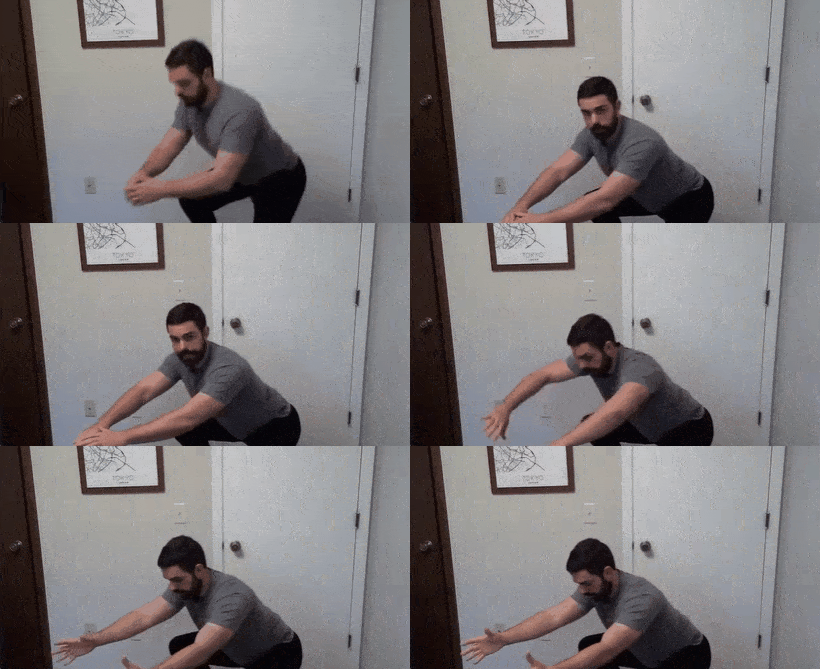
For example, for your squats, you may pause at the bottom of the movement:
This can help you grow stability during a particular stretch.
During the course of the next four weeks, we’ll be utilizing a combination of active range of motion, pulses, and holds, to increase your flexibility.
And with that, onto week 1!
How to Improve Your Flexibility: Week 1
For our first week, Coach Matt is going to start us off slow.
Here, it’s all about learning the foundations of the movement.
To increase flexibility, it often comes down to properly setting up the stretch.
We’ll begin by teaching you the basics.
Toe Touch Week 1:
Back Scratch Week 1:
Butterfly Series Week 1:
How to Improve Your Flexibility: Week 2
This week, we’re going to identify the edge of your flexibility.
We won’t push or strain ourselves too much, but we’ll use our breath as a sign of difficulty.
The goal here is to understand how flexible you may actually be (you might be able to reach farther than you think).
However, as Coach Matt will continuously reminds, if it feels unsafe, DON’T DO IT!
Toe Touch Week 2:
Back Scratch Week 2:
Butterfly Series Week 2:
How to Improve Your Flexibility: Week 3
In Week 3, it’s all about exploring and expanding your flexibility exercises.
We’ll be testing your movements and begin thinking about ways to “go off the rails” a little here and there.
In our third round of exercises, you’ll begin changing, adapting, and remixing the moves to increase your range of motion.
With flexibility, some creativity can be a good thing, which will be your focus for this stage.
Toe Touch Week 3:
Back Scratch Week 3:
Butterfly Series Week 3:
How to Improve Your Flexibility: Week 4
In the last week of “Flexibility for the Inflexible,” it’s all about building strength.
Muscle will help you hold and expand mobility positions, so this week Coach Matt covers exercises designed to couple strength with your flexibility.
We’ll even mix in some weights into your routine here.
Toe Touch Week 4:
Back Scratch Week 4:
Butterfly Series Week 4:
Next Steps for Becoming More Flexible
The video above is a “re-cap party” with Coach Matt, ending the 30-dayFlexibility for the Inflexiblechallenge we ran for Nerd Fitness Prime members.
Let’s go over some highlights.
#1) Continue to test and retest your flexibility benchmarks.
That which gets measured gets improved, so continue to track your toe touch, back scratch, and butterfly stretch.
Remember, these tests don’t need to be some precise measurement rounded to the nearest millimeter (although if you want to do that, have at it).
Instead, they can be subjective:
“This is really tough, I can’t bring down my knees at all.”
to…
“I could probably sit like this for 15 minutes.”
Don’t stress out over how precise your measurements are, but do keep a record of how these stretches feel. It’ll help us know if you’re improving.
#2) Use your breath as a guide.
Breathing can often be a signal of excretion levels:
If your breath is calm and normal, what you’re doing is within your comfort range.
If you’re huffing and puffing a lot, or even holding your breath, you’re probably exerting yourself too much.
As Coach Matt highlights, during your flexibility exercises, don’t push too far past your comfort zone.
Yes, we should find your edge, but we also want you to feel in control during your stretches so you can really “own” the movement.
If you find yourself having to catch your breath, it could be a sign you’ve gone too far.
Be mindful of your breathing during our flexibility exercises.
#3) You don’t have to stretch every day.
You probably noticed that we provided three 20 minute videos per week to help improve your flexibility.
This was intentional, because you don’t have to stretch every day to increase your range of motion.
Truth be told, you don’t even need to do 20-minute sequences three times a week to improve flexibility. Even just 10 minutes of flexibility exercises a couple of times per week could improve your mobility.
To do so, you can continue to follow the videos in this guide, or I have some other resources for you to check out.
Here are three more guides for improving your flexibility:
21 Yoga Poses for Beginners. Yoga can be a great practice to improve your flexibility. If you’ve never tried it before, check out our guide. We’ll provide video sequences designed for beginners, so don’t worry if you have no clue what a downward dog is. We’ll teach you.
Three Full-Body Stretching Routines to Cool Down. After a workout, a good stretch can be the perfect way to lower your heart rate. Our guide will offer you three different routines to perform after your workout (or whenever) so you can start improving your flexibility.
How to Touch Your Toes. Since the toe touch is the go-to benchmark to see how flexible you are, we have a complete guide on getting you there. If you’ve always dreamed of being able to reach your little piggy wiggies, start here.
The most important thing you can do now?
Get to it!
You’re not going to get any more flexible by reading articles online, so pick a sequence from today and get going!
If you like our style here at Nerd Fitness, I have three great options on how you can continue your journey with us:
Option #1) If you want a professional coach in your pocket, who can do video form checks, provide feedback, and adjust your workouts based on your experience level, check out our 1-on-1 Online Coaching Program!
For example, let’s say you have an old injury and couldn’t perform one of our flexibility exercises. A Nerd Fitness Coach can work with you to create a customized routine for your exact situation.
Personally, I’ve been working with the same online coach since 2015 and it’s changed my life. You can learn more by clicking on the box below:
Option #2) Exercising at home and need a plan to follow? Check out Nerd Fitness Journey!
Our fun habit-building app helps you exercise more frequently, eat healthier, and level up your life (literally).
Plus, you can take part in flexibility challenges alongside a group of nerds who are all trying to better themselves!
Try your free trial right here:
Option #3) Become part of the Rebellion!We need good people like you in our community, the Nerd Fitness Rebellion.
Sign up in the box below to enlist and get ourRebel Starter Kit, which includes all of our “work out from home” guides.
Get your Nerd Fitness Starter Kit
The 15 mistakes you don’t want to make.
Full guide to the most effective diet and why it works.
Complete and track your first workout today, no gym required.
Alright, now I want to hear from you!
Did you try our “Flexibility for the Inflexible” series?
Did you find any of the exercises easier or harder than the others?
Any tips or tricks to help the “inflexible”?
Let me know in the comments!
-Steve
P.S.Personally, I’ve found a yoga practice to be incredibly helpful in improving my mobility.
These are the exact type of workouts we build for our 1-on-1 Coaching clients, busy business travelers like you that are trying to get fit even while living out of hotel rooms and airports!
Do one exercise right after another – this should take you probably 3-4 minutes.
Nextset your watch/laptop for 15 minutes and do as many full circuits as possible in that time frame, using PERFECT FORM for each repetition. Try to move from each exercise to the next without stopping.
I’ve also split the workout into three levels – beginners should start at level 1 until they feel comfortable enough to advance to levels 2 and 3.
LEVEL 1 HOTEL ROOM WORKOUT
Body Weight Squats: 20 reps (you don’t need a chair like in video, that’s just if you need help)
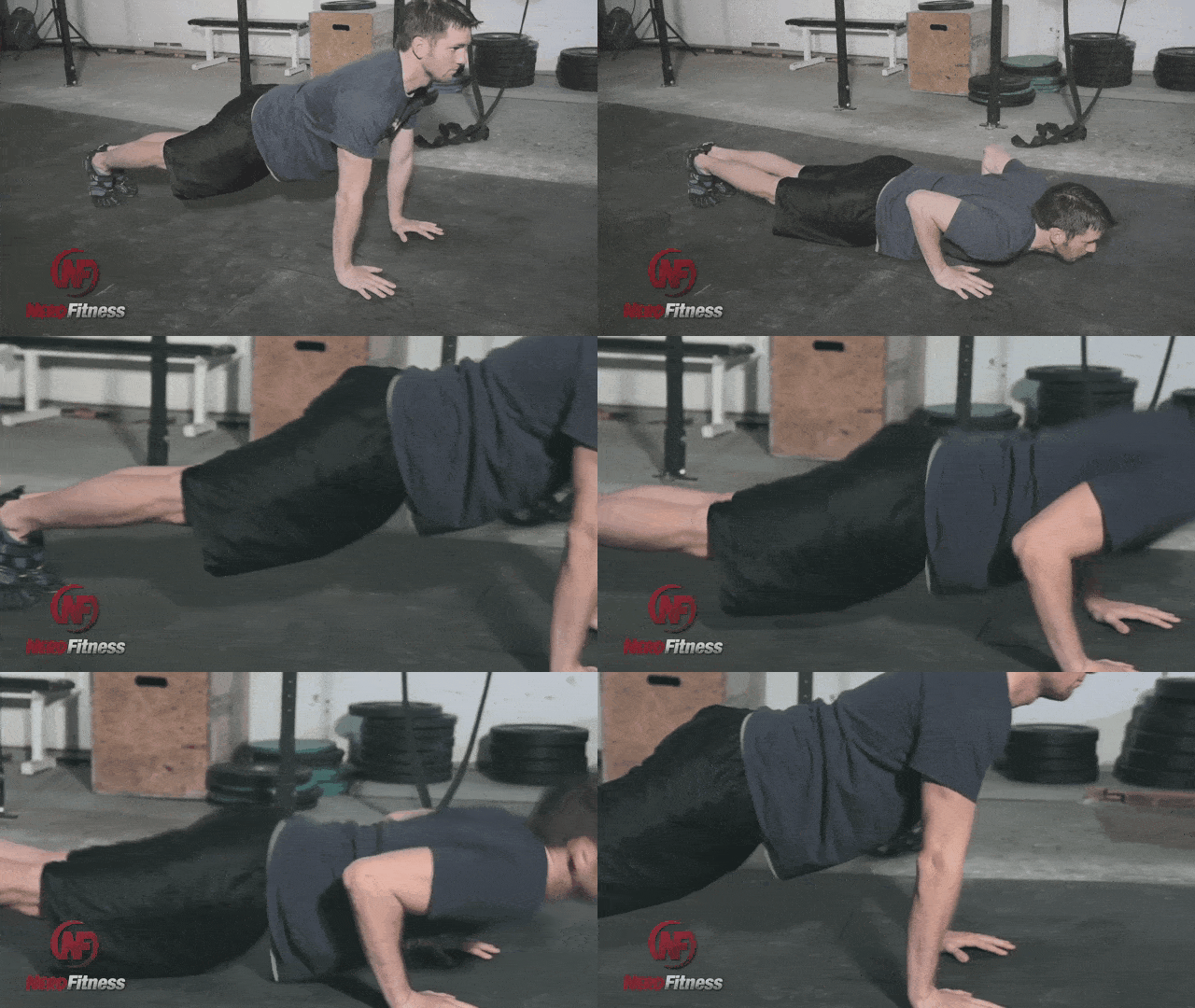
Incline Push-Ups: 15 reps (feet on floor, hands on edge of bed or desk)
One-Arm Luggage Rows: 10 reps (each arm, use your suitcase as your weight)
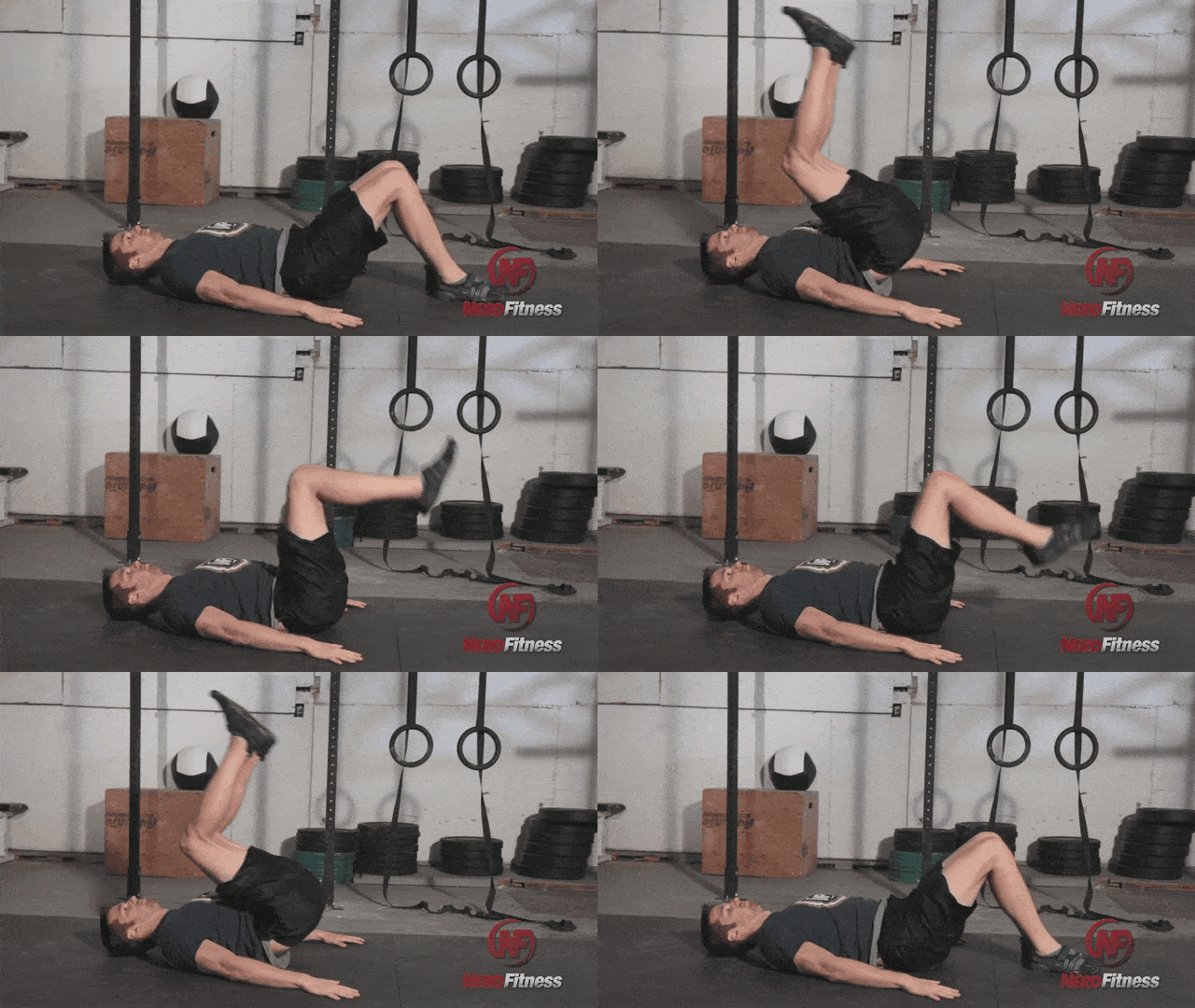
Reverse Crunches: 10 reps
LEVEL 2 HOTEL ROOM WORKOUT
Overhead Squats: 25 reps
Push-Ups: 20 reps
Inverted Rows: 10 reps(using the desk in your hotel room…just don’t break it!)
Reverse Crunches: 15 reps
LEVEL 3 HOTEL ROOM WORKOUT
Jumping Squats: 25 reps
Decline Push-Ups: 20 reps (feet up on bed or desk chair)
So here are the exercises you can do in the comfort of your hotel room while watching guilty pleasure reality shows you’re tooembarrassedto watch at home.
Here’s a list of quick exercises you can do in your Hotel Room:
You can always do a little yoga in your hotel room!
Nope, you don’t need a mat. You can just use a towel if you’d like to pad your knees a little.
For instructions on how to do any move in the routine above, check out A Nerd’s Guide Yoga.
WHY YOU SHOULD WORK OUT IN YOUR HOTEL ROOM
Even when I’m living out of hotel rooms, I prioritize working out.
I find that on days when I exercise, I eat better. Something activates in my brain when exercising that says “I’m trying to be healthy, so I’m going to eat healthy.” On days when I don’t exercise at all, I tend to say things like “meh, I’ll do it tomorrow” or ‘it’s only one meal” or “it’s only a few beers.”
That’s why a workout, even if it’s for only 20 minutes, can be very critical while traveling. It really does have a way of stopping you from gorging yourself silly on pizza later. It’ll also help you build momentum.
Speaking of momentum…have you met Jeff?
Jeff is a doctor and start-up founder who travels 2+ weeks out of every month and lives out of hotel rooms too! We helped him lose 30+ pounds and get in the best shape of his life despite the fact he was living out of hotel rooms for the past two years.
Jeff is a proud member of our snazzy1-on-1 Online Coaching Program, and loves the “global accountability” his coach provides.
If you are somebody that can’t seem to stay healthy while traveling, we’d love to help – we’ll build you a program that works at home, and then adjust your workouts to fit into your travel schedule too. We help our clients with expert guidance, support, and accountability.
Interested?
Click below to learn more:
If that’s too much for you right now, I’ve got two other great options for you:
#1) If you want a roadmap for getting in shape on the road, check out NF Journey.Our fun habit-building app will help you exercise and eat better, all while you build your very own superhero…no matter where on Earth you are!
Interested?
Try your free trial right here:
#2) Join The Rebellion!We have a free email newsletter that we send out twice per week, full of tips and tricks to help you get healthy, get strong, and have fun doing so.
I’ll also send you tons of free guides that you can use to start leveling up your life too:
Download our free weight loss guide
THE NERD FITNESS DIET: 10 Levels to Change Your Life
Follow our 10-level nutrition system at your own pace
What you need to know about weight loss and healthy eating
3 Simple rules we follow every day to stay on target
Okay, that about does it.
The next time you’re in a hotel room, or any room, try our 20-Minute Hotel Room Workout. If you find even Level 3 too easy, try this one instead. I’ll warn you though, I don’t hold back on this more advanced circuit.
Alright, now I want to hear from you:
Do you spend a lot of time in hotels?
Travel a lot for work?
What are your tips and tricks for staying healthy while living in hotels?
Today’s podcast episode is sponsored byDr. Stephen Cabral. He was on a recent podcast episode and I’ve learned so much from him over the past couple of years. I was thrilled when he offered to partner for the podcast! If you head to this page, he’s offering a free HTMA mineral and metals test + 30 minute health consult.All of you have to do is pay for shipping!I can’t wait to receive my results.
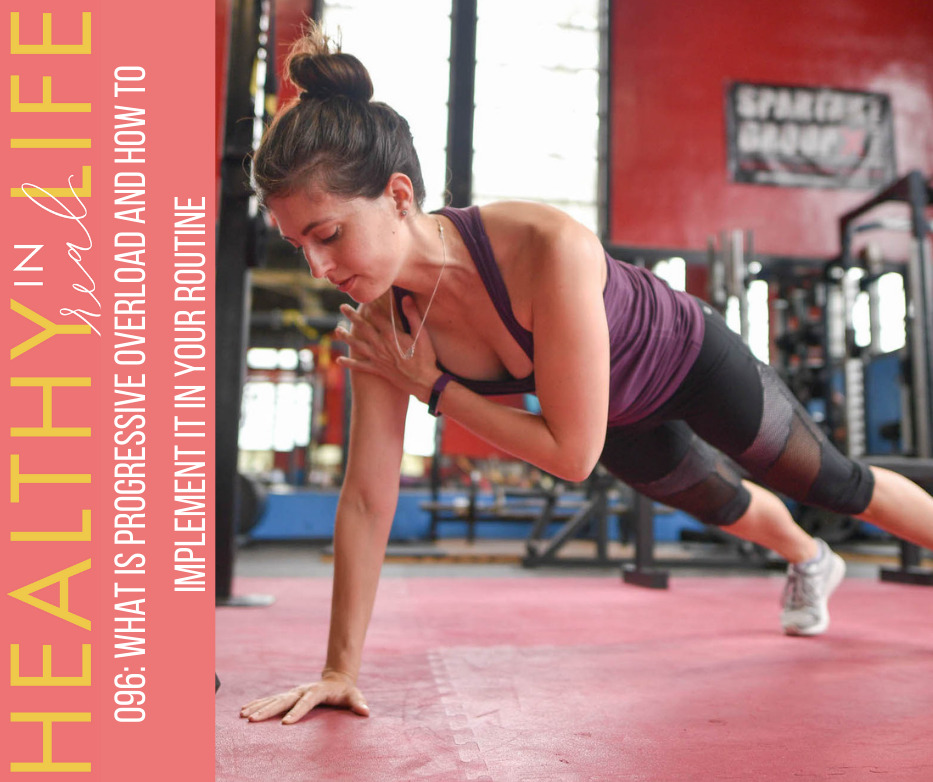
Today I’m going to talk about progressive overload and how you can use this in your routine to life heavier weights over time. This should be especially helpful to my friends out there who consistently strength train but but always use the same weight, set, and rep amounts.
Listen to the full episode here:
What is progressive overload and how to implement it in your routine
What is progressive overload?
Gradually increasing the amount of weight, sets, and reps of a particular exercise. It’s commonly referred to during strength training, but these principles can also be applied to cardio.
The body is an intelligent machine and adapts to the demands placed upon it. This is why you may see some changes initially when you change your routine, but stop seeing results after a month or so. This is due to something called the SAID principle, which stands for Specific Adaptation to Imposed Demands (SAID). This means that the human body adapts specifically to demands placed upon it, and to continue to see change, you have to consistently add stressors to your routine.
When you hit a plateau, this can be a positive thing: it means that you’ve gotten stronger and a routine that used to challenge you feels easier. At the same time, in order to continue to see progress, you need to switch up your routine.
My favorite way to implement progressive training: increase weight, and then increase volume (reps, then sets).
Here’s what an example looks like:
STRENGTH:
Measure your current weight selection for foundational exercises:
Squat
Lat pulldown
Chest press
Bent-over row
Deadlift
Pick an exercise above and choose a weight selection that’s heavier than your current weight selection, one you can only complete 6-8 reps using proper form for 3 sets
– Continue to do this in your routine for 4-6 weeks
– After this, it should start to feel much easier and you can increase your reps to 8-10
– Repeat for 4ish weeks until it feels easier
– Increase reps to 12-15
– When this feels easier, add in a fourth set
Track your progress on your phone or in a small notebook so you can measure your strength gains over time
RUNNING:
Make sure that you’re slowly increasing your mileage or time to get your body used to performing these repeated movement patterns for a longer stretch.
You can utilize progressive training through time, distance, or speed.
Words of wisdom: whether you’re focusing on strength or running, make sure that you add stressors gradually to avoid injury. I don’t recommend an increase larger than 10% in time, weight, or intensity.
Even better: work with a certified personal trainer or running coach to make sure your training aligns with your goals, and is safe for your unique body and medical history. They will also help you progress according to your personal fitness level.
Do you use progressive training in your routine? If you’re looking for a new workout plan, new Fit Team workouts drop TOMORROW and were designed for muscle gain and fat loss. They’re also phased to prevent plateaus, and are a complete action plan, so you no longer have to puzzle-piece your workouts together. Work out with us here!
Thank you so much for listening and for all of your support with the podcast! Please be sure to subscribe, and leave a rating or review if you enjoyed this episode. If you leave a rating, head to this page and you’ll get a little “thank you” gift from me to you.
Lots of tips here on metabolic flexibility and how to improve it.
Hi hi! How’s the day going? I hope you’re having a wonderful morning so far. I’m subbing a Tabata class and then heading to coffee with a friend. I hope you have a lovely day today.
For today’s post, I’m chatting about something that I just recently started to pay more attention to over the past couple of years: metabolic flexibility. As I learn more biohacking tips and strategies to improve my health, I’m excited to share more of this info here. This post was written in collaboration with Mia, our Fitnessista RD. If you have any questions for her or topics you’d like to us to cover, please let me know!
We’ll also be doing an Instagram live this Friday at 9:30 PST /12:30 EST if you’d like to officially meet her and ask any fitness or nutrition questions! We’ll also be sharing the details about our new nutrition coaching program.
How to improve metabolic flexibility
What is metabolic flexibility?
Metabolic flexibility is the ability for the body to switch between sources of fuel, whether it is energy received from fat or energy from carbohydrate consumption. Do you notice that you feel better when you eat a steak vs a pizza?
Being metabolically flexible allows for the body to easily switch between the two sources of fuel. It allows your body to use food that was just eaten for fuel, or if it’s been hours or even a day since your last meal, it lets your body dip into fat storage for fuel. A flexible metabolism allows this to happen with ease while feeling great.
How do you know if you have a flexible metabolism?
Here are some indicators that your metabolism is functioning at an optimal level:
– You can go hours without eating and not become “hangry.”
– Your meal frequency doesn’t dictate your mood.
– Your energy levels are great when eating a diet rich in protein and healthy fats.
– You feel great when eating a diet rich in protein and carbohydrates.
-No need to eat every 2-3 hours to prevent fatigue, headaches, or hypoglycemia.
– You haven’t coined yourself as someone who follows a specific “diet”.
How I measure my own metabolic flexibility:
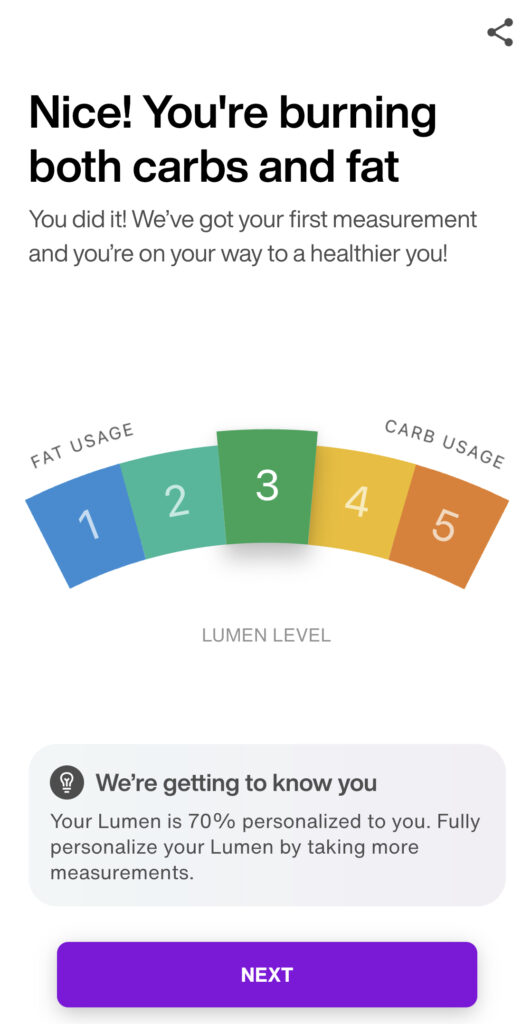
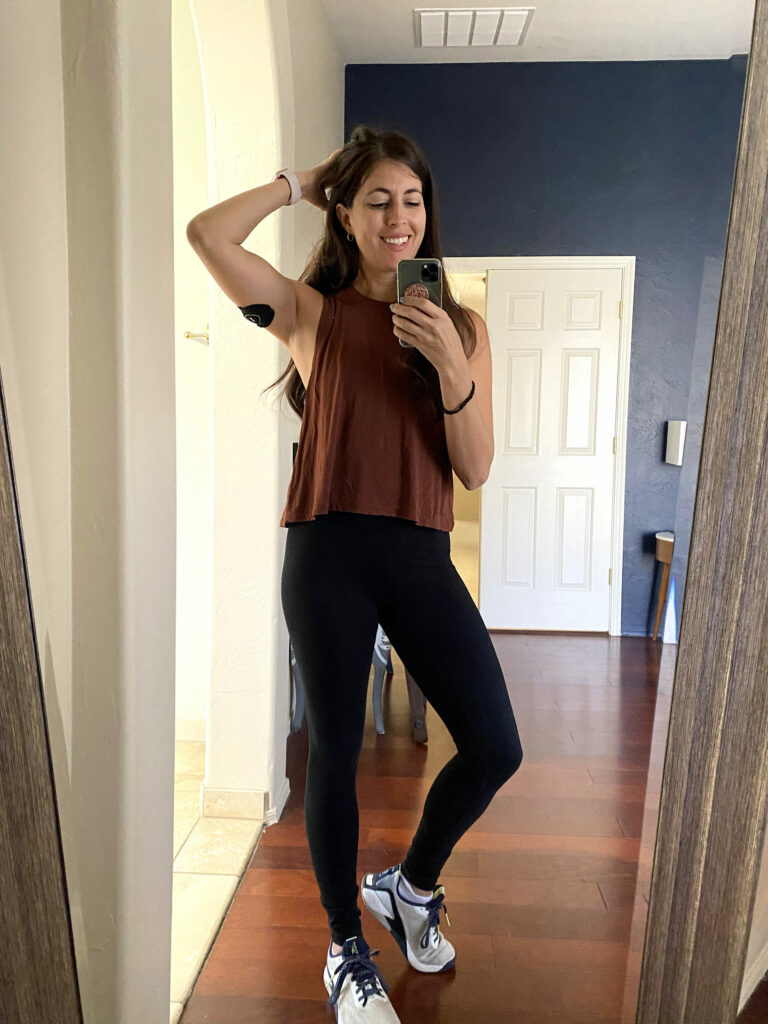
I use two things to see how my metabolism is functioning and how my body responds to different foods and eating patterns. The first one is the Lumen, which will actually tell you whether you’re predominantly burning carbs or fat, based on your RER (respiratory exchange ratio). I use Lumen a few times throughout the day, and tweak my nutrition based off its suggestions. (If you decide to try it use FITNESSISTA for an extra 10% off.)
It’s also been insightful to see how certain workouts and foods (especially late-night meals) affect my metabolic function.
I’ll also occasionally use Nutrisense, which is an app that’s paired with a Continuous Glucose Monitor (CGM) and the support of a Registered Dietitian. This has been incredible to see my body’s response in real time, and it helped me to make very simple tweaks to my diet and eating patterns. It’s been a good motivation to have my last meal earlier in the day, skip the late-night alcohol, take a walk before or after a carb-heavy meal, and also eat my protein first.
One of the easiest things you can do to achieve a flexible metabolism is to balance your blood sugar and be strategic about your choices of fuel. The goal is to have moderate rises in our blood sugar throughout the day, while minimizing the high spikes and crashes.
How to do this:
– Choose to eat your protein before carbohydrates at a meal. This might look like eating your eggs and bacon before diving into the side of fruit; eating half of your steak before taking a bite of broccoli or that baked potato.
– Balancing your meals with the proper ratios of protein, carbohydrates and fats depending on your goals. Make half of your plate non starchy, green vegetables, 6 oz of cooked protein and fill in the rest with carbohydrates or fat as you prefer, remembering to eat the protein first.
– Schedule your carbohydrates. Front loading your carbohydrates earlier in the day (breakfast/lunch) is better for overall metabolic health and preventing insulin resistance.
What does this look like?
Grilled chicken thighs with veggies at lunch, finish with “treat” that you typically save for the end of the day and then go for a walk. Or follow your lunchtime lifting session with shrimp stir fry with rice. Eating the protein and fiber first will blunt the spike from the simple carbohydrates in the treat & the rice.
Plus, including carbohydrates after lifting allows your muscles to soak up those carbohydrates and put them to use for repair and growth. Walk after meals to help move the glucose through the bloodstream. Put the energy to work instead of sitting and getting stored in the body.
– Finally, make sure that you’re finishing your last meal at least 2-3 hours before you hit the hay! Not only will you get better sleep, but your body will be able to get to work scrubbing your brain and regenerating new cells instead of focusing on digestion. I know, it’s hard not to eat late and we run into activities with kids or a late work meeting. Slowly begin to front load your total food intake for the day, so that in the event you do eat late, it’s a smaller meal of protein and veggies, knowing that your body received the majority of its nutrition earlier in the day.
The body is primed to take advantage of utilizing human growth hormone in order to repair and build while you’re sleeping. The sweet spot is 10pm-2am, so start that bedtime routine early so you can hit the pillow to dream land and soak up the free benefits.
Let me know if this post was helpful for ya! Please let me know if there are any future topics you’d like to see like this. 🙂